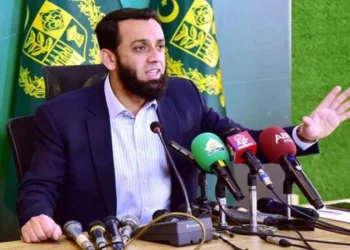
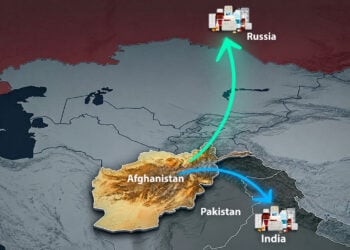
Pakistan’s Prime Minister, Shehbaz Sharif, recently issued a blunt warning to the Taliban: they must choose either Pakistan or Tehrik-e-Taliban Pakistan (TTP). He further stated that if the Taliban opt for the TTP, Pakistan will sever its relations with the regime. The pressing question now is: which path will the Taliban take?
1) The Taliban have already tasted the bitter consequences of sheltering global terrorism in the past, most notoriously with Osama bin Laden, the founder and former leader of al-Qaeda. There may still be relatively pragmatic figures within the Taliban who, having learned from that episode, are unwilling to sacrifice everything once again, this time for the sake of the TTP. If the Taliban side with the TTP instead of Pakistan, the international community will condemn them and validate Islamabad’s claims. Whatever fragile and tentative credibility the Taliban have gained will collapse entirely. Neighboring countries would also see the Taliban as unabashed sponsors of terrorism. Their reasoning would be simple: if the group is willing to support the TTP against its longtime patron, Pakistan, then it would certainly provide cover for other militant movements as well, including the East Turkestan Islamic Movement, al-Qaeda, the Islamic Movement of Uzbekistan, Jaish al-Adl, and Tajikistan’s Ansarullah Movement. In that scenario, the Taliban would abandon even the limited and reluctant engagement they currently maintain with other states.
2) Should the Taliban declare their allegiance to the TTP, Pakistan would be left with two options: launching repeated military strikes across Afghanistan’s border regions or offering explicit, sustained backing to the Taliban’s political and armed opposition. If matters escalate to armed confrontation, the Taliban lack the capacity to withstand Pakistan militarily, and they know it. But if Islamabad turns to supporting the anti-Taliban opposition, the consequences for the regime could be even more severe. Pakistan has a deep understanding of Afghanistan’s political factions and a long history of navigating among them. A recent example is the reported gathering of Afghan political and civil society activists in Islamabad. This development unsettled the Taliban and their allies, including former U.S. envoy Zalmay Khalilzad. Khalilzad openly admitted that he would welcome such meetings anywhere in the world except in Islamabad.
3) Despite its frustrations with the Taliban, Pakistan has so far refrained from officially withdrawing its support. Even now, Islamabad continues to encourage the world to engage with the Taliban, though cautiously, and short of granting formal recognition to their regime. Pakistan holds significant leverage in this regard: if it chooses, it can facilitate the Taliban’s quest for international recognition, or conversely, it can stall it indefinitely. Islamabad enjoys powerful allies both in the West and the East, and through diplomatic channels, it can discipline the Taliban if it wishes. The Taliban, for their part, are intent on survival. Without the backing of countries like Pakistan, day-to-day governance would become far more difficult. For that reason, they are unlikely to trade such vital support for a risky alliance with the TTP.
Given the circumstances outlined above, another question arises: if the Taliban are ultimately compelled to side with Pakistan, why do they continue to stand alongside the TTP?
The answer lies in Pakistan’s collusion with the United States in toppling the Taliban’s first regime, and in the aftershocks of that historic event, pursuits, arrests, and the imprisonment of senior Taliban leaders in Pakistani jails and at Guantánamo. Mohammad Omar Daudzai, a senior official under both Hamid Karzai and Ashraf Ghani, recounts in his memoirs a telling encounter with Mullah Abdul Ghani Baradar, now the Taliban’s deputy prime minister for economic affairs, during Baradar’s imprisonment in Pakistan. Daudzai describes Baradar’s psychological state as so unsettled and broken that, after leaving the meeting, he whispered to himself: “The Taliban will never forgive Pakistan for what it has done to their leaders.” This reveals that today the Taliban view the TTP as a tool for extracting revenge against Pakistan—less about overthrowing the Pakistani state than about settling old scores. Similarly, a reading of former Taliban ambassador to Pakistan Abdul Salam Zaeef’s memoir, and his account of how the Pakistani military detained him, underscores how the Taliban’s outlook toward Islamabad has shifted since 2001. The principle of “absolute dominance and submission” no longer defines the relationship. More importantly, Mullah Mohammad Omar, the Taliban’s late leader, agreed to Qatar’s role as mediator in peace talks precisely because Doha had not taken part in the U.S.-led invasion of Afghanistan. For him, this was a non-negotiable condition, one that Islamabad simply did not meet.
Beyond the grievances rooted in the fall of their first regime, four other factors make it difficult for the Taliban to sever ties with the TTP:
- Both movements are Islamist and share a commitment to establishing their vision of an Islamic state through jihad.
- Both are predominantly Pashtun, and supporting one another is a way of preserving tribal bonds.
- The TTP fought alongside the Taliban during the Republic era, and now that the Taliban hold power, they are reluctant to appear ungrateful by abandoning a wartime ally.
- The Taliban lack full confidence in their regime’s durability. Collapse remains a real possibility in the eyes of their leadership. Should that occur, they may once again need the TTP’s support on both sides of the border to survive, even temporarily.
You can read the Persian version of this analysis here:
هشدار شهباز شریف؛ طالبان در تنگنای انتخاب میان پاکستان و تیتیپی