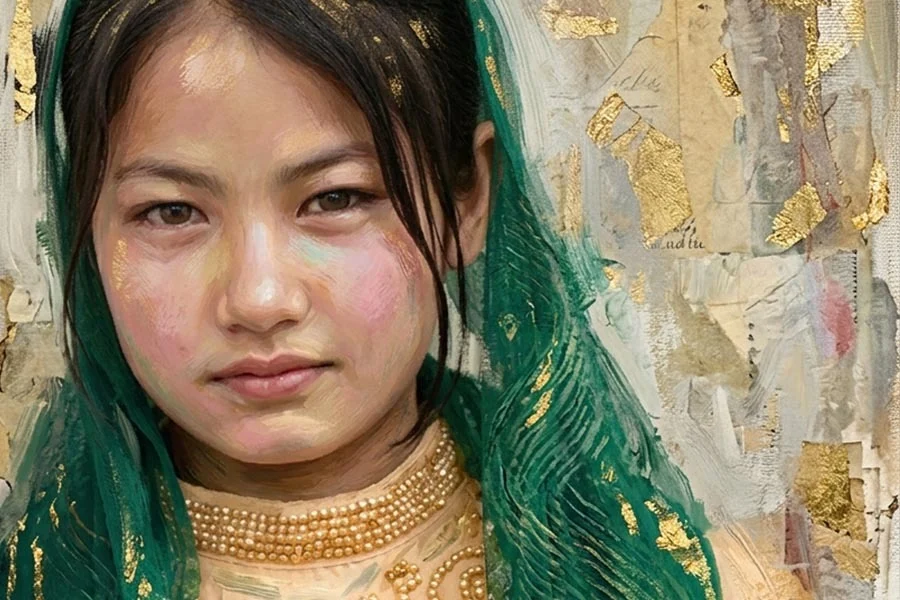
Although at least 11 years have passed since the hostage-taking of seven Hazara passengers in Ghazni and their subsequent horrific beheading in Zabul, the file on this tragic story has still not been closed.
On October 13, 2015, seven residents of Dehmarda Gulzar village in Jaghori district, including two women, a 9-year-old child and four men, were abducted by unidentified armed men in the Dalan area of Gilan district, Ghazni province, while traveling toward Pakistan. At the time, the incident was attributed to the Islamic State group (ISIS).
Three months before the abduction of these seven passengers, three other residents of the same village, including two women and a man who were traveling from Jaghori’s Angori Bazaar to their homes in Dehmarda Gulzar, disappeared in the Rasna area of Gilan district.
At that time, a large part of Gilan district in Ghazni province, including the Rasna area, was under Taliban control. People approached the Taliban to search for the missing individuals, but the Taliban told them at the time that a large number of ISIS families were present in the area and that these people might have been abducted by that group.
After efforts by the people and the government to find the abducted individuals produced no result, popular forces who had gathered from various areas in Dehmarda Gulzar village raided the home of a man named Shirdil in Dara village, in the Pashtun-populated Kakat area of Khak-e Afghan district, Zabul province, at night and took 16 members of his family hostage. During the raid on Shirdil’s home, a clash broke out between him and the attackers, in which Shirdil was killed.
Many people at the time believed that Shirdil’s sons were linked to ISIS and that, in cooperation with the group, they had first taken three residents of this village hostage and then seven others, including Shukria Tabassum.
After 16 residents of the Pashtun-populated Kakat area of Khak-e Afghan district, Zabul province, were taken hostage, the situation brought the two sides to the brink of a full-scale military conflict. However, through the efforts of the people, local influential figures, and the mediation of the former government, fighting between the two sides was averted, and the 16 hostages from the Pashtun-populated Kakat area were released. In return, however, none of the hostages from Dehmarda Gulzar village were released.
A few weeks after the release of the 16 hostages from the Kakat area of Khak-e Afghan district, Zabul province, three residents of Dehmarda Gulzar village who had been taken hostage the first time were released.
A few days after the release of the three residents of Dehmarda Gulzar, seven other residents of this village, including Shukria Tabassum, a 9-year-old child, who had been taken hostage in October 2015, were beheaded horrifyingly in Arghandab district, Zabul province, on November 8 of the same year. It was a tragic incident that shook Afghanistan and the world.
The people transferred the bodies of the seven beheaded passengers first to Ghazni and then to Kabul, the capital, in pursuit of justice. This spontaneous popular movement, which later became known as the “Tabassum Movement,” grew into the largest civil movement for justice in the history of Afghanistan, reaching the gates of the Presidential Palace.
Despite widespread and historic public protests in response to the beheading of Shukria Tabassum and her companions, the former government of Afghanistan took no particular action against the perpetrators of the attack. Now the Taliban’s Islamic Emirate, under whose rule ISIS carried out such an inhumane and shocking crime in the area at the time, is not only unaccountable in this matter but has once again rubbed salt into this bloody wound.
It should be recalled, however, that in early 2015, in February of that year, masked armed men pulled 31 Hazara passengers who had just returned from Iran off two passenger buses on the Kabul-Kandahar highway in Shahjoy district, Zabul province, and took them away. Of these 31 passengers, seven died due to illness and torture by their captors, and the rest were released in two batches after months in captivity.
At least 11 years since the beheading of Shukria Tabassum and her companions, this bloody case has now taken on a different story for the people of Dehmarda Gulzar village.
Now the heart of the matter is the story of the killing of Shirdil, one of the Pashtuns of the Kakat area of Khak-e Afghan district, Zabul province, not the brutal and merciless killing of Tabassum and her companions.
Since the Taliban’s return to power in Afghanistan in August 2021, Shirdil’s family and sons have approached Taliban courts several times to seek justice for their father’s blood. During these five years, alongside the official and continuous pursuit of this case by Shirdil’s family, the residents of Dehmarda Gulzar village, who live next to the Pashtuns of Gilan district in Ghazni and the Kakat area of Khak-e Afghan district in Zabul, have been harassed repeatedly and in various ways by their Pashtun neighbors because of this issue.
In recent years, even during the former government’s time, one resident of this village was mysteriously killed in the border strip area with the Pashtuns in the mountains.
In another case, last year the private car of one of the residents of this village was set on fire at night. People point the finger of blame at their dissatisfied neighbors, who create a new problem for them from time to time.
Recently, however, Shirdil’s family and sons have intensified pressure on the residents of Dehmarda village through the Taliban to force people to pay blood money for their father.
Although local sources say that the Taliban’s primary court in Khak-e Afghan district, Zabul province, had acquitted the residents of Dehmarda of this case, Shirdil’s sons had not accepted this ruling.
Finally, through the efforts of religious scholars and tribal elders from both sides and the mediation of the Taliban’s Ministry of Borders and Tribal Affairs, the residents of Dehmarda Gulzar village were forced to pay 900,000 Afghanis as blood money for the killing of Shirdil. The text of the agreement, prepared to end this dispute, refers to Shirdil as a martyr. The agreement states that representatives of the Dehmarda residents should go to his home with 900,000 Afghanis and one sheep to offer condolences to Shirdil’s family and hand over the compensation to his family. Last Friday, representatives of the people of Dehmarda Gulzar village went to Shirdil’s family in Dari village in the Kakat area of Khak-e Afghan district, Zabul province, with the agreed sum and one sheep to offer condolences, and brought the dispute to an end.
However, regarding the Tabassum case, the Taliban told members of this delegation that the group had clashed with ISIS members to free three passengers and that Shukria Tabassum and her companions had also been beheaded by ISIS.
Since the Taliban’s return to power, legal disputes between Hazaras and Pashtuns in some central areas, as well as disputes between Kuchis and Hazaras in various provinces, including Ghazni, Bamyan, Maidan Wardak and Ghor, have increased sharply.
Over the past five years, the Taliban have settled many of these legal disputes in favor of Pashtuns and Kuchis.
In another case of such blood-feud disputes, three years ago the Taliban’s Commission for Resolving Disputes between Kuchis and Settled Residents ruled that the Hazaras of Jalrez district, Maidan Wardak province, must pay 1.75 million Afghanis in compensation because several heads of Kuchi livestock had disappeared in this area during the former government’s time. It was a large sum that the Hazaras of Jalrez were forced to pay.
Last year, a Taliban court settled another legal dispute between Kuchis and Hazaras in Bamyan in favor of the Kuchis and forced the residents of Rashak village in Panjab district, Bamyan province, numbering 25 families, into forced displacement.
In another similar case, last year in the Keshrow valley in Daulatyar district, Ghor province, the Taliban forced hundreds of families into displacement.
Two years ago, in another legal dispute between Hazaras and Kuchis in the impoverished village of Kandir in Gizab district, Uruzgan province, the native people were forced by a Taliban court ruling to pay 30 million Afghanis to return to their ancestral lands.
Meanwhile, local sources in Nawur district, Ghazni province, say that over the past five years, dozens of such cases have been brought by Kuchis against the native people in this district and have been settled in favor of the Kuchis by Taliban courts.
In the first year of the Taliban’s return to power, the Kuchis received 11.5 million Kaldar in blood money from the people because one of their members had been killed 22 years earlier in a clash with government forces in this district.
In another case, three years ago, the Kuchis claimed that 25 years earlier, 200 heads of their livestock had disappeared while passing through the “Miana Dang” area in Nawur. The Taliban subsequently ruled that the villages of Wagh, Sabznala and Joshan in this district must pay 5.5 million Afghanis in compensation to the Kuchis.
Three years ago, the Taliban handed over dozens of jeribs of agricultural land and pastureland belonging to residents of the villages of Wagh, Sardarya and Barki in this district to the Kuchis and forced the native residents of these areas into displacement.
Meanwhile, last year, a resident of Jarghi and Barjegi in Nawur district was killed by Kuchis because he objected to the presence of Taliban livestock on his farmland.
With the Taliban’s return to power in Afghanistan, non-Pashtuns in general, and Hazaras in particular, have faced widespread pressure and restrictions over the past five years. Land grabbing, forced displacement, extortion,n and harassment of people by the Kuchis, along with Taliban support for them, are among the issues that have repeatedly made headlines in Afghanistan during this period.
Although the Taliban describe the establishment of an Islamic system in Afghanistan as one of the major achievements of their 20-year war against the United States and the West, people say that the group’s five-year record shows that in most legal and criminal cases the Taliban have so far engaged in discriminatory, ethnic and sectarian treatment, and that there is no sign of Islamic justice. With each passing day, this issue has deepened the wall of mistrust and the distance between the people and the Taliban and made life darker and more bitter for the people.
You can read the Persian version of this article here:
پرونده خونین شکریه تبسم؛ طالبان پس از ۱۱ سال بر این زخم نمک پاشیدند