The Taliban have recently demolished Ariana Cinema, one of Kabul’s most famous and historic cultural landmarks, only months after destroying Behzad Cinema in Khair Khana. For decades, Ariana Cinema welcomed lovers of film and art and served as a shared space for imagination and memory. The Taliban have announced that they plan to build a commercial center in its place. This decision has sparked strong reactions from film lovers, including filmmaker Atiq Rahimi and a French architect who helped redesign the cinema. For many residents of the capital, Ariana Cinema stood as one of Kabul’s most cherished cultural venues, a place where audiences watched celebrated films from around the world.
Last week, the Taliban carried out the demolition of Ariana Cinema, ending the life of a venue that had hosted generations of film and art enthusiasts. The group said it would replace the cinema with a commercial complex. Images from the site show a banner announcing plans to build what is described as a standard and modern market.
Earlier, on March 22, 2023, the group confirmed that it had completely demolished the old Behzad Cinema in Khair Khana to make way for a commercial market, a mosque, and residential buildings. Behzad Cinema had also ranked among the capital’s oldest and most recognized cinema halls.
Citizens, writers, filmmakers, and art lovers inside and outside Afghanistan have voiced their opposition to the Taliban’s actions. Among them, the French architect who took part in the cinema’s redesign and reopening described its destruction as deeply personal, calling it the loss of his own heart.
Jean-Marc Lalo, the French architect who worked on the redesign of Ariana Cinema in 2004, responded with visible pain to its destruction. He described the cinema as a symbol of hope and openness and said, “It is as if a bulldozer has destroyed my heart.”
In 2004, Jean-Marc Lalo and Frédéric Namour led the redesign of the cinema. An association called A Cinema for Kabul raised the funds needed to reopen it. The organization was chaired by Claude Lelouch, the French director who won the Palme d’Or at the Cannes Film Festival for the film A Man and a Woman.
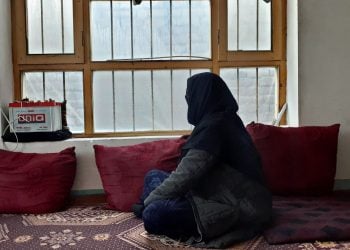
On May 23, 2004, Renaud Donnedieu de Vabres, then France’s Minister of Culture, traveled to Kabul alongside several filmmakers to inaugurate the new 600-seat hall, furnished with red chairs and locally made carpets.
Atiq Rahimi, the winner of the Goncourt Literary Prize, told Agence France-Presse that Ariana Cinema was not a ruin meant for demolition but a living memory that deserved renewal. The director of The Patience Stone said, “Destroying a cinema is not building the future.”
Rahimi, whose first film screened at Ariana Cinema in 2004, recalled that the building had already suffered destruction during the civil wars. He said this loss felt worse because it came under the name of modernity, a modernity he described as empty, without images, and without the shared silence people once experienced together in the dark.
Poet and writer Partow Naderi also reflected on the destruction of Ariana Cinema. He wrote that in 1347 of the Solar Hijri calendar, shortly after arriving in Kabul as a student at the Kabul Teachers Training Institute, he watched his first artistic film there. The film, titled Sharab, featured performances by Katayoun, Habibullah Bolour, Behrouz, and Vosoughi.
Naderi recalled the black curtain rising slowly as dreamy music filled the hall. Each visit to Ariana, he wrote, brought back that music and stirred a powerful sense of nostalgia. He said he would always miss both the music and Ariana Cinema and wished he could watch A Woman Named Sharab one more time.
Over the past more than four years, the Taliban have banned the operation of cinemas across the country while imposing a wide range of other restrictions. Many cinematic works now stand on the edge of complete disappearance. Early on, the group banned the display of women’s faces, their appearance in television series, and the broadcasting of their voices in many programs. They also erased images from signboards, advertisements, and city billboards in the name of enforcing Sharia, destroyed statues at the university’s Faculty of Fine Arts, and shut down parts of the faculty itself. On May 13, 2025, the Taliban officially announced the dissolution of the Afghan Film administration, the country’s only state-run cinema institution.
The Taliban also closed Afghan Film, which had served as the sole official body responsible for film production, support, and archiving in Afghanistan. Afghan cinema, which once told stories of love, friendship, and everyday life, has now reached a dead end. Ideological productions that praise bombers and suicide attacks have replaced earlier narratives, while strict censorship has pushed these works out of public reach.
Earlier, during the former government, authorities demolished another cinema in Kabul known as Cinema Park on the order of then First Vice President Amrullah Saleh. Officials planned to replace it with a shopping center, but its fate remains unclear.
Built in the 1960s, Ariana Cinema suffered looting and destruction during the civil wars between 1992 and 1996. With support from a French-led reconstruction project, it reopened in 2004, once again becoming a space for shared stories, light, and silence before its final demolition.
You can read the Persian version of this report here:
خاموشی پردهها؛ وقتی ایدئولوژی طالبان خون هنر را بر زمین میریزد