• 8AM.MEDIA
  • ویب‌سایت فارسی
  • پښتو ویب‌پاڼه
  • اۉزبېکچه ویب‌سایت
  • Podcast
Monday, October 5, 2026
Hasht-e Subh
  • Home
  • News
    • Afghanistan News
    • World News
  • Opinion
    • Editorial
    • Analysis
  • Reports
    • Daily Reports
    • Investigative Reports
  • Society
    • The story of people
  • Women’s Word
  • Columns
    • Three Years After Afghanistan’s Fall: The Taliban’s Resurgence
    • Towards Equality
    • The Resurgence of the Taliban: Two Years Since Afghanistan’s Fall
    • Hebatullah Report Special Edition
    • Resistance for Education Special Edition
    • Special Column on Taliban’s Education Curriculum
    • Nawroz
  • Interviews
  • Contact Us
    • About Us
    • 8AM MEDIA Annual Awards
    • Submit an Article to Hasht-e-Subh
  • 8am.mediaBack
Subscribe
No Result
View All Result
  • Home
  • News
    • Afghanistan News
    • World News
  • Opinion
    • Editorial
    • Analysis
  • Reports
    • Daily Reports
    • Investigative Reports
  • Society
    • The story of people
  • Women’s Word
  • Columns
    • Three Years After Afghanistan’s Fall: The Taliban’s Resurgence
    • Towards Equality
    • The Resurgence of the Taliban: Two Years Since Afghanistan’s Fall
    • Hebatullah Report Special Edition
    • Resistance for Education Special Edition
    • Special Column on Taliban’s Education Curriculum
    • Nawroz
  • Interviews
  • Contact Us
    • About Us
    • 8AM MEDIA Annual Awards
    • Submit an Article to Hasht-e-Subh
  • 8am.mediaBack
No Result
View All Result
Hasht-e Subh
No Result
View All Result

Suppression of Freedom of Expression and Journalists’ Self-Censorship: Only Taliban’s Preferred Information is Covered

Amin Kawa Amin Kawa
20 October 2024 - Solar Hijri Date: 1403/07/29 [t_time:1729447768]
A Taliban militant stands guard in front of the Afghanistan Independent Journalists Association (AIJA) banner. (Photo Credit: Wakil KOHSAR / AFP)

Wakil KOHSAR / AFP

Access to information is a fundamental human right, allowing citizens to participate in decision-making and social activities. However, under Taliban rule, access to information in Afghanistan has been severely restricted by the group’s repressive policies. The media landscape in the country has never been more constrained, and journalists report that the Taliban’s restrictions and pressure on media outlets have significantly diminished access to information. Censorship and self-censorship—driven by security threats, media shutdowns, and Taliban surveillance of online activities—have further reduced access to information, often making it impossible.

One of the challenges journalists face is the Taliban’s refusal to engage with female journalists. Censorship of international reports and the reactions of global organizations to the Taliban, coupled with the expectation that female journalists should be “grateful” for employment, exacerbate the difficulties. Many journalists inside Afghanistan say that only information aligned with the Taliban’s narrative can be published, leaving no room for free reporting or access to unbiased information.

Since the Taliban took control of Afghanistan, media outlets have faced increasing pressure, forcing them into severe self-censorship. Many journalists avoid covering sensitive topics like security or politics due to fears of arrest or violence, choosing instead to follow the Taliban’s guidelines. Recently, the Taliban even banned photographing and filming living beings, further complicating the work of journalists.

Over the past three years, the Taliban have shut down several media outlets, including Hasht-e Subh Daily, and have blocked their websites. By censoring content and monitoring social media, the Taliban have deprived the public of freely accessing information. Meanwhile, some journalists, who wish to remain anonymous, urge media support organizations abroad to collaborate with international freedom-of-expression groups to put more pressure on the Taliban. They argue that merely issuing statements condemning Afghanistan’s media crisis is insufficient, as these organizations’ responsibilities go beyond just reacting to the deteriorating media environment.

Journalists also claim that some organizations, that claim to support Afghan journalists, are ineffective due to Taliban influence, offering only “symbolic and selective” assistance. They stress that these organizations must not stay silent and must act to prevent Afghanistan from becoming a nation without a voice or image.

Adrina Behnaz (pseudonym), a female journalist, describes the numerous challenges female reporters face, including widespread media restrictions and lack of access to information. She explains that when female journalists contact Taliban spokespersons, many do not respond, and some even block their numbers. “There is no freedom of expression,” Behnaz says. “International reports and organizations’ responses to the Taliban are censored.”

She adds that female journalists are forced to work for meager wages, as some media outlets believe women should be “grateful” just to have a job. “Women in media are compelled to accept extremely low pay because they feel indebted to the media for hiring them,” she explains.

Fahim (pseudonym), a journalist based in Herat, reports that media operations in the province are subject to severe censorship. Journalists have to wait hours to get stories approved, and they are barred from covering security or criminal events without Taliban permission. He says, “Our access to information is extremely limited. We wait for hours to get stories approved, and sometimes, no one even responds. We’re not allowed to cover security events unless we get clearance, which is rarely granted. Even when criminal incidents are approved, we still need Taliban authorization to report them. The same goes for traffic incidents.”

Mahan (pseudonym), another journalist, continues to report under an alias to avoid being tracked by the Taliban. Despite the group’s restrictions, female journalists strive to provide accurate information. However, building reliable sources is challenging, as there is no practical accountability. “Many female journalists engage in self-censorship just to access sources and information,” he says.

He also notes, “Using an alias makes it harder to build trust, which weakens the impact of our reports. This has had devastating effects on the work of female journalists.”

A journalist in Ghazni Province says that the Taliban view the media as a tool to serve their regime, treating any reporting outside of their narrative as anti-Taliban propaganda. Journalists face both open and covert threats from the Taliban, leading many to resort to self-censorship. “The information we need is not available,” he explains.

He also claims that organizations claiming to support Afghan journalists have essentially become Taliban lobbyists, more focused on securing projects and funding than providing real support. “A clear example of this is the recent arrest of two journalists in Ghazni by Taliban intelligence forces. Media support organizations in the country haven’t even issued a statement condemning this or demanded an explanation,” he adds.

Recently, the Taliban in Khost province prevented coverage of a visit by Neda Mohammad Nadeem, the group’s acting Minister of Higher Education, to Sheikh Zayed University, allowing journalists to only prepare text-based reports. Earlier, in Takhar province, the Taliban issued a complete ban on photography and visual reporting. Local officials announced that visual media outlets should transition to radio. The Taliban’s Directorate for the Propagation of Virtue and Prevention of Vice in Takhar also banned video interviews with Taliban officials, requiring government employees to present reports in written or audio formats.

The Taliban’s refusal to engage with female journalists, censorship of international reports, and reactions from global organizations, along with the expectation that female journalists should feel “grateful” for their jobs, remain among the most significant challenges for Afghan journalists.

You can read the Persian version of this daily report here:

سرکوب آزادی بیان و خودسانسوری خبرنگاران؛ تنها اطلاعات مورد نظر طالبان پوشش می‌یابد | روزنامه ۸صبح 

ShareTweetSendSendShare

Related Posts

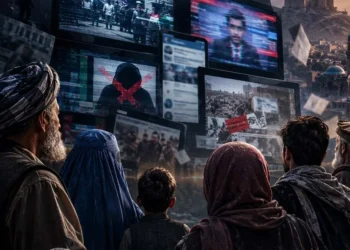
A crowd of men, women, and a child watch screens showing news broadcasts, social media feeds, and a crossed-out hooded figure amid concerns over fake news and media freedom. (Photo credit: AI)
Articles

A Society Without Media Is Left Defenseless Against Power and Fake News

1 October 2026 [t_time:1790858060]
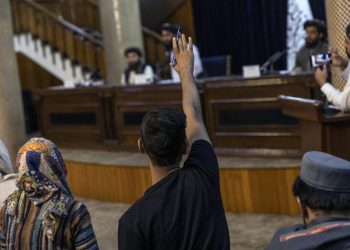
A journalist raises their hand to ask a question during a press conference with Taliban officials in Kabul, Afghanistan. (Photo Credit: Victor J. Blue/The New York Times)
Daily Reports

Access to Information Under Siege: Taliban Turn Media Into Propaganda Mouthpiece

1 October 2026 [t_time:1790857959]
The logo of the Afghanistan Media Support Organization, which has called for the release of detained AVA staff. (Photo credit: AJSO)
Afghanistan News

Afghanistan Media Support Organization Calls for Release of AVA Staff

30 September 2026 [t_time:1790768191]

Latest

Loading latest news...

Popular stories

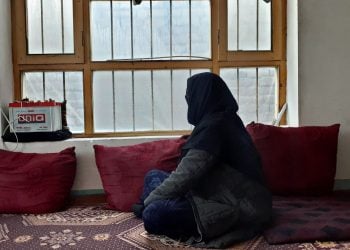
  • An Afghan woman gazes out of her home, reflecting the isolation and challenges faced by women in Afghanistan under Taliban rule. (Photo Credit: 8am.media)

    UN Report Reveals Shifts in Family Attitudes and Rise in Domestic Violence in Afghanistan

    Share
    Share Tweet
  • Taliban Shoot Young Man from Herat After Torturing Him with Hands Tied

    Share
    Share Tweet
  • Al-Qaeda Releases Hamza bin Laden Message on 9/11 Anniversary

    Share
    Share Tweet
  • Afghanistan Journalists Center: Taliban Have Detained Around 300 Journalists and Media Workers

    Share
    Share Tweet
  • The Silencing of Afghanistan

    Share
    Share Tweet

Podcast

Insights
Insights

Join Lynne O’Donnell for 8AM’s podcast series, Insights.
Lynne talks with generals, diplomats, soldiers, journalists, politicians, activists, people who have front row seats for conflicts around the world, and citizens with a story to tell, happy or sad. For this first series, Afghanistan is the focus. Lynne and her guests talk about the collapse of the republic in August, 2021, and the impact since — for the people of Afghanistan, for the security of the region, for the safety of the world. It’s important, interesting and insightful.

Insights/22: Controlling the Narrative with Mina Sharif
byinsights8am

Controlling the Narrative

Lynne O’Donnell talks with Mina Sharif, author, activist, women’s rights campaigner, educator and mentor. They discuss who controls the narrative and who speaks for Afghanistan’s people when the Taliban appear to have seized control not only of the country but of the message, too.

Have a listen

Insights/22: Controlling the Narrative with Mina Sharif
Episode play icon
Insights/22: Controlling the Narrative with Mina Sharif
Episode Description
Episode play icon
Insights/21: Media Meltdown with Zahra Joya
Episode Description
Episode play icon
Insights/20: Terror Inc with Scott Richards
Episode Description
Episode play icon
Insights/19: Busting Stereotypes with Bushra Gohar
Episode Description
Episode play icon
Insights/18: Media Matters with Waliullah Rahmani
Episode Description
Episode play icon
Insights/17: What Goes Around Comes Around with Sima Samar
Episode Description
Search Results placeholder
Hasht-e Subh

8AM Media, also known as Hasht-e-Subh Daily, stands as Afghanistan's premier independent and non-profit newspaper, resonating as a beacon of journalistic integrity since its establishment in June 2007 by esteemed Afghan journalists and human rights advocates. With a steadfast commitment to citizen journalism and civic education, Hasht-e-Subh Daily has earned its place as the most esteemed publication in the nation.

Publisher: Sanjar Sohail
Email: [email protected]
Executive Director: Parwiz Kawa
Email: [email protected]

Read More

Eighth Moscow Format Meeting Begins; Lavrov: We Do Not Accept NATO Presence in Afghanistan and the Region

Saudi Arabia Cuts Oil Prices for Asian Buyers

Mohammad Sadiq: Discussed Afghanistan’s Situation with Tajik Official

Uzbek Media: Nearly 600 Kilograms of Drugs Smuggled from Afghanistan Seized in Surkhandarya

Indian Police Accused of Sexually Harassing Journalists During Protests

Editor’s Choice

Every Saturday morning, 8AM MEDIA English Services Department will guide you through the week’s biggest stories from Afghanistan and the international community.

Subscribe

© 2026 - ©Hasht-e Subh Daily

No Result
View All Result
8am.Media
پښتو ویب‌پاڼه
ویب‌سایت فارسی
اۉزبېکچه ویب‌سایت
  • Home
  • News
    • Afghanistan News
    • World News
  • Opinion
    • Editorial
    • Analysis
  • Reports
    • Daily Reports
    • Investigative Reports
  • Society
    • The story of people
  • Women’s Word
  • Columns
    • Three Years After Afghanistan’s Fall: The Taliban’s Resurgence
    • Towards Equality
    • The Resurgence of the Taliban: Two Years Since Afghanistan’s Fall
    • Hebatullah Report Special Edition
    • Resistance for Education Special Edition
    • Special Column on Taliban’s Education Curriculum
    • Nawroz
  • Interviews
  • Contact Us
    • About Us
    • 8AM MEDIA Annual Awards
    • Submit an Article to Hasht-e-Subh
  • 8am.media

© 2026 - ©Hasht-e Subh Daily