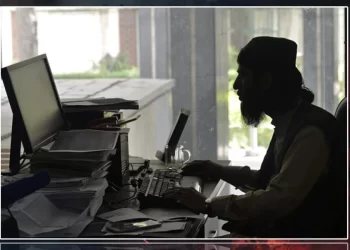

Several citizens of Afghanistan have complained about the problems and challenges involved in obtaining business licenses. They say the process is not only time-consuming but also burdened with additional costs. According to them, the presence of unqualified individuals in some Taliban-controlled offices causes delays and errors in document processing, and it is ultimately the citizens who are forced to pay extra and redo the work.
Citizens also note that in some cases, deeds and documents from the Republic era are rejected by Taliban officials as guarantees, further complicating the process. Several economic experts, meanwhile, believe these challenges can be addressed through administrative reform. Simplifying procedures and introducing online systems, they say, would improve the licensing process and spare citizens unnecessary time and expense.
Ahmad (pseudonym) says that bureaucratic red tape and sluggish document processing in Taliban-controlled offices have left people deeply frustrated. Valid documents from the Republic era, he explains, are not recognized by Taliban offices, while the process of obtaining replacements has become so complicated that it is virtually impossible for many people.
“For example, all powers of attorney issued during the Republic era are no longer valid in Taliban offices, and re-obtaining them comes with several hurdles,” he says. “First, most people living abroad cannot return to the country and must instead visit an Afghanistan consulate in their country of residence to have a power of attorney issued, while no country except Russia recognizes the Taliban. Second, witnesses based abroad would have to travel to Afghanistan and testify in a domestic court, which is impossible. Third, no one would risk entering the country just to appoint a lawyer in a local court.”
Ahmad adds: “Obtaining licenses for companies, pharmacies, real estate agencies, clinics, high-rise buildings, and other businesses people need to start comes with enormous obstacles. At every step of the licensing process, bribery and nepotism are rampant. Between the bribes and the crushing fees, people have lost the will to start businesses. Even after obtaining a license, taxes are prohibitively high. Despite low revenues, the costs are staggering, and in some cases, a single license can cost tens of thousands of dollars.”
Nawid (pseudonym) says Taliban offices have made the business licensing process an ordeal of problems and complications. When applying for an information guidance license, he introduced a guarantor who held a customary deed, but the Taliban refused to accept the deed because it had been issued during the Republic era. They demanded he re-register and “renew” it, a requirement he believes exists solely to extract more fees.
“In the end, I was forced to put up a house worth approximately 4.8 million Afghanis as collateral,” he says. “On top of that, I paid 50,000 Afghanis to the Taliban’s Ministry of Finance just to have my application approved.”
Nawid says the process at the Directorate of Land Affairs alone took nearly a month. A new excuse surfaced every day: the engineer was absent, the mullah was unavailable, or the document registry had gone missing. When his file finally cleared the Taliban’s Ministry of Justice, he discovered that his father’s name had been entered in the documents instead of his own.
“That single mistake meant the entire process had to start from scratch and took another two months,” he says. “Even though the error was made by Taliban administration staff, they still charged me for it. I even had to cover the engineers’ transportation costs and their lunches. I paid 20,000 Afghanis in one department and 13,000 Afghanis in another. All told, obtaining a single business license takes about three months and comes with enormous costs and difficulties.”
Fawad (pseudonym), another citizen, says he wants to open a restaurant but has found the administrative process under Taliban rule to be riddled with obstacles. For days, he has been shuttling between offices, arriving in the morning and waiting until evening, only to leave with nothing accomplished.
“One of the main problems is the presence of unqualified staff in Taliban offices,” he says. “They slow everything down and make errors in the documents, forcing applicants to spend more time and money starting over.”
Fawad adds: “At every step of the process, money is demanded. This is not limited to business licenses. The same pattern exists in transport, municipalities, national identity cards, and passports. It is as though the Taliban came to plunder. People are exhausted by the endless extra payments.”
Shakir Yaqubi, an economic affairs expert, says that a well-functioning business licensing system could have a positive impact on Afghanistan’s economic growth. When individuals and companies operate legally, he explains, investor confidence rises, tax collection improves, and new jobs are created, all of which strengthen the labor market.
“Those who hold business licenses can expand their operations and hire more people, which plays a significant role in reducing unemployment,” Yaqubi says. “Workers and professionals with official licenses can also make a meaningful contribution to strengthening the private sector.”
He argues that the existing challenges in the licensing process can be resolved by simplifying administrative procedures, cutting bureaucracy, clarifying regulations, and adopting online systems.
“If the licensing process is made simple and transparent, people will be less discouraged and more willing to engage in legal business activity,” he says. “The number of registered businesses will grow, investment will increase, and new job opportunities will emerge. The future of Afghanistan’s labor market depends on investment, economic stability, and support for the private sector. If the conditions for trade, education, and legal activity are put in place, the labor market will gradually recover. Without the creation of real opportunities, however, unemployment will remain one of the country’s defining challenges.”
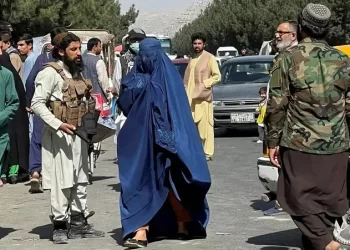
This comes as the Taliban, since returning to power in Afghanistan, have imposed sweeping restrictions and harsh laws that have made daily life significantly more difficult for the country’s citizens.
Some time ago, sources told the Hasht-e Subh Daily that Taliban officials at the hospital in Bamyan Province were charging business license applicants 3,000 Afghanis for a blood test, even though the same service is provided free of charge at the hospital itself.
Sources said the official cost of a work license at the hospital is between 500 and 700 Afghanis, but that higher amounts are routinely collected from applicants in practice.
They added that the situation has placed growing economic pressure on low-income workers.
You can read the Persian version of this report here:
بروکراسی و رشوهستانی طالبان؛ شهروندان از پیچیدهگی روند و هزینههای بلند اداری شکایت دارند