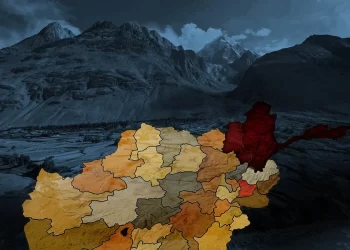
Tribal elders from the provinces of Nuristan and Kunar have signed a peace agreement with their counterparts across the border in Chitral and Bajaur, a development that has drawn a response from former president Hamid Karzai. In a public statement, Karzai alleged that Islamabad is pressuring border communities in Nuristan and Kunar to bring their grievances to Pakistani authorities rather than their own government. He further claimed that Pakistan is using such moves to push for de facto recognition of the Durand Line, which he described as an “imaginary” boundary that undermines Afghanistan’s national sovereignty. Karzai stopped short of a direct accusation, but implicitly called on the Taliban to clarify their stance. Pakistan’s Foreign Ministry, for its part, welcomed the agreement, calling it a reflection of border residents’ genuine desire for peace. The Taliban, who claim absolute control over Afghan territory, have said nothing, neither endorsing nor rejecting what took place.
The crisis began when Pakistani soldiers blocked the roads connecting the districts of Kamdesh and Barg-e-Matal in Nuristan, severing food supply lines and pushing up market prices. Unable, or unwilling, to reopen the routes themselves, the Taliban stood aside as tribal elders from both districts turned directly to their counterparts in Chitral. Through traditional negotiation, they succeeded where the Taliban had failed, convincing Pakistani forces to withdraw and reopen the roads. For a group that publicly positions itself as both an adversary of Pakistan and a defender of territorial integrity, the episode was deeply revealing. Had the Taliban been capable of resolving the crisis through military or diplomatic means, they would have acted. Their silence and inaction make clear they were not. Without that capacity, any response risking exposure of their limitations would have done more damage than good.
Why Have the Taliban Remained Silent?
The Taliban’s silence cuts two ways. First, it reflects their inability to manage the border situation. A response that fails to deter or resolve achieves nothing, except drawing more attention to the problem and inviting questions about their actual grip on the country’s remote regions. Staying quiet on uncomfortable incidents has become a pattern for the Taliban. When former military personnel are killed, the group neither claims responsibility nor comments. The same silence applies to back-channel dealings with foreign actors and other sensitive events. Each episode generates online discussion for a few days, then fades. Yet on matters of this scale, the Taliban owe the public an explanation and bear a responsibility to be accountable.
Their silence on the Kunar and Nuristan elders’ initiative also reflects the group’s deep ethnic and regional biases. The Taliban, as a movement defined by rigid ideological and ethnic solidarity, tends to apply a lighter hand to tribal leaders from the southern and eastern provinces, even if those communities are not fully satisfied either and share many of the same frustrations as people elsewhere in the country. Had elders from the northern or northeastern provinces done exactly what the Kunar and Nuristan leaders did, the response would almost certainly have been swift and brutal. In those regions, residents are already being arrested and forcibly disappeared on charges of poppy farming or illegal mining. Properties are seized on spurious grounds and transferred to foreign fighters. Making matters worse, identity documents are being issued to individuals of dubious background, in what appears to be a deliberate effort to shift the demographic balance and entrench ethnic control.
There is, however, an alternative reading. It is possible that the Kunar and Nuristan elders entered negotiations with the Chitral and Bajaur leaders with the Taliban’s tacit approval. Having exhausted both military options and bilateral diplomacy with Pakistan, the Taliban may have quietly encouraged tribal elders to pursue a solution through traditional channels. This interpretation matters precisely because of the Taliban’s well-documented rigidity. A regime this authoritarian would be unlikely to permit tribal leaders to independently negotiate with a foreign country without prior consent. The fact that it may have done so speaks volumes about the limits of its authority.
You can read the Persian version of this analysis here:
توافق صلح میان بزرگان دو سوی خط دیورند؛ آیا طالبان بر قلمرو افغانستان تسلط کامل دارند؟