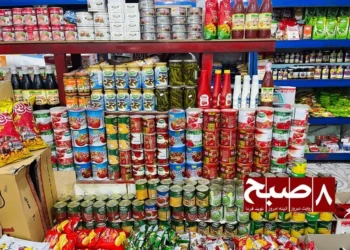

As the Taliban claim economic growth in Afghanistan, several Kabul residents say these claims are incompatible with the realities of people’s daily lives. According to them, the Taliban have dealt a severe blow to the country’s economy by imposing restrictions on women and excluding them from social activities, government institutions, and private and international organizations. They say that while Taliban officials speak from podiums about remarkable economic growth, many families cannot afford three meals a day and can only provide a single meal for their household members. Street vendors also stress that before the Taliban speak of economic growth, they would do better to ask people whether they can even provide one meal of bread for their families.
Amin (pseudonym), a Kabul resident, says that although the Taliban constantly speak of executing economic projects and growth, and this is reflected in the media as well, the reality on the ground in society is entirely different.
This Kabul resident says: “If the economy has truly grown, why are people getting poorer and more desperate every day? There are no jobs or employment opportunities, prices are high, and many young people are resorting to begging to meet their most basic needs. Yes, there may be capital in Afghanistan, perhaps even a great deal of it, but that capital is not circulating and is most likely concentrated in the hands of a few individuals, while the lower strata of society live under the crushing weight of extreme poverty.” According to him, a large portion of the country’s economy depends on the presence and participation of women.
Amin adds: “The Taliban have dealt a severe blow to the country’s economy by imposing restrictions on women and excluding them from social activities, government institutions, and private and international organizations. Therefore, what the Taliban’s official sources announce about economic growth bears no resemblance to the reality of people’s lives and the conditions prevailing in society.”
Haidar (pseudonym), another Kabul resident, also considers the Taliban’s claims about Afghanistan’s economic growth to be at odds with the reality of people’s lives. He says that while Taliban officials speak of improving economic indicators, citizens continue to face serious economic hardships and livelihood difficulties.
This Kabul resident says: “While Taliban speak of the country’s economic growth, people are still grappling with severe livelihood and economic hardships.” According to him, not only has the economic situation of people failed to improve, but with each passing day, more families and businesses are facing financial difficulties and bankruptcy.
Haidar adds: “Employment opportunities are very limited, and there is insufficient space for young people to find work. Even companies and investors lack the necessary facilities to invest. Therefore, contrary to the Taliban’s claims, the country’s economic situation is not only failing to improve but continues to face serious challenges.”
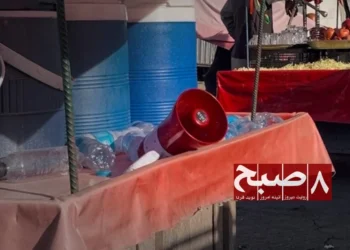
Rohullah (pseudonym), a Kabul street vendor, considers the Taliban’s claim of economic growth in Afghanistan to be far removed from reality. He says that even providing a single meal of bread for his family is accompanied by enormous difficulty.
This street vendor adds, “If the economy has truly grown, then where is this money? Why is our standard of living not improving? Many others who work like me and I have been stuck in the same situation for five years. Where does the money they talk about go? Is it being transferred to their accounts in banks abroad? The Taliban are presenting a false picture of the economic situation to the people and to international institutions. Instead of conditions improving, they have gotten worse every day.” According to him, out of three daily meals, he can only manage to provide one meal for his family.
Rohullah says, “There are eight people in my family. I have three adult daughters who are not allowed to work. I am the sole breadwinner of the household and do not even have the capital to expand my work. I call out to customers all day long, but by the end of the day, I barely earn 100 to 200 Afghanis. I cannot provide proper food for my children. I have been living in this same economic situation for five years, and conditions have not only failed to improve but have gotten worse.”
Jawid (pseudonym), another Kabul resident, says that before the Taliban speak of economic growth from their podiums, they would do better to ask people once whether they can even afford to provide one meal of bread for their families. He says: “From morning to night, nearly 14 hours, I shine people’s shoes, but at the end of the day I can only bring home a few pieces of dry flatbread and a little okra, squash, or eggplant. If we eat something at night, in the morning, I do not know where I will find bread again.”
This Kabul resident adds: “To whom should we complain? Those who speak of economic growth are themselves well-fed, have prosperous homes, and have their children studying abroad. What do they know of our pain and circumstances? When Taliban officials stand behind microphones, they say Afghanistan’s economy has grown to project a good image of themselves to the world. But we are left bewildered as to where this growth is. Perhaps it only exists in their own pockets.”
Meanwhile, Shekab (pseudonym), an economic affairs analyst, says that the relative stability of the Afghani currency and the increase in customs revenues do not amount to economic prosperity. This apparent stability bears no relation to the reality of people’s lives and household tables. The purchasing power of citizens has declined sharply, and the Taliban have only succeeded in the area of revenue collection, but no effective action has been taken to fairly distribute these revenues or improve people’s livelihoods.
This analyst adds: “The official statistics of international institutions and the reality of people’s lives stand in stark contradiction to the Taliban’s figures and claims about economic growth.” According to him, empty tables, difficult living conditions, and rising migration rates all attest to this bitter reality. Unemployment and limited job opportunities are rampant, and at present, the only factor keeping many families from falling into complete destitution is the financial remittances sent by people of Afghanistan living abroad.
Shekab says that economic problems, international isolation, the cut-off of foreign aid, the exclusion of women from the economic cycle, and excessive reliance on the informal economy are among the most significant factors behind Afghanistan’s economic crisis. He says: “The announced economic growth, in the most optimistic scenario, represents only a fragile administrative and financial stability at the macro level, a stability that, due to the lack of employment-generating infrastructure, international isolation, and the exclusion of women from the labor market, has never reached the lower layers of society or people’s household tables. As a result, three out of every four people in Afghanistan remain unable to meet their basic daily needs.”
This comes as the World Bank had warned in its report that, despite Afghanistan’s economy growing by 4.8 percent in 2025, rapid population growth, the return of millions of migrants, rising inflation, and reduced foreign aid have meant that this growth has not translated into improved living standards, and poverty, food insecurity, and economic pressures continue to intensify across the country. The report specifically noted that the return of approximately 3.7 million people has outpaced economic growth, resulting in a 5.6 percent decline in per capita gross domestic product (GDP).
You can read the Persian version of this report here:
ادعای رشد اقتصادی طالبان؛ شهروندان: حتا توان تامین یک وعده غذایی را نداریم