
Sources within the Taliban Ministry of Interior report widespread corruption within the institution. According to these sources, in the procurement and contracting sector, Taliban officials often award contracts to relatives, family members, or individuals who, in return, provide them with a share of the profits. The sources also report multi-million dollar embezzlement cases in the fuel distribution sector. In the Counter-Narcotics Deputy Ministry and related directorates, up to the level of security districts, some Taliban members are cooperating with drug distributors. Meanwhile, several political analysts consider corruption in Taliban-controlled institutions, particularly the Ministry of Interior, a serious and concerning challenge. They say that despite the Taliban’s promises to fight corruption, reports indicate that abuse of authority, extortion, and non-transparent appointments continue.
Credible sources, who do not wish to be named due to security threats, say that the Taliban award most contracts without following legal procedures and competitive bidding, under the label of “security confidentiality.” According to the sources, even the Inspection Directorate and other relevant bodies of the group do not have the authority to review and monitor these contracts.
A credible source says: “In the Ministry of Interior, in the procurement and contracting sector, officials often award contracts to relatives, family members, or individuals who provide them with a share in return. Most contracts are awarded to companies without following bidding procedures, under the label of security confidentiality, under which even the Inspection Directorate and relevant departments do not have the right to inspect and review.”
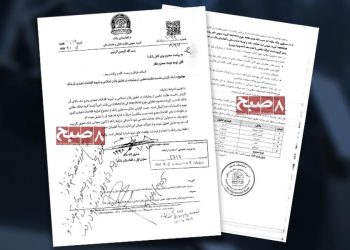
The source also refers to a contract between the company “Red Star” and the Traffic Department, as well as the Communications and Technology Department of the Taliban Ministry of Interior. The contract includes three stages: registration and biometric processing, property transfer, and, in the third stage, issuance of license plates for single-key vehicles, which has been implemented without any bidding process.
The source adds: “This contract is against the public interest. Previously, the company ‘German High Tech’ charged 250 Afghanis for the same services, of which 75 Afghanis was the company’s share, and the rest was deposited into the state account. But now 1,000 Afghanis is charged per vehicle, of which 750 Afghanis goes to the company ‘Red Star’, and the remaining amount is divided into two parts: one part goes to the state account, and the other is spent on installations. As a result, millions of Afghanis have been embezzled through this contract.”
The source further points out that this contract is also in contradiction with the order of Hibatullah Akhundzada, saying: “This contract is also in contradiction with the decree of Hibatullah Akhundzada. He has ordered that ministers are not allowed to sign contracts worth more than 30 million Afghanis, and such contracts must be approved by the leadership.”
Another source says: “In the urban taxi sector, a contract has been signed with the company ‘Statak’ in the same manner. It is said that the quality of vehicle paint is low while the cost is very high, with an average of more than 50,000 Afghanis spent on each vehicle. In the logistics department, in the fuel distribution sector, there has also been multi-million dollar embezzlement, especially in the remote provinces of Afghanistan.”
This source emphasizes that corruption is not limited to contracts, but is also present in judicial and security processes. He says: “In the Criminal Investigation Directorate of the Ministry of Interior, some individuals are released in exchange for money without their cases going through legal procedures. Similar cases also exist in security districts, where individuals are released in exchange for payment.”
The source stresses that in the Counter-Narcotics Deputy Ministry and related directorates, up to the level of security districts, some Taliban officials are cooperating with drug distributors and are involved in their activities.
Meanwhile, Mirwais Ashuftah, a political analyst, considers corruption in Taliban-controlled government institutions, particularly the Ministry of Interior, to be a serious and concerning challenge. He says that despite the Taliban’s promises to fight corruption, reports show that abuse of authority, extortion, and non-transparent appointments continue.
Mr. Ashuftah adds: “Corruption in Afghanistan’s government institutions under Taliban control, especially in the Ministry of Interior, has become a serious challenge. Despite the group’s promises to fight corruption, evidence shows that abuse of authority, extortion, and non-transparent appointments are still ongoing.” According to him, real efforts to fight corruption require transparency, accountability, and the establishment of effective oversight mechanisms.
This comes as several citizens of the country have repeatedly complained about corruption and bribery in several departments under Taliban control since the group’s return to power.
You can read the Persian version of this report here:
فساد سیستماتیک در وزارت داخله طالبان؛ از قراردادهای میلیونی تا حمایت از قاچاقچیان مواد مخدر