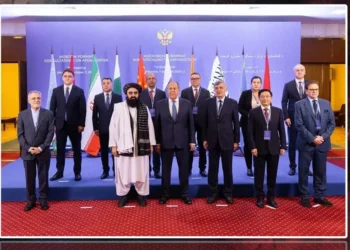
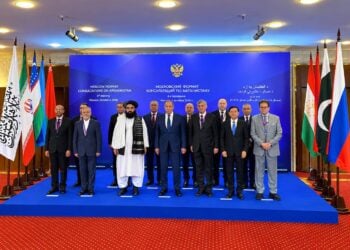
The third round of talks between the Taliban and Pakistan in Istanbul ended without results, and tensions between the two sides have intensified. The Taliban claim that the failure of the negotiations was caused by obstruction from specific circles within Pakistan’s army and intelligence services, as well as Islamabad’s refusal to accept its responsibilities. Some members of the group have even threatened Pakistan with military confrontation. In response, Pakistani officials, including the ministers of defense and information, have stressed the need to ensure national security and to officially record any agreements, warning that the territory of Afghanistan must not be used against Pakistan. Meanwhile, Afghan politicians and some diplomats have described the failure of the negotiations as a sign of the Taliban’s crisis of legitimacy and decision-making regarding the TTP and regional relations, and have warned about potential consequences for the people of Afghanistan.
The third round of negotiations between Taliban and Pakistani representatives, which took place on Thursday and Friday of last week in Istanbul, Turkey, concluded without results. After the failure of these talks, the two sides blamed each other; however, both announced that they would remain committed to the ceasefire.
Zabihullah Mujahid, the Taliban spokesperson, emphasized in his press conference that the group remains committed to the ceasefire. On the other hand, Khawaja Asif, Pakistan’s minister of defense, also stated that the ceasefire with the Taliban will continue as long as no attacks are launched from the territory of Afghanistan.
Taliban’s Reaction to the Failure of Their Negotiations with Pakistan
Zabihullah Mujahid, the spokesperson of the Taliban regime, confirming the failure of the group’s negotiations with Pakistan, wrote on his X page that the Pakistani side had refused to accept its responsibilities and had tried throughout the talks to place all the burdens on the Taliban, despite having no readiness to assume its own obligations.
The Taliban spokesperson also said at a press conference on the third round of Taliban–Pakistan talks in Istanbul that specific circles within Pakistan’s intelligence service and army are creating obstacles. According to him, these circles are attempting to attribute Pakistan’s internal problems, insecurity, and the attacks carried out by Tehrik-e Taliban Pakistan (TTP) on Pakistani soil to the Taliban in Afghanistan.
Noorullah Noori, the Taliban regime’s minister of borders, has threatened Pakistan with direct military confrontation and warned its minister of defense not to boast about Pakistan’s military technology or test the patience of the Taliban. He warned Pakistan and claimed that the country should take lessons from the fate of the United States and Russia in Afghanistan. Addressing Khawaja Asif, Noori said: “Do you believe that old men and young men will come after you?” Noori further added that, unlike the United States and Russia, Pakistan is not far from Afghanistan, and “the two sides are connected in Punjab and Sindh.”
Reactions of Pakistani Officials and Politicians
Khawaja Asif, Pakistan’s minister of defense, has also confirmed that the talks between the two sides in Turkey have reached an impasse. He added: “Our return empty-handed is a sign that even the mediators no longer have hope in the Taliban of Afghanistan.” According to him, the Taliban delegation in the negotiations demanded verbal trust but refused to have the agreements formally recorded in writing. Asif stressed that at the level of international negotiations, all agreements must be official and documented in written form.
The Pakistani minister of defense said, “If no attack is launched from the territory of Afghanistan, the ceasefire will remain in place; but if it is violated, we will respond. Our only request is that the territory of Afghanistan not be used against Pakistan.”
Attaullah Tarar, Pakistan’s minister of information and broadcasting, has said that the country will use “all necessary options” to protect its security and national sovereignty. He emphasized that Islamabad has no enmity with the people of Afghanistan, but it will not support any action by the Taliban that harms the people of Afghanistan or neighboring countries.
Ahmed Sharif Chaudhry, the head of Pakistan’s Inter-Services Public Relations and spokesperson for the country’s army, previously stated that Tehrik-e Taliban Pakistan and Tehrik-e Taliban Afghanistan are the same and are not separate entities. He added that both groups have pledged allegiance to Hibatullah Akhundzada and obey him.
Asif Durrani, Pakistan’s former special representative for Afghanistan, referring to the deadlock in the Istanbul talks, has said that it appears the Taliban have decided to continue confronting Islamabad. According to him, the failure of the Istanbul negotiations means that the Taliban of Afghanistan do not want to address the issue of Tehrik-e Taliban Pakistan (TTP).
Reactions of Some Exiled Afghan Politicians
Noorurrahman Akhlaqi, the former minister of refugees and repatriation of the previous government, reacting to the failure of the negotiations between the two sides, wrote on his X page: “Despite the flexibility and efforts of the Taliban delegation at the negotiating table, as well as Muttaqi’s repeated calls and pleas to Pakistan’s foreign minister, Islamabad still is not convinced that the Taliban, who are deeply trapped in ideological extremism and ethnocentrism, have the will and capability to distance themselves from the TTP or to end support or facilitation for the Baloch armed groups (including the BLA).” According to him, as long as these issues remain ambiguous, Pakistan will not have security confidence on its western border.
Akhlaqi also wrote: “The conflict between the Taliban and Pakistan is no longer superficial; the Durand Line, the TTP, the BLA, and relations with India are deep and unresolved knots in this equation, and the Taliban, who have no legitimacy at the domestic or international level, are not a responsible or competent address for resolving these issues.”
Najibullah Alikhel, the former ambassador of the previous Afghan government to Pakistan, wrote on his X page that the negotiations between Pakistan and the Taliban in Turkey showed that, despite the efforts of the mediators, the talks have reached an impasse and the future developments are completely unpredictable. According to him, those who still consider the confrontations and direct clashes between the two sides merely a “game” or a “show” should reconsider their views.
Dawood Naji, the head of the political committee of the Afghanistan Freedom Front (AFF), wrote: “The failure of the Istanbul negotiations was predictable. The Taliban, because of the Pakistani Taliban, conflict with the Pakistani government; the borders are closed, traders have suffered losses, the prices of basic goods have risen, and now the country is on the brink of a full-scale war with Pakistan. This means sacrificing the people of Afghanistan to protect the TTP.”
Nasir Ahmad Andisha, former ambassador of Afghanistan to Switzerland, has said that the deadlock in the Taliban–Pakistan negotiations indicates a ‘crisis of identity, legitimacy, and historical accountability’. According to him, the Taliban’s silence or ambiguity regarding Tehrik-e Taliban Pakistan “is not merely tactical, but an existential issue for the group.” Andisha wrote on his X page that for the Taliban, Pakistan’s demand that they condemn Tehrik-e Taliban Pakistan is not just a security request, but “a request to deny ideological kinship,” because the TTP has pledged allegiance to the Taliban’s leader in Afghanistan, and this allegiance has created a spiritual and transnational bond between the two groups.
Relocation of TTP Families in Ghazni; Taliban: Tribal Residents Have Been Relocated
Zabihullah Mujahid, the Taliban spokesperson, confirmed yesterday that the families of tribal migrants have been transferred to central regions of Afghanistan and that camps have been built for them. He said at a press conference: “Those tribal migrants who were living near the Durand Line and were afraid of Pakistan, we relocated them from those areas to central regions and built camps for them so that it would be easier and more secure to control them.”
Mujahid’s announcement of the relocation of tribal migrants to central regions comes while the Hasht-e Subh Daily had previously found in an investigative report that the Taliban had constructed four settlements for members of Tehrik-e Taliban Pakistan (TTP) and al-Qaeda in Ghazni Province.
According to this report, the Taliban built a fully equipped base with residential houses in the Malikuddin area of Nawa District for al-Qaeda, and three settlements for Tehrik-e Taliban Pakistan in the Dasht-e Bagh-e Attar area of Qarabagh District, the Dasht-e Kabuli area of Waghaz District, and the Kotal-e Rawza area on the outskirts of the city of Ghazni. These settlements, in addition to residential houses, include large religious schools and equipped dormitories. Findings of this report at the time indicated that members of Tehrik-e Taliban Pakistan had selected specific areas in Ghazni to relocate their families. One of the factions of this group that settled in Ghazni was the faction of Hafiz Gul Bahadar, a splinter commander of Tehrik-e Taliban Pakistan.
It is said that Pakistan seeks a written agreement with the Taliban under which the activities and presence of Tehrik-e Taliban Pakistan militants in the territory of Afghanistan would be halted. This agreement includes severing the Taliban’s ties with the TTP, disarming the group, and designating it as a terrorist organization. In addition, Pakistan is seeking the relocation of TTP members away from its borders and, most importantly, official guarantees from the Taliban to halt any terrorist attacks on Pakistani soil.
You can read the Persian version of this report here:
بنبست مذاکرات طالبان و پاکستان؛ تهدیدها و اختلافها بر سر تیتیپی ادامه دارد