• 8AM.MEDIA
  • ویب‌سایت فارسی
  • پښتو ویب‌پاڼه
  • اۉزبېکچه ویب‌سایت
  • Podcast
Monday, October 12, 2026
Hasht-e Subh
  • Home
  • News
    • Afghanistan News
    • World News
  • Opinion
    • Editorial
    • Analysis
  • Reports
    • Daily Reports
    • Investigative Reports
  • Society
    • The story of people
  • Women’s Word
  • Columns
    • Three Years After Afghanistan’s Fall: The Taliban’s Resurgence
    • Towards Equality
    • The Resurgence of the Taliban: Two Years Since Afghanistan’s Fall
    • Hebatullah Report Special Edition
    • Resistance for Education Special Edition
    • Special Column on Taliban’s Education Curriculum
    • Nawroz
  • Interviews
  • Contact Us
    • About Us
    • 8AM MEDIA Annual Awards
    • Submit an Article to Hasht-e-Subh
  • 8am.mediaBack
Subscribe
No Result
View All Result
  • Home
  • News
    • Afghanistan News
    • World News
  • Opinion
    • Editorial
    • Analysis
  • Reports
    • Daily Reports
    • Investigative Reports
  • Society
    • The story of people
  • Women’s Word
  • Columns
    • Three Years After Afghanistan’s Fall: The Taliban’s Resurgence
    • Towards Equality
    • The Resurgence of the Taliban: Two Years Since Afghanistan’s Fall
    • Hebatullah Report Special Edition
    • Resistance for Education Special Edition
    • Special Column on Taliban’s Education Curriculum
    • Nawroz
  • Interviews
  • Contact Us
    • About Us
    • 8AM MEDIA Annual Awards
    • Submit an Article to Hasht-e-Subh
  • 8am.mediaBack
No Result
View All Result
Hasht-e Subh
No Result
View All Result

Taliban Restrictions Leave Women in Remote Badakhshan Without Access to Female Doctors

Mohammad Farhaad Mohammad Farhaad
11 November 2024 - Solar Hijri Date: 1403/08/21 [t_time:1731344680]
A map of Badakhshan province highlighted in red within the map of Afghanistan. (Photo Credit; 8am.media)

8am.media

Women in remote districts of Badakhshan province report that they cannot access healthcare services or female doctors for gynecological and obstetric issues during the cold season. They say the situation worsens as temperatures drop and roads become impassable.

Badakhshan residents cite several major challenges, including a shortage of healthcare centers, a lack of female specialists, and limited medicine supplies. They also mention that the routes to healthcare centers are long and difficult, with some patients losing their lives while being transported to medical facilities.

In these remote districts, women face a severe shortage of female doctors and gynecologists. Due to cultural norms, they feel embarrassed discussing female health issues with male doctors and find it difficult to openly explain their conditions.

Rayhana (pseudonym), a resident of Maimay district, explains that healthcare centers are far away and lack female doctors and essential medicines. As a result, she and others are often forced to travel to Fayzabad, the provincial capital, even for minor health concerns.

She adds, “When our children fall ill, doctors tell us to take them to Fayzabad. The roads are in poor condition, making the journey very difficult. There is no organized healthcare facility here to address women’s and children’s health problems. The roads are bad, and traveling to Fayzabad is a real challenge. We need a large, well-equipped clinic here. Our region is underdeveloped and lacks healthcare facilities.”

Marwa, a resident of Wakhan district, points out that the lack of female doctors is the most serious issue for women in her district. She explains that women are forced to travel between districts and are uncomfortable sharing their health concerns with male doctors due to feelings of shame and hesitation.

She adds, “There is no female doctor here to whom we can turn, and there are no quality medicines. We feel embarrassed discussing personal health issues with male doctors. Sometimes, we have to travel to other districts, which is costly. But even then, none of the districts have a specialist gynecologist or female doctor to address our needs.”

These women express frustration with the lack of adequate services. They report traveling long distances to find a female doctor and waiting for hours, but sometimes, they return home without receiving any medical care after waiting all day.

In addition, some residents of remote Badakhshan districts confirm that due to the absence of female specialists, people are forced to transport patients from one district to another or Fayzabad City. Because of the long distances and difficult routes, some patients die en route.

Rahmanullah, a community elder in Kuf Ab district, says the lack of midwives and female doctors is a critical healthcare issue. He adds, “We face numerous health problems. The main issue is the absence of gynecologists, which we don’t have at all. If a woman’s gynecological condition becomes critical, we have to transfer her to the Nasay district. In many cases, patients die on the way.”

Most districts in Badakhshan are mountainous, with poorly maintained, challenging roads. Residents report that snowfall begins in many areas before winter, and all roads are blocked for weeks when heavy snow falls. In such conditions, people cannot even travel between villages, and if a patient faces a serious issue, they have no choice but to endure the pain.

You can read the Persian version of this daily report here:

ممنوعیت‌های طالبان؛ زنان در مناطق دوردست بدخشان به داکتر زن دسترسی ندارند | روزنامه ۸صبح 
ShareTweetSendSendShare

Related Posts

A girl stands by a window, looking outside, amid concerns over child marriage and restrictions on girls' rights and education in Afghanistan. (Photo credit: UNICEF)
Afghanistan News

UNICEF: More Than 28% of Women in Afghanistan Married Before Age 18

11 October 2026 [t_time:1791736302]
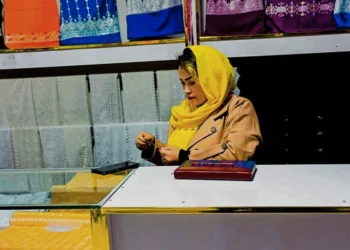
A woman entrepreneur sits behind the counter of her embroidered fabric shop in Kabul as businesses struggle amid rising costs and falling sales. (Photo credit: Exclusive)
Daily Reports

Women Entrepreneurs in Kabul Struggle as Poverty and Taliban Restrictions Cripple Businesses

11 October 2026 [t_time:1791719407]
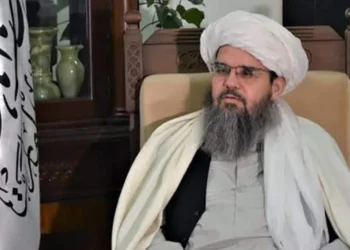
Shahabuddin Delawar, head of the Afghan Red Crescent Society under Taliban control, speaks about women’s rights and the Doha Agreement. (Photo credit: Social Media)
Afghanistan News

Shahabuddin Delawar: Women Were Not Mentioned in Doha Agreement

10 October 2026 [t_time:1791628392]

Latest

Loading latest news...

Popular stories

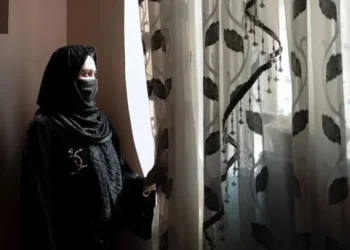
  • An Afghan woman gazes out of her home, reflecting the isolation and challenges faced by women in Afghanistan under Taliban rule. (Photo Credit: 8am.media)

    UN Report Reveals Shifts in Family Attitudes and Rise in Domestic Violence in Afghanistan

    Share
    Share Tweet
  • More Than 200 Aftershocks Recorded in Panama Since Friday’s Earthquake

    Share
    Share Tweet
  • The Politics We Inherited: Rethinking Afghanistan’s Political Culture

    Share
    Share Tweet
  • Pakistan and the Yemen War: Balancing Between Riyadh and Tehran

    Share
    Share Tweet
  • Al-Qaeda Releases Hamza bin Laden Message on 9/11 Anniversary

    Share
    Share Tweet

Podcast

Insights
Insights

Join Lynne O’Donnell for 8AM’s podcast series, Insights.
Lynne talks with generals, diplomats, soldiers, journalists, politicians, activists, people who have front row seats for conflicts around the world, and citizens with a story to tell, happy or sad. For this first series, Afghanistan is the focus. Lynne and her guests talk about the collapse of the republic in August, 2021, and the impact since — for the people of Afghanistan, for the security of the region, for the safety of the world. It’s important, interesting and insightful.

Insights/22: Controlling the Narrative with Mina Sharif
byinsights8am

Controlling the Narrative

Lynne O’Donnell talks with Mina Sharif, author, activist, women’s rights campaigner, educator and mentor. They discuss who controls the narrative and who speaks for Afghanistan’s people when the Taliban appear to have seized control not only of the country but of the message, too.

Have a listen

Insights/22: Controlling the Narrative with Mina Sharif
Episode play icon
Insights/22: Controlling the Narrative with Mina Sharif
Episode Description
Episode play icon
Insights/21: Media Meltdown with Zahra Joya
Episode Description
Episode play icon
Insights/20: Terror Inc with Scott Richards
Episode Description
Episode play icon
Insights/19: Busting Stereotypes with Bushra Gohar
Episode Description
Episode play icon
Insights/18: Media Matters with Waliullah Rahmani
Episode Description
Episode play icon
Insights/17: What Goes Around Comes Around with Sima Samar
Episode Description
Search Results placeholder
Hasht-e Subh

8AM Media, also known as Hasht-e-Subh Daily, stands as Afghanistan's premier independent and non-profit newspaper, resonating as a beacon of journalistic integrity since its establishment in June 2007 by esteemed Afghan journalists and human rights advocates. With a steadfast commitment to citizen journalism and civic education, Hasht-e-Subh Daily has earned its place as the most esteemed publication in the nation.

Publisher: Sanjar Sohail
Email: [email protected]
Executive Director: Parwiz Kawa
Email: [email protected]

Read More

(9) The Unfinished Pashto Exam Papers: The Girl Whose Education Was Interrupted Twice

Climate Change and Habitat Destruction Push Afghanistan’s Wildlife Toward Extinction

Kabul Heads Toward Water “Day Zero” in 2029: An Expert’s Urgent Warning, Ignored for Years

Caught in the Storm of Politics: The Fragile Lives of the People of Afghanistan

Power Shortages Shut Down More Than Two Thirds of Factories in Kandahar, Industrialists Say

Editor’s Choice

Every Saturday morning, 8AM MEDIA English Services Department will guide you through the week’s biggest stories from Afghanistan and the international community.

Subscribe

© 2026 - ©Hasht-e Subh Daily

No Result
View All Result
8am.Media
پښتو ویب‌پاڼه
ویب‌سایت فارسی
اۉزبېکچه ویب‌سایت
  • Home
  • News
    • Afghanistan News
    • World News
  • Opinion
    • Editorial
    • Analysis
  • Reports
    • Daily Reports
    • Investigative Reports
  • Society
    • The story of people
  • Women’s Word
  • Columns
    • Three Years After Afghanistan’s Fall: The Taliban’s Resurgence
    • Towards Equality
    • The Resurgence of the Taliban: Two Years Since Afghanistan’s Fall
    • Hebatullah Report Special Edition
    • Resistance for Education Special Edition
    • Special Column on Taliban’s Education Curriculum
    • Nawroz
  • Interviews
  • Contact Us
    • About Us
    • 8AM MEDIA Annual Awards
    • Submit an Article to Hasht-e-Subh
  • 8am.media

© 2026 - ©Hasht-e Subh Daily