• 8AM.MEDIA
  • ویب‌سایت فارسی
  • پښتو ویب‌پاڼه
  • اۉزبېکچه ویب‌سایت
  • Podcast
Sunday, September 27, 2026
Hasht-e Subh
  • Home
  • News
    • Afghanistan News
    • World News
  • Opinion
    • Editorial
    • Analysis
  • Reports
    • Daily Reports
    • Investigative Reports
  • Society
    • The story of people
  • Women’s Word
  • Columns
    • Three Years After Afghanistan’s Fall: The Taliban’s Resurgence
    • Towards Equality
    • The Resurgence of the Taliban: Two Years Since Afghanistan’s Fall
    • Hebatullah Report Special Edition
    • Resistance for Education Special Edition
    • Special Column on Taliban’s Education Curriculum
    • Nawroz
  • Interviews
  • Contact Us
    • About Us
    • 8AM MEDIA Annual Awards
    • Submit an Article to Hasht-e-Subh
  • 8am.mediaBack
Subscribe
No Result
View All Result
  • Home
  • News
    • Afghanistan News
    • World News
  • Opinion
    • Editorial
    • Analysis
  • Reports
    • Daily Reports
    • Investigative Reports
  • Society
    • The story of people
  • Women’s Word
  • Columns
    • Three Years After Afghanistan’s Fall: The Taliban’s Resurgence
    • Towards Equality
    • The Resurgence of the Taliban: Two Years Since Afghanistan’s Fall
    • Hebatullah Report Special Edition
    • Resistance for Education Special Edition
    • Special Column on Taliban’s Education Curriculum
    • Nawroz
  • Interviews
  • Contact Us
    • About Us
    • 8AM MEDIA Annual Awards
    • Submit an Article to Hasht-e-Subh
  • 8am.mediaBack
No Result
View All Result
Hasht-e Subh
No Result
View All Result

Taliban’s Drone Strike on Pakistan: A Bid to Save Face

Translated by Farhad Farhaad | Originally reported in Persian by Kiomars Samadi

Mohammad Farhaad Mohammad Farhaad
22 June 2026 - Solar Hijri Date: 1405/04/01 [t_time:1782150870]
A drone hovers over a map of Pakistan amid scattered missile debris, symbolizing the Taliban's claimed drone strike on Pakistani soil. (Photo credit: Social media)

Social media

The Taliban’s Ministry of Defense has issued a statement claiming a drone strike on Pakistani soil, an attack whose stated objective was the destruction of Daesh (ISIS) hideouts. The Pakistani side, while dismissing the strike as ineffective, has described Taliban-administered Afghanistan as a haven for terrorism. Islamabad has so far made no mention of launching a retaliatory attack. The Taliban, for their part, appear to have settled for firing a single drone and have no intention of pursuing further clashes.

The question that now arises is this: what led the Taliban to strike Pakistani soil with a drone? Three scenarios are worth considering in answering it.

First, if we view the matter through the lens of both sides’ political conduct, the Taliban’s recent attack resembles a symbolic gesture more than an effective, deterrent military operation. We recall well that a week earlier, Pakistan targeted three eastern provinces of Afghanistan with airstrikes, attacks that left 13 civilians dead. The Taliban, having stayed silent for several days in the face of that assault, drew considerable mockery and derision. In this sense, the recent drone strike was designed less to inflict heavy damage and casualties on Pakistan than to sway public opinion inside Afghanistan. On this basis, the possibility of prior coordination with Pakistan is also conceivable. The very fact that the attack caused no damage, that no image or video of the drone’s impact site has been released, and that Pakistani officials have not reacted harshly even in rhetorical terms, lends weight to the coordination hypothesis. Experience has likewise shown that hostile governments sometimes strike a balance between the “need to respond” and the “need to avoid all-out war.” The result of such a situation is recourse to measures that appear large in propaganda terms but remain militarily limited and controllable.

Second, we recall well that in recent weeks the Taliban’s defense minister traveled to Russia and signed a military-technical agreement with that country. More importantly, upon returning from Moscow and as he arrived at Kabul airport, he declared in a warning tone that Pakistan would soon abandon any desire to attack Afghanistan. Now that the Taliban have issued such a warning, they are obliged to display some sign of their capacity to act on it. The problem began when, only a few days after the defense minister’s return from Russia, Pakistan once again targeted the eastern regions of Afghanistan. Had the Taliban stayed silent, the defense minister’s warning would have become the joke of the day on people’s lips. In such circumstances, even a limited, symbolic response can carry significant weight in preserving the Taliban’s political credibility. On this basis, the recent attack is not merely a military action but also part of a display of “deterrence.” Indeed, the principal aim was not to inflict heavy damage on Pakistan but to convey the message that the Taliban are supposedly no longer an isolated group weakened in military terms. In this narrative, the crux of the matter is not the scale of damage and casualties inflicted on the enemy but the projection of a new reality: that the Taliban are supposedly capable of launching a retaliatory strike against a foreign force. From this perspective, the political value of the attack may outweigh its military value.

Third, in this scenario, the Taliban’s acquisition of modern military equipment cannot be overlooked. The question of where the Taliban procure this equipment is itself a major one that has so far gone unanswered. But if regional rivalries are taken as the basis for assessment, attention inevitably turns toward countries that stand to gain from a weakened Pakistan. Among the players in our region, Indi, a more eager than any other country to see Pakistan weakened. To be sure, no strong, verifiable evidence is yet available regarding the delivery of drones or similar weapons by India to the Taliban. Nevertheless, experience in the world of politics tells us that political relations are not always governed by ideological bonds but also by interests. For this reason, state actors sometimes cooperate with parties with whom they are intellectually and politically far removed but with whom, at a particular juncture, they may share common interests, the clearest and most recent example being this very camaraderie between Russia, India, and Iran and the Taliban.

If the scenario of India arming the Taliban proves true, the consequences for the group will be severe, for Pakistan cannot remain a bystander to such a situation. The Taliban’s drawing closer to India amounts to a “strategic threat” in Pakistan’s eyes. In that case, the relationship between the two sides, already at its most critical stage, could enter a more overt and unprecedented phase of confrontation, one that would also extend to support for the Taliban’s armed opponents.


You can read the Persian version of this analysis here:
حمله پهپادی طالبان بر پاکستان؛ پاسخی برای حفظ آبرو

ShareTweetSendSendShare

Related Posts

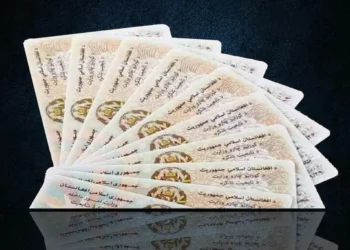
Afghan electronic identity cards (e-Tazkiras) are displayed in a stack (Photo: didpress)
Afghanistan News

Taliban: More Than 827,000 E-Tazkiras Distributed in Six Months

27 September 2026 [t_time:1790502378]
Ministry of Justice Building in Kabul (photo: @MojAfghanistan)
Afghanistan News

Taliban Seize Nearly 297 Acres of Land in Balkh

27 September 2026 [t_time:1790501591]
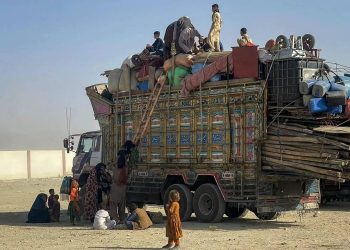
Afghan refugees returned to Afghanistan with their belongings (Photo: AFP via Getty Images)
Afghanistan News

More Than 100 Migrant Families Return to Afghanistan

27 September 2026 [t_time:1790494503]

Latest

Loading latest news...

Popular stories

  • Surveillance footage shows Taliban fighters surrounding and shooting a bound man in Herat. (Photo credit: Social Media)

    Taliban Shoot Young Man from Herat After Torturing Him with Hands Tied

    Share
    Share Tweet
  • Al-Qaeda Releases Hamza bin Laden Message on 9/11 Anniversary

    Share
    Share Tweet
  • UN Report Reveals Shifts in Family Attitudes and Rise in Domestic Violence in Afghanistan

    Share
    Share Tweet
  • Asian University for Women: Protesting Students Face Expulsion

    Share
    Share Tweet
  • Pakistani Army Says Five Killed Over Alleged Links to Terrorism

    Share
    Share Tweet

Podcast

Insights
Insights

Join Lynne O’Donnell for 8AM’s podcast series, Insights.
Lynne talks with generals, diplomats, soldiers, journalists, politicians, activists, people who have front row seats for conflicts around the world, and citizens with a story to tell, happy or sad. For this first series, Afghanistan is the focus. Lynne and her guests talk about the collapse of the republic in August, 2021, and the impact since — for the people of Afghanistan, for the security of the region, for the safety of the world. It’s important, interesting and insightful.

Insights/22: Controlling the Narrative with Mina Sharif
byinsights8am

Controlling the Narrative

Lynne O’Donnell talks with Mina Sharif, author, activist, women’s rights campaigner, educator and mentor. They discuss who controls the narrative and who speaks for Afghanistan’s people when the Taliban appear to have seized control not only of the country but of the message, too.

Have a listen

Insights/22: Controlling the Narrative with Mina Sharif
Episode play icon
Insights/22: Controlling the Narrative with Mina Sharif
Episode Description
Episode play icon
Insights/21: Media Meltdown with Zahra Joya
Episode Description
Episode play icon
Insights/20: Terror Inc with Scott Richards
Episode Description
Episode play icon
Insights/19: Busting Stereotypes with Bushra Gohar
Episode Description
Episode play icon
Insights/18: Media Matters with Waliullah Rahmani
Episode Description
Episode play icon
Insights/17: What Goes Around Comes Around with Sima Samar
Episode Description
Search Results placeholder
Hasht-e Subh

8AM Media, also known as Hasht-e-Subh Daily, stands as Afghanistan's premier independent and non-profit newspaper, resonating as a beacon of journalistic integrity since its establishment in June 2007 by esteemed Afghan journalists and human rights advocates. With a steadfast commitment to citizen journalism and civic education, Hasht-e-Subh Daily has earned its place as the most esteemed publication in the nation.

Publisher: Sanjar Sohail
Email: [email protected]
Executive Director: Parwiz Kawa
Email: [email protected]

Read More

Guterres: Real Power Lies in Building a Better Future for All Humanity

UN: Justice and Crime Prevention Are Shared Global Goals

Iran’s Revolutionary Guard Threatens to Attack US Ships

First Woman in 200 Years to Be Executed in Tennessee, US

Taliban: More Than 827,000 E-Tazkiras Distributed in Six Months

Editor’s Choice

Every Saturday morning, 8AM MEDIA English Services Department will guide you through the week’s biggest stories from Afghanistan and the international community.

Subscribe

© 2026 - ©Hasht-e Subh Daily

No Result
View All Result
8am.Media
پښتو ویب‌پاڼه
ویب‌سایت فارسی
اۉزبېکچه ویب‌سایت
  • Home
  • News
    • Afghanistan News
    • World News
  • Opinion
    • Editorial
    • Analysis
  • Reports
    • Daily Reports
    • Investigative Reports
  • Society
    • The story of people
  • Women’s Word
  • Columns
    • Three Years After Afghanistan’s Fall: The Taliban’s Resurgence
    • Towards Equality
    • The Resurgence of the Taliban: Two Years Since Afghanistan’s Fall
    • Hebatullah Report Special Edition
    • Resistance for Education Special Edition
    • Special Column on Taliban’s Education Curriculum
    • Nawroz
  • Interviews
  • Contact Us
    • About Us
    • 8AM MEDIA Annual Awards
    • Submit an Article to Hasht-e-Subh
  • 8am.media

© 2026 - ©Hasht-e Subh Daily