On January 5, Iran’s Ministry of Information and National Security revealed that one of the two suicide bombers behind the terrorist attack carried out on January 3 in the southeastern city of Kerman was a Tajik national. Several days later, Iran’s Interior Ministry shared that the second perpetrator was also most likely a Tajik citizen.
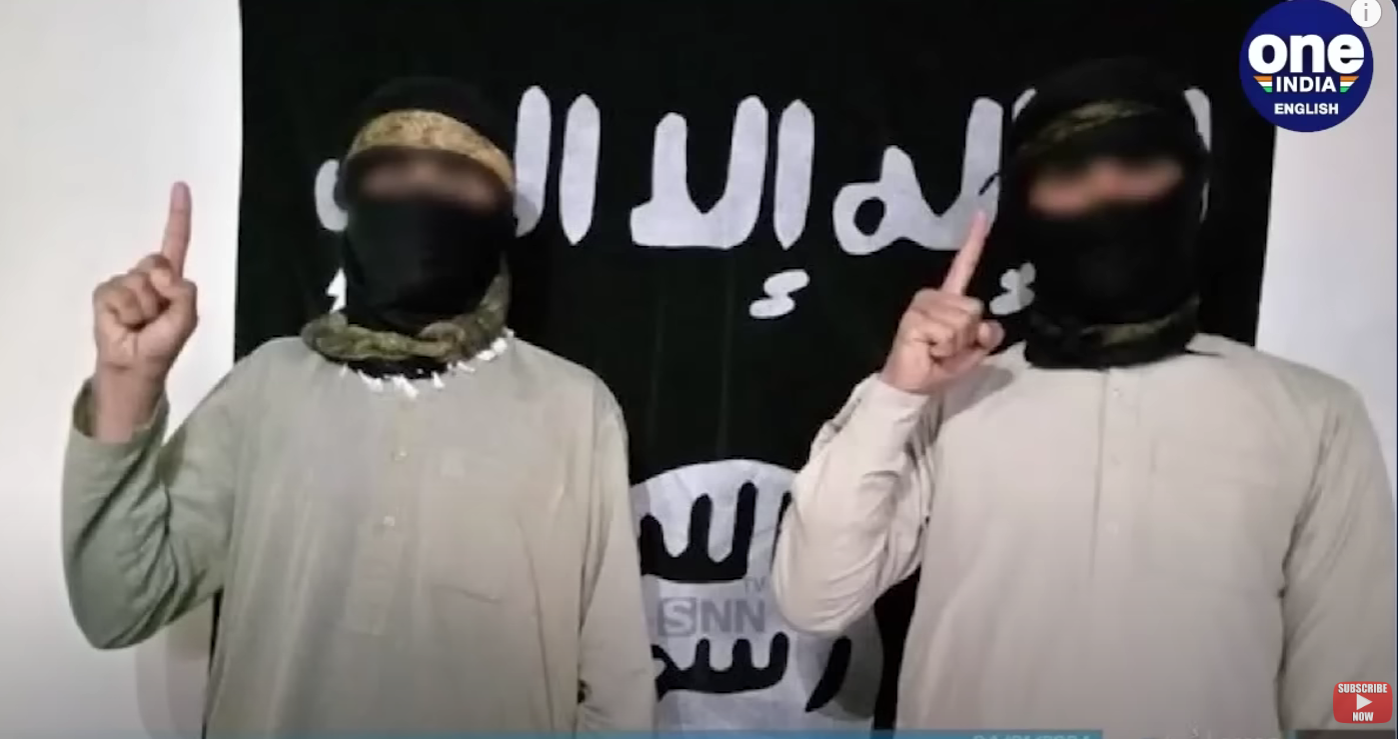
The attack was carried out near the grave of Iran’s top-level military officer Qasem Soleimani, who was killed in a US drone strike exactly three years ago on January 3, 2020, during his visit to Iraq. Eighty-nine people died, and 300 sustained injuries, according to the Iranian authorities. They had all come to visit Soleimani’s tomb on the third anniversary of his death. A terrorist offshoot organization of the Islamic State, called Islamic State – Khorasan Province (ISKP), claimed responsibility for the attack.
This became the latest and perhaps the most notorious case of Tajik nationals’ involvement in terrorist attacks abroad. Just 11 days earlier, on December 23, 2023, German and Austrian authorities detained a Tajik national and two other suspects on charges of plotting terrorist attacks at the St. Stephen’s Cathedral in Vienna and the Cologne Cathedral in Cologne. He, too, had been recruited by the ISKP. These incidents represent a worrying trend of Tajik nationals joining global jihadi terrorist organizations and becoming a source of insecurity across the world.
Wreaking havoc around the world
Over the last decade, Tajikistan’s foreign terrorist fighters (FTFs) have brought their homeland under negative limelight on numerous occasions. The most notorious of them all is Gulmurod Khalimov, who became the IS Minister of War after joining the group in 2015. Before becoming a high-ranking terrorist, he served as the head of the special forces unit under Tajikistan’s Interior Ministry in the rank of colonel.
After defecting to Syria, Khalimov recorded a video message in which he criticized the Tajik authorities for their ‘anti-Islamic’ religious policy and poor economy that pushed his compatriots out of the country in search of jobs. The IS used Khalimov as its poster boy for the recruitment of Tajik nationals and other Central Asians until he died in 2017. Between 1,100 and 1,900 Tajik citizens joined the IS.
Tajikistan was in the headlines again in 2018 when four foreign cyclists were killed in an attack carried out just 100 km away from the capital Dushanbe. The IS claimed responsibility. US, Swiss, and Dutch nationals died in the attack, and the incident drew the attention of all major media outlets in the world. Two years later, five Tajik nationals were arrested in Germany on charges of plotting attacks and cooperating with the IS. In 2022, they were found guilty and sentenced to prison sentences ranging from 4.8 to 9.6 years.
The January attack in Kerman was not the first one carried out by Tajik FTFs in Iran. On October 25, 2022, a group of IS gunmen attacked the Shah Cheragh shrine in Shiraz located in the country’s south, killing 13 and injuring 27 people. One of the attackers was a Tajik national named Komroni Subhon, who was recruited by the IS during his stay in Russia as a migrant worker.
In August 2023, the same shrine came under the IS attack again, and a Tajik national, Rahmatullo Navruzov, was one of the perpetrators. In September 2023, he was sentenced to death in Iran.
The year 2023 was a highlight year for Tajik FTFs in terms of their media exposure worldwide. In June, Turkish authorities arrested a Tajik national Shamil Khukumatov, widely known as Abu Miskin, in Istanbul for his recruitment of new members and raising funds for the ISKP. In July, a group of nine Central Asians were arrested in Germany and the Netherlands for creating a terrorist organization and supporting the IS. Six of them were Tajik nationals.
In September, a Tajik national was sentenced to 11 years in prison in Kazakhstan for plotting an attack at the Khoja Ahmed Yasawi Mausoleum located in the country’s south. In December, five Tajik nationals were sentenced to lengthy prison sentences in Russia for plotting to attack the headquarters of the Russian Federal Security Service in Moscow.
Authoritarianism, migration, and ghosts of the civil war
It is difficult to pinpoint a single reason why Tajik citizens join terrorist organizations and commit attacks at home and beyond. However, the Tajik government’s heavy-handed policies and migration seem to be undeniable and overarching factors of Tajik FTFs’ radicalization.
Tajikistan’s president Emomali Rahmon has been ruling over the country since 1992, with the first five years of his rule coinciding with the civil war the country went through between 1992 and 1997 with hundreds of thousands dead and millions displaced. Under Rahmon’s rule, Tajikistan regularly ranks at the bottom of international rankings on political freedoms and governance effectiveness, reflecting a lack of transparency, accountability, and inclusiveness in the country.
Tajikistan is ranked 150th out of 180 countries on the corruption perception index. Reporters Without Borders ranks the country 153rd out of 180 states on its press freedom index. According to the Committee to Protect Journalists, Tajikistan has the highest number of journalists in prison in Central Asia. Freedom House classifies the country as a consolidated authoritarian regime with a democracy score of 1 out of 7.
Over the years, Rahmon has decimated all the opposition in the country, including the Islamic Renaissance Party of Tajikistan (IRPT), which was guaranteed parliament seats and government posts as part of the peace agreement signed in 1997 at the end of the civil war. In 2015, IRPT was declared a terrorist organization with its members jailed or exiled afterwards.
In 2022, the authorities shut down whatever remained of independent voices in the country by conducting ‘anti-terrorist’ operations in the Gorno-Badakhshan Autonomous Region, home to ethnically and culturally distinct Pamiri people. Prominent human rights defenders, informal leaders, and journalists in the region were either killed or detained by the central authorities.
Migration is another important contributing factor. It has become an accepted wisdom that Tajik citizen workers are radicalized and recruited during their stay in Russia, which is a primary destination country for Tajik migrant workers seeking employment abroad. Around 1 million Tajik nationals work in Russia as migrant workers. Experts say that the social, legal, and economic troubles they encounter abroad make them vulnerable to terrorist propaganda and recruitment.
None of the factors that make Tajik nationals conducive to radicalization is set to change any time soon. If anything, Tajik FTFs are reportedly expanding their areas of operation with the recent reports suggesting that hundreds of them have relocated to Gaza to join Hamas forces and fight against the Israeli army. Tajikistan’s homegrown terrorist organization Jamaat Ansarullo, which is currently based in Afghanistan, having built an alliance with the Taliban, is only gaining steam by expanding its capacities. There seems to be no end to the rise of Tajik FTFs as a global menace.