Afghanistan is a land of vast geographical expanse and cultural diversity. Its people have coexisted for centuries, embracing linguistic, artistic, and religious diversity with tolerance and relative accommodation. Such countries appeal immensely to anthropologists, cultural scholars, and travelers alike. Countries where their leaders are accountable and enlightened citizens understand the inherent value of ethnic diversity and cultural richness. This spiritual wealth transforms a nation with ethnic and cultural diversity into a captivating land, brimming with color, melody, and flavor.
Consider India: its cultural and ethnic diversity attracts millions of tourists annually, eager to witness firsthand its vibrancy and variety. Do the people and policymakers of Afghanistan now emulate this pattern, making peace and mutual acceptance the cornerstone of their existence? The current rulers of Afghanistan claim to have united the people under one banner and, according to their interpretation, fostered brotherhood and camaraderie among citizens, transcending ethnic and linguistic divides. To test the veracity of the current rulers’ claim of dominance in this regard, let us examine their treatment of the Persian language, for example.
The Persian language has a long and storied history in Afghanistan, dating back at least over a thousand years. Compared to other prevalent languages in the country, Persian boasts a richer historical pedigree. Moreover, due to the extensive use by poets and writers over millennia, its capabilities have grown, and its influence among the inhabitants of Afghanistan and other people in the region has expanded. Persian is often referred to as the “lingua franca” and “international language,” meaning that if, for instance, a speaker of Uzbek or Turkmen wishes to communicate with a Pashto speaker, they often resort to Persian. It is because of this versatility that Persian has been bolstered over the ages, even by rulers whose primary language was not Persian, who encouraged writing books and composing poetry in this language. Undoubtedly, a language with such attributes is a significant asset in a war-torn and tense country like Afghanistan and must be fiercely protected. By utilizing Persian, a platform for understanding and closeness among various ethnicities, tribes, and religions can be established. To what extent have the contemporary leaders of the country acted rationally and wisely, devoid of prejudice and hatred, in this regard?
The unfortunate reality is that the majority of Afghanistan’s rulers, at least since the time of King Amanullah Khan, have treated Persian language with neglect and have positioned it in opposition to Pashto. Sometimes, the biased treatment of politicians towards Persians has been so extreme and excessive that it has greatly increased pessimism, hatred, and distance between ethnic groups. Persian-averse politicians, instead of striving to strengthen Pashto, believed that striking at the Persian language would pave the way for the dominance and expansion of Pashto. However, the destruction of Persian not only deprives Afghanistan of tapping into a rich resource but also erases unity of speech, sows seeds of discord and animosity among ethnicities, and perpetuates tension and conflict over the fate of the people for a long time. The Taliban regime, currently holding the country’s destiny, stands as one of the worst regimes in contemporary times due to its hostility towards the Persian language.
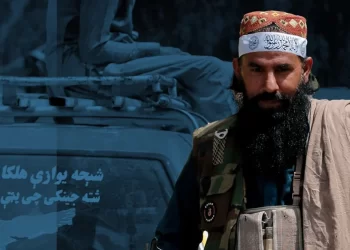
Recently, Taliban spokespersons quoted Mullah Hibatullah Akhundzada, the supreme leader of the Taliban, stating that anyone who creates division between Persian and Pashto will be punished. Firstly, the mere fact that Hibatullah is addressing the relationship between Persian and Pashto implicitly suggests that there are currently issues and tensions in linking these two languages, and individuals perceive differences between them. Secondly, there is a significant gap between rhetoric and action. Hibatullah speaking about punishing individuals who create division between these two languages essentially demonstrates bias against the Persian language in Taliban actions. Although the Taliban profess brotherhood in religion and present themselves as executors of God’s law, which is based on equality among all citizens, it cannot be ignored that the Taliban—predominantly Pashtun, with other ethnicities within the organization lacking significant influence—deeply believe in ethnic superiority and see no difference in this regard between themselves and secular Pashtun nationalists. All official communications of the Taliban are primarily written in Pashto. Newsletters and leadership directives of the Taliban are issued in Pashto. Many Persian words are eradicated from official documents under the guise of preserving national terminology. The vast majority of speeches by Taliban leaders are delivered in Pashto. Most leaders of this group cannot speak Persian. Just recently, when Mullah Abdul Ghani Baradar went to Iran, he needed a translator to communicate and understand Iranian officials, creating an unprecedented incident. Some Taliban officials go even further and explicitly express hostile statements against the Persian language. Mohammad Yunus Rashid, the deputy minister of information and culture for the Taliban, stated in Bamyan province that Afghanistan does not need Persian and that young people should learn disciplines that enable them to create advanced weapons. Additionally, the Taliban removed plaques written in Persian from government or university buildings and instead installed only Pashto plaques.
The Taliban’s ethnocentrism is undeniable. This group heavily relies on ethnic factors in its appointments. Currently, the majority of government office employees belong to one ethnic group. Even when people visit government offices, they are forced to speak Pashto with the staff, or else their concerns may not be addressed. It may be unbelievable that Taliban police treat roadside vendors based on their ethnicity and language. A non-Pashto-speaking vendor in one of Kabul’s areas was delighted to show proficiency in Pashto, and when conversing with a Taliban fighter in Pashto, he was allowed to continue his work without harassment and was even permitted to sell his goods.
Pashtunwali (way of the Pashtun) culture is a fundamental component of the Taliban’s identity, and any analyst who overlooks this aspect when introducing this group forgets a significant and foundational truth. Taliban members mostly hail from remote villages and have limited worldviews. They are not familiar with urban culture and the Persian language, and this unfamiliarity has led them to develop bias and hatred towards this language. The fact that Ismail Yun and many other Pashtun ultranationalists openly support and endorse the Taliban is due to the commonality they share in their adherence to Pashtunwali and their belief in ethnic superiority and disdain for the Persian language.
Weakening the Persian language may be desirable for the Taliban’s regime survival, but it is not conducive to Afghanistan’s future as a desirable nation. When the Persian language and its cultivated culture vanish, Afghanistan essentially loses a great asset and deprives itself of a precious heritage. Persian serves as a bond, fostering familiarity and closeness among the diverse ethnic groups residing in Afghanistan, and it also serves as a point of connection with regional countries. The future will reveal the extent to which the Taliban will proceed with Persian marginalization and how successful they will be in this endeavor. However, it should not be forgotten that Persian was once widely used in Central Asia and the Indian subcontinent, but the policies of dominant regimes led to its decline or marginalization in these regions.
Therefore, I do not accept the claims of those who assert that the Taliban cannot weaken the Persian language in Afghanistan. Political authorities in the past have succeeded in eliminating this language from certain regions of the world, and they could do so again if circumstances allow. While Persian is linguistically capable compared to other prevalent languages in the country, it has failed to keep pace with changing times due to various factors. Hence, it is possible that authorities could easily replace it with English. In the struggle between Persian and Pashto, English could become a desirable substitute as the global lingua franca reflecting the latest global developments. If Persian disappears or is marginalized, Afghanistan loses a priceless God-given treasure.
You can read the Persian version of this analysis here:
اگر زبان فارسی از افغانستان حذف شود، چه اتفاق میافتد؟ | روزنامه ۸صبح