“Bakhtar News”, the state-run media now controlled by the Taliban, reported yesterday that a Chinese company has begun drilling 18 oil wells in the Amu Darya basin. According to the report, citing the press official of the company, 23 oil wells are currently operational in this basin, and the drilling of 18 more is expected to be completed in 2024 and 2025. These operations are being carried out by “Afchin Company,” a Chinese company. Bakhtar News stated that 500 barrels of oil are currently being extracted daily from the 23 operational wells, and the new wells are expected to significantly increase output. Over the past three years, the extraction of Afghanistan’s mines and underground resources has grown at an unprecedented rate, which, for various reasons, essentially amounts to the looting of public assets.
The mines and underground resources of a country are not the property of its government but belong to the people of that country. Governments can only extract and utilize these resources when they are legitimate and lawful representatives of the people. This legitimacy stems from citizens granting authority to individuals or entities through elections to manage these resources on their behalf. The Taliban’s utilization of these public assets, despite not having been granted such authority, constitutes the plundering of public wealth. The Taliban regime lacks both international and domestic legitimacy to authorize the drilling of oil wells or the extraction of underground resources. The fact that the Taliban seized power through armed force and collaboration with certain countries, yet are extracting national resources, resembles armed robbery, enforced by coercion and weapons.
Additionally, public wealth is meant to be used for public welfare. Over the past three years, the Taliban have failed to provide any services and are unlikely to do so in the future. What justification, then, do they have for extracting Afghanistan’s mines? When they sell the people’s resources, what benefits do the people receive? Undoubtedly, none. From their inception to their recent three-year reign, particularly over the past two decades, the Taliban have consistently destroyed public and even private infrastructure, blowing up bridges and demolishing roads. They have not taken moral responsibility for the destruction they caused and still consider others indebted to them. Recently, a Taliban official even suggested that the countries that destroyed Afghanistan over the past 20 years should rebuild it. This group not only denies its role in the country’s devastation but also assumes no responsibility for reconstruction, just as they attributed the nation’s extreme poverty to divine will and refused to acknowledge their role in exacerbating it. Reconstruction efforts in Afghanistan remain at a standstill, despite millions of dollars in aid from the U.S., other nations, and international organizations. Occasionally, news emerges about the construction of a school, road, bridge, hospital, or clinic, but these projects are often funded by private donations. People no longer expect the ruling regime to build anything and have taken it upon themselves to initiate small-scale projects, primarily financed by Afghan migrants abroad.
The oil and mineral wealth extracted and sold from the country’s rich underground resources does not contribute even minimally to reconstruction or modernization. Instead, the revenue is directly distributed among Taliban factions and then to the leaders of each faction. Over the past three years, many of these leaders have gone from poverty to owning luxury homes and large businesses. This is effectively the looting of public assets by the Taliban, facilitated by their allies.
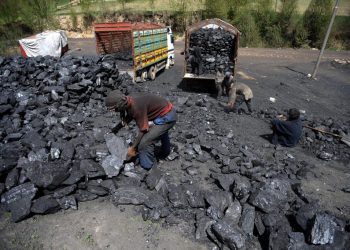
The Taliban’s allies, complicit in plundering Afghanistan’s public resources, are a few nations that maintain close ties with the group. Chief among them are China and Pakistan. One of the key minerals extracted and exported extensively since the Taliban’s return to power is coal. Pakistan is a consistent customer in this exploitation. Pakistan has a significant demand for coal to produce thermal power but lacks sufficient mines to meet this need. Through its friendship with the Taliban, Pakistan can secure its coal supply. Facing a severe electricity shortage, much of Pakistan’s power generation relies on thermal energy. The coal mines in Pakistan’s Balochistan province are both of low quality and limited in capacity. Additionally, the region is plagued by attacks from the “Balochistan Liberation Army (BLA)”, an armed separatist group, which often targets workers and staff at coal mines. This situation exacerbates Pakistan’s reliance on Afghan coal, which the Taliban extract and sell at low prices to fulfill their obligations to Rawalpindi.
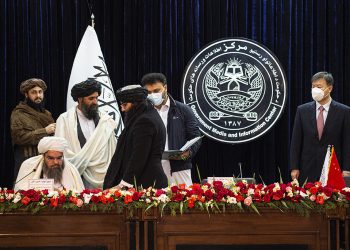
Another major ally of the Taliban in plundering public wealth is China. The Chinese government has established close ties with the Taliban and accepted their ambassador. Chinese companies now control Afghanistan’s mines and underground resources. Wherever Chinese companies operate, they typically bring their workers from China instead of employing locals. As a result, Chinese investments not only deplete underground resources but also fail to contribute to local job creation. Currently, some of Afghanistan’s largest mines, including the Hajigak iron ore and Mes Aynak copper deposits, are under Chinese control. Likewise, previously drilled and operational oil wells are managed by Chinese companies, with new wells being drilled by another Chinese company, Afchin Company.
Since even the Taliban’s allied nations and governments do not officially recognize them, any transactions with such an illegitimate group are inherently unlawful. Both parties to a legal agreement must have legitimacy, but the Taliban lacks both domestic and international legitimacy. Furthermore, the mining activities are conducted unprofessionally, leading to significant environmental damage. The lack of legitimacy of one party in the transactions and the fact that the revenue from selling public resources does not benefit the people or improve their living conditions make these mining activities nothing more than the plundering of public wealth by the Taliban and their allies.
You can read the Persian version of this analysis here: