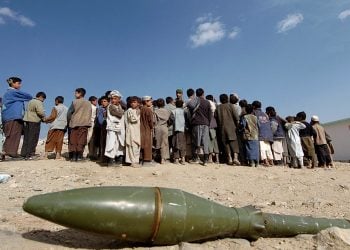
Khash district in Badakhshan province has recently witnessed violent clashes between the Taliban and residents, resulting in dozens of civilian casualties. The confrontation reportedly stems from Taliban-led operations to destroy poppy fields cultivated by local farmers. This is not the first such incident in Badakhshan. Over the past two years, the province has seen multiple episodes of conflict between the Taliban and residents of districts like Argo, Darayim, and Jurm, each rooted in disputes over poppy cultivation. Now, Khash becomes the latest district to experience this unrest.
The Taliban’s approach in these incidents is open to criticism on two fundamental grounds:
1) The residents of Khash have indeed turned to poppy cultivation. However, this fact alone should not justify the violent suppression of civilians. As the de facto rulers of Afghanistan, the Taliban ought to adopt a policy grounded in analysis and responsibility. This means addressing the root causes of poppy farming instead of resorting to armed intervention. Raiding opium fields and opening fire on farmers—killing and injuring them—does not resolve the issue; it only paves the way for deeper social unrest and prolonged instability.
If one seeks to understand the drivers behind poppy cultivation, widespread poverty is undeniably the most significant. And ironically, the Taliban regime has significantly contributed to the current economic collapse. Even if one chooses not to place full blame on the Taliban for Afghanistan’s poverty, they are still responsible for alleviating it. Notably, poppy cultivation has historically flourished in areas under Taliban control rather than those governed by the former Afghan government. In this sense, too, the Taliban bear responsibility. Therefore, if the Taliban are genuinely committed to eradicating opium cultivation, they must first create sustainable alternative livelihoods for farmers. According to experts in the field, fighting narcotics without providing such alternatives is an illusion—nothing more than a futile exercise.
Instead of resorting to bullets, the Taliban could adopt a more humane and constructive approach by engaging with communities through dialogue and moral persuasion. This would likely yield more sustainable results. Religious leaders and local elders, for instance, could play a pivotal role. Imams at Friday prayers and during religious festivals could denounce poppy cultivation using Islamic teachings and shift community attitudes on the issue. This strategy is entirely feasible, especially given the deep respect rural communities have for mosque preachers. It is noteworthy that the Taliban often rely on religious clerics to justify social restrictions, or they cite countless verses and hadiths to defend their actions. Yet, when it comes to combating poppy cultivation, they prefer bullets to sermons.
2) The reality is that over the past two years, the Taliban’s crackdowns on poppy cultivation have been confined largely to Badakhshan, creating the impression that this province alone is responsible for Afghanistan’s opium production. Meanwhile, regions in southern Afghanistan, long associated with poppy farming, appear to be exempt from similar enforcement. This selective focus has sparked legitimate questions among Afghan citizens: Why Badakhshan? Why Taliban’s anti-narcotics campaign disproportionately concentrated in one province? To the impartial observer, this overemphasis on Badakhshan suggests the Taliban may have ulterior motives under the guise of combating narcotics. This raises serious doubts about the sincerity and consistency of the group’s anti-drug agenda.
What the residents of Khash are doing in response to Taliban actions is also open to critique, from two perspectives:
1) Even if residents of certain districts in Badakhshan believe they have a right to defend their poppy fields, such resistance appears neither effective nor constructive. The energy and unity they have shown might be more beneficially channeled toward causes that advance collective well-being—causes that address the broader crises affecting Afghanistan since the Taliban’s return to power in mid-August 2021. Foremost among these is the mass exclusion of women and girls from education—a policy that has drawn widespread condemnation from global institutions and foreign governments. If there is a cause worthy of protest, it is surely the denial of fundamental rights to half the population.
When such resistance fails to materialize in defense of education, but violence erupts over poppy fields, it leaves the neutral observer with a troubling impression: that in some communities, poppy cultivation is perceived as more urgent than girls’ access to schools. Redirecting this resistance toward more fundamental rights would not only improve the public perception of these communities but could also forge meaningful paths toward reform.
2) It must also be noted that resisting the Taliban in defense of poppy cultivation ultimately works in the group’s favor, even if local communities suffer casualties. When previous deadly clashes occurred in other Badakhshan districts, international organizations and foreign governments remained largely silent. Today, even the United Nations Assistance Mission in Afghanistan (UNAMA) has not condemned the violence in Khash. It is conceivable that UN bodies quietly welcome the Taliban’s actions in this area. Some governments have even praised the Taliban for their “success” in combating drug production. The Strategic Shift
Thus, standing up to the Taliban in the name of opium cultivation only serves to intensify the conflict on terms that benefit the regime. The narrative becomes one of a government committed to law and order versus lawless citizens who refuse to abandon narcotics. To avoid reinforcing this false narrative, communities must shift the grounds of their resistance.
You can read the Persian version of this analysis here: