• 8AM.MEDIA
  • ویب‌سایت فارسی
  • پښتو ویب‌پاڼه
  • اۉزبېکچه ویب‌سایت
  • Podcast
Thursday, October 29, 2026
Hasht-e Subh
  • Home
  • News
    • Afghanistan News
    • World News
  • Opinion
    • Editorial
    • Analysis
  • Reports
    • Daily Reports
    • Investigative Reports
  • Society
    • The story of people
  • Women’s Word
  • Columns
    • Three Years After Afghanistan’s Fall: The Taliban’s Resurgence
    • Towards Equality
    • The Resurgence of the Taliban: Two Years Since Afghanistan’s Fall
    • Hebatullah Report Special Edition
    • Resistance for Education Special Edition
    • Special Column on Taliban’s Education Curriculum
    • Nawroz
  • Interviews
  • Contact Us
    • About Us
    • 8AM MEDIA Annual Awards
    • Submit an Article to Hasht-e-Subh
  • 8am.mediaBack
Subscribe
No Result
View All Result
  • Home
  • News
    • Afghanistan News
    • World News
  • Opinion
    • Editorial
    • Analysis
  • Reports
    • Daily Reports
    • Investigative Reports
  • Society
    • The story of people
  • Women’s Word
  • Columns
    • Three Years After Afghanistan’s Fall: The Taliban’s Resurgence
    • Towards Equality
    • The Resurgence of the Taliban: Two Years Since Afghanistan’s Fall
    • Hebatullah Report Special Edition
    • Resistance for Education Special Edition
    • Special Column on Taliban’s Education Curriculum
    • Nawroz
  • Interviews
  • Contact Us
    • About Us
    • 8AM MEDIA Annual Awards
    • Submit an Article to Hasht-e-Subh
  • 8am.mediaBack
No Result
View All Result
Hasht-e Subh
No Result
View All Result

The Taliban Regime Will Not Easily Fall

Aamonpour Aamonpour
5 August 2024 - Solar Hijri Date: 1403/05/15 [t_time:1722845966]
The Taliban Regime Will Not Easily Fall

AFP

A simplistic belief exists among the people of Afghanistan that the Taliban will not last long and will soon be gone. A kind of naive optimism convinces people that the Taliban regime is destined to collapse and that, subsequently, everything will be just fine. This hope among the people does not stem from an expert analysis of the current situation in Afghanistan but is born out of superficial and common optimism typical in religious societies that say, “Things won’t stay like this; God is merciful.” This attitude towards the harsh reality does not indicate the power of the people; rather, it signifies their helplessness and desperation. When people cannot do anything to end the catastrophe, they resort to religious optimism and wait for saviors to come and free them from the clutches of Taliban terror and barbarism. From corrupt ethnic politicians and pretentious ivory tower intellectuals to NGO-influenced leftists and ordinary citizens, everyone expects the “international community” to once again favor Afghanistan as it did before and return the country to a normal path. But does the international community have the desire and willingness to re-enter the quagmire of Afghanistan?

Currently, not only is there no positive signal of international military intervention, but on the contrary, the world wants to engage more with the Taliban and present this group as its partner in the “fight against terrorism.” Some countries have gone so far in this direction that they even want to remove the Taliban from the list of terrorist groups. The world no longer has any interest in “nation-building” and fighting to institutionalize democracy in Afghanistan. Instead, it wants to engage with a force that can at least establish some order in this country and prevent further collapse. The crisis in Afghanistan is so chronic and deep-rooted that even the world’s major powers no longer have any interest in solving it and merely want to create a semblance of order to reduce their headaches. For a long time, realism has replaced political idealism, and major powers are even sacrificing their long-term goals for short-term interests. They have realized well that entering the “graveyard of empires” might be by their own choice, but exiting this trap will not be according to their wishes. Any superpower that has once entered this quagmire and barely saved itself has not again been enthusiastic about military intervention.

Apart from external factors, the anti-Taliban forces are so mired in political and organizational chaos that many are convinced that the Taliban have no alternative. The corrupt, exiled politicians are more eagerly awaiting a miracle from the “international community” than the Afghan people themselves and occasionally directly or indirectly appeal to it, asking it to do something. With the slightest positive signal from foreigners, they lose their composure and rush to meet with special representatives of various countries, hoping not to miss out on any potential favors. These exiled politicians have not yet abandoned their dreams of returning to Afghanistan; however, they do not intend to take action themselves to make this dream a reality. They believe that if the “international community” ever decides to overthrow the Taliban, it will need them. Therefore, the people and their political leaders share many similar characteristics, one of which is an excessive reliance on powerful external factors.

In other words, both the people and their leaders are looking to saviors; the people expect their leaders or external powers to take action, while the leaders are waiting for the “international community” to step in. In such a situation, can we still hope for the collapse of the Taliban? If this group does not self-destruct from within – currently, despite all the internal differences among the Taliban, they remain united, and the recent “reform meeting” led by Mullah Haibatullah in Kandahar seems to have been effective in temporarily burying internal conflicts – and if no foreign power steps in to overthrow the Taliban, there is no other threat to this group. Neither do the people have the motivation or interest to start a widespread uprising against the Taliban, nor do the exiled opposition have the capacity to confront this group on their own.

However, if the people and their leaders do not wait for external saviors and instead rely on their capacity to engage in a sustained and strategic struggle – not a hasty, temporary, and short-term fight against the Taliban – then victory is possible. Therefore, unless the people make a concerted effort, the Taliban are not going anywhere. They have come to stay indefinitely and even prepare the ground for extending their rule beyond Afghanistan’s borders through the implementation of the global jihad project. The Taliban have not fought all this time to hand over power to others and retreat into isolation easily. Instead of wishful thinking childish religious optimism, and reliance on external powers, we must start now to turn scattered, temporary, and fleeting fights against the Taliban into a comprehensive, attritional, and strategic war. Only in this way can we hope for a Taliban-free Afghanistan in the future. Then, we have the right to be optimistic, for this optimism will be of a different kind and will have little to do with the current superficial and common beliefs.

You can read the Persian version of this analysis here:
رژیم طالبانی به‌ساده‌گی نابود نمی‌شود | روزنامه ۸صبح 

ShareTweetSendSendShare

Related Posts

Nasir Ahmad Andisha, Afghanistan’s ambassador to Switzerland, says the country’s diplomatic missions at the United Nations continue to defend people’s rights. (Photo credit: @AndishaNasir)
Afghanistan News

Andisha: Afghanistan’s UN Missions Defend People’s Rights

24 October 2026 [t_time:1792860178]
National Resistance Front of Afghanistan official emblem displayed on a dark background. (Photo credit: NRF)
Afghanistan News

National Resistance Front Reports Killing of Two Taliban Fighters in Herat

24 October 2026 [t_time:1792848209]
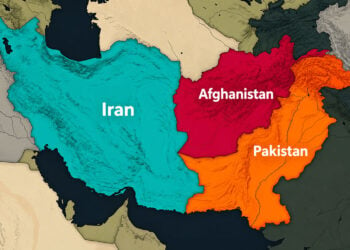
A color-coded regional map highlights Iran, Afghanistan and Pakistan, three neighbors whose interests shape the future of Taliban rule. (Photo credit: Magnific)
Analysis

Afghanistan’s Neighbors: Architects of Taliban Survival or Catalysts of Its Collapse?

20 October 2026 [t_time:1792500594]

Latest

Loading latest news...

Popular stories

  • Donald Trump - U.S. President (Photo: Reuters)

    Trump Calls Norway a “Garbage Country”

    Share
    Share Tweet
  • UN Report Reveals Shifts in Family Attitudes and Rise in Domestic Violence in Afghanistan

    Share
    Share Tweet
  • Iran’s Revolutionary Guards Say They Are Preparing to Unveil “Father of All Bombs”

    Share
    Share Tweet
  • Taliban Raid Home of Former Military Official in Uruzgan

    Share
    Share Tweet
  • World News Day 2024: We need your help

    Share
    Share Tweet

Podcast

Insights
Insights

Join Lynne O’Donnell for 8AM’s podcast series, Insights.
Lynne talks with generals, diplomats, soldiers, journalists, politicians, activists, people who have front row seats for conflicts around the world, and citizens with a story to tell, happy or sad. For this first series, Afghanistan is the focus. Lynne and her guests talk about the collapse of the republic in August, 2021, and the impact since — for the people of Afghanistan, for the security of the region, for the safety of the world. It’s important, interesting and insightful.

Insights/22: Controlling the Narrative with Mina Sharif
byinsights8am

Controlling the Narrative

Lynne O’Donnell talks with Mina Sharif, author, activist, women’s rights campaigner, educator and mentor. They discuss who controls the narrative and who speaks for Afghanistan’s people when the Taliban appear to have seized control not only of the country but of the message, too.

Have a listen

Insights/22: Controlling the Narrative with Mina Sharif
Episode play icon
Insights/22: Controlling the Narrative with Mina Sharif
Episode Description
Episode play icon
Insights/21: Media Meltdown with Zahra Joya
Episode Description
Episode play icon
Insights/20: Terror Inc with Scott Richards
Episode Description
Episode play icon
Insights/19: Busting Stereotypes with Bushra Gohar
Episode Description
Episode play icon
Insights/18: Media Matters with Waliullah Rahmani
Episode Description
Episode play icon
Insights/17: What Goes Around Comes Around with Sima Samar
Episode Description
Search Results placeholder
Hasht-e Subh

8AM Media, also known as Hasht-e-Subh Daily, stands as Afghanistan's premier independent and non-profit newspaper, resonating as a beacon of journalistic integrity since its establishment in June 2007 by esteemed Afghan journalists and human rights advocates. With a steadfast commitment to citizen journalism and civic education, Hasht-e-Subh Daily has earned its place as the most esteemed publication in the nation.

Publisher: Sanjar Sohail
Email: [email protected]
Executive Director: Parwiz Kawa
Email: [email protected]

Read More

Ripples: A Conversation with Hafsa

Part I: Wisdom, Institutions and the Future of Islamic Civilization

Taliban and Pakistan Face a Historic Test: From Proxy Alliance to Deep Rift

UN Reports Nearly Fivefold Increase in Opium Production in Afghanistan

Sources: Taliban Arrest Former Security Official in Kabul

Editor’s Choice

Every Saturday morning, 8AM MEDIA English Services Department will guide you through the week’s biggest stories from Afghanistan and the international community.

Subscribe

© 2026 - ©Hasht-e Subh Daily

No Result
View All Result
8am.Media
پښتو ویب‌پاڼه
ویب‌سایت فارسی
اۉزبېکچه ویب‌سایت
  • Home
  • News
    • Afghanistan News
    • World News
  • Opinion
    • Editorial
    • Analysis
  • Reports
    • Daily Reports
    • Investigative Reports
  • Society
    • The story of people
  • Women’s Word
  • Columns
    • Three Years After Afghanistan’s Fall: The Taliban’s Resurgence
    • Towards Equality
    • The Resurgence of the Taliban: Two Years Since Afghanistan’s Fall
    • Hebatullah Report Special Edition
    • Resistance for Education Special Edition
    • Special Column on Taliban’s Education Curriculum
    • Nawroz
  • Interviews
  • Contact Us
    • About Us
    • 8AM MEDIA Annual Awards
    • Submit an Article to Hasht-e-Subh
  • 8am.media

© 2026 - ©Hasht-e Subh Daily