• 8AM.MEDIA
  • ویب‌سایت فارسی
  • پښتو ویب‌پاڼه
  • اۉزبېکچه ویب‌سایت
  • Podcast
Thursday, September 17, 2026
Hasht-e Subh
  • Home
  • News
    • Afghanistan News
    • World News
  • Opinion
    • Editorial
    • Analysis
  • Reports
    • Daily Reports
    • Investigative Reports
  • Society
    • The story of people
  • Women’s Word
  • Columns
    • Three Years After Afghanistan’s Fall: The Taliban’s Resurgence
    • Towards Equality
    • The Resurgence of the Taliban: Two Years Since Afghanistan’s Fall
    • Hebatullah Report Special Edition
    • Resistance for Education Special Edition
    • Special Column on Taliban’s Education Curriculum
    • Nawroz
  • Interviews
  • Contact Us
    • About Us
    • 8AM MEDIA Annual Awards
    • Submit an Article to Hasht-e-Subh
  • 8am.mediaBack
Subscribe
No Result
View All Result
  • Home
  • News
    • Afghanistan News
    • World News
  • Opinion
    • Editorial
    • Analysis
  • Reports
    • Daily Reports
    • Investigative Reports
  • Society
    • The story of people
  • Women’s Word
  • Columns
    • Three Years After Afghanistan’s Fall: The Taliban’s Resurgence
    • Towards Equality
    • The Resurgence of the Taliban: Two Years Since Afghanistan’s Fall
    • Hebatullah Report Special Edition
    • Resistance for Education Special Edition
    • Special Column on Taliban’s Education Curriculum
    • Nawroz
  • Interviews
  • Contact Us
    • About Us
    • 8AM MEDIA Annual Awards
    • Submit an Article to Hasht-e-Subh
  • 8am.mediaBack
No Result
View All Result
Hasht-e Subh
No Result
View All Result

The Taliban’s ‘Jihad’ to Re-Islamize Afghanistan’s Population

Sadiq Sadiq
26 November 2024 - Solar Hijri Date: 1403/09/06 [t_time:1732642554]
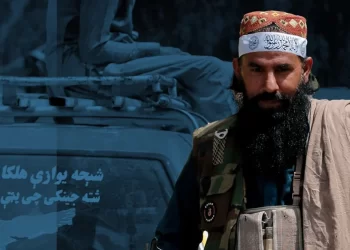
Taliban Morality Police enforce Sharia regulations on the streets of Afghanistan, stopping vehicles for inspections. (Photo Credit: Mohsen KARIMI / AFP)

Mohsen KARIMI / AFP

Under the directive of Mullah Hibatullah, a large jihadist madrasa must be established in each of Afghanistan’s 34 provinces. These madrasas must be equipped with sufficient resources and staffed with “prominent scholars of Islamic sciences (Sheikh al-hadith).” A significant portion of the government’s budget is allocated to these institutions. Such schools have been established in nearly all provinces of the country. Recently, Mullah Abdul Ghani Baradar, the Taliban’s deputy economic prime minister, stated in a meeting with Indian and Bangladeshi religious scholars that the Taliban have initiated these jihadist madrasas to promote Islam among the people.

While these remarks illustrate the Taliban’s resolute and fervent interest in indoctrinating the Afghan populace, they also reveal their deep-seated mistrust of the people of Afghanistan.

Some media outlets attempt to portray Mullah Abdul Ghani Baradar as a moderate among the Taliban leadership, suggesting that, if given the opportunity, he and others like him would embrace all citizens regardless of gender, sect, ethnicity, or belief, and include them in the state’s structure. However, his comments reveal that Baradar, like other Taliban leaders, views the majority of Afghans who are “not Taliban” as somehow outside the fold of Islam and alien to its teachings. In their view, these people need to be re-educated in religious principles, and the Taliban’s return to power presents an opportunity to rectify their alleged ignorance and bring them back into the fold of Islam.

Mullah Hibatullah has repeatedly stated that television channels and media that operated “during the occupation” distanced people from religion. He emphasizes the need to eliminate the “remnants of occupation” and acquaint Afghans with the truths of Islam.

One employee of an NGO focused on supporting children and widows recounted an incident when Taliban intelligence agents visited their office to investigate the staff’s backgrounds. When one of the agents saw an employee praying, he expressed surprise and asked, “Do you pray too?” Such incidents highlight the Taliban’s mistrust of the non-Taliban majority and their preconceived notions about them.

It is also possible that the Taliban leadership uses these actions to fabricate excuses for suppressing the population. By casting doubt on people’s religiosity, the Taliban not only portray themselves as more devout but also seek pretexts for weakening and oppressing the public.

The Ministry of Hajj and Religious Affairs drafts the content for Friday sermons nationwide, and no preacher is allowed to deviate from these prepared texts. Two recurring themes in these sermons stand out. First, they align with the Taliban’s political and cultural narratives, promoting their ideology. Second, they often present basic religious teachings and rudimentary topics, as though assuming that Afghans have been entirely deprived of religious education in the past two decades.

This approach implies that Afghans must be reintroduced to religious principles from scratch.

Now that the Taliban have seized power after years of bloodshed and destruction, they face threats from other extremist groups, including Islamic State – Khorasan Province (ISKP), which shares ideological similarities with them. The Taliban have dedicated a portion of their ideological propaganda to countering Islamic State – Khorasan Province (ISKP). They have published books about ISIS and made them mandatory reading in their madrasas and training centers.

Interestingly, the Taliban refer to the Islamic State – Khorasan Province (ISKP) as a “takfiri group” in these publications, despite the Taliban’s long history of excommunicating others for differing beliefs. For years, the Taliban exaggerated claims of sexual freedoms under the previous republic to incite their followers and justify violence. They labeled anyone who worked with “occupiers,” even as low-level government employees, as apostates, making their blood permissible to spill. The Taliban continue to target former civilian and military employees of the previous government.

If the Taliban are not a takfiri group, then no takfiri group exists. The jihadist madrasas mentioned by Mullah Abdul Ghani Baradar promote an entirely takfiri narrative. What is taught in these schools? Students are instructed about the dichotomy between Dar al-Kufr (the abode of unbelief) and Dar al-Islam (the abode of Islam). Other Islamic sects are excommunicated, linked to Jews and Christians, and the revival of ancient sectarian conflicts is encouraged.

The interpretation of Islamic jurisprudence, Quranic exegesis, and Hadith taught in these madrasas fosters fear, violence, intolerance, and the elimination of dissenters. The Taliban aim to indoctrinate future generations with these ideologies. Thousands of religious schools across Afghanistan expose hundreds of thousands of boys and girls to exclusionary and divisive readings of Islam.

The survival and persistence of fundamentalist groups depend on their extremist and violence-promoting ideologies. If these groups were to abandon such beliefs, they would quickly lose their essence and collapse. The leadership of the Taliban organization is well aware of this fact, which is why it strives to keep the flames of these ideologies alive. Establishing jihadist religious schools is one of the Taliban’s main tools to achieve this goal.

If the situation continues as it is, extremism will undoubtedly extend beyond Afghanistan and spread to other countries. Even now, we are witnessing the effects of the Taliban’s takeover of Afghanistan in Pakistan. This country is grappling with extremist militant groups, placing it in a difficult position—groups whose primary bases are reportedly located within Afghan territory.

The Pakistani government believed it could exploit extremism indefinitely to serve its expansionist geopolitical ambitions. However, the challenge these groups currently pose to Pakistan’s government demonstrates that religious extremism is like a scorpion; its nature is to sting, and in fulfilling this nature, it makes no distinction between friend and foe.

You can read the Persian version of this Analysis here:
کوشش طالبان برای مسلمان‌سازی مردم افغانستان! | روزنامه ۸صبح 

ShareTweetSendSendShare

Related Posts

Returnees of Afghanistan walk through a crowded border crossing after being deported from neighboring countries, many seeking aid and shelter upon arrival.(Photo Credit: IOMAFGHANISTAN/X)
Afghanistan News

OCHA: Refugees Returned to Afghanistan from Pakistan Need Urgent Support

16 September 2026 [t_time:1789563487]
An elderly man from Afghanistan looks on, as many families across the country rely on remittances from relatives abroad to survive worsening poverty. (Photo credit: AFP)
Daily Reports

Poverty and Hunger Deepen in Afghanistan as Families Depend on Remittances from Abroad

9 September 2026 [t_time:1788956650]
A Talib official gazes downward beside a textured relief map of Afghanistan, symbolizing the country's uncertain path under continued Taliban rule. (Photo credit: AFP)
Analysis

Afghanistan’s Future Under Continued Taliban Rule

26 August 2026 [t_time:1787754265]

Latest

Loading latest news...

Popular stories

  • Hamza bin Laden - the son of Osama bin Laden (Photo: Social Media)

    Al-Qaeda Releases Hamza bin Laden Message on 9/11 Anniversary

    Share
    Share Tweet
  • Sajjad Haider Khan: Those with Valid Visas Will Continue Their Studies in Pakistan

    Share
    Share Tweet
  • UN Report Reveals Shifts in Family Attitudes and Rise in Domestic Violence in Afghanistan

    Share
    Share Tweet
  • Taliban Shoot Young Man from Herat After Torturing Him with Hands Tied

    Share
    Share Tweet
  • German Politician Calls for Faster Deportation of Undocumented Afghan Migrants

    Share
    Share Tweet

Podcast

Insights
Insights

Join Lynne O’Donnell for 8AM’s podcast series, Insights.
Lynne talks with generals, diplomats, soldiers, journalists, politicians, activists, people who have front row seats for conflicts around the world, and citizens with a story to tell, happy or sad. For this first series, Afghanistan is the focus. Lynne and her guests talk about the collapse of the republic in August, 2021, and the impact since — for the people of Afghanistan, for the security of the region, for the safety of the world. It’s important, interesting and insightful.

Insights/22: Controlling the Narrative with Mina Sharif
byinsights8am

Controlling the Narrative

Lynne O’Donnell talks with Mina Sharif, author, activist, women’s rights campaigner, educator and mentor. They discuss who controls the narrative and who speaks for Afghanistan’s people when the Taliban appear to have seized control not only of the country but of the message, too.

Have a listen

Insights/22: Controlling the Narrative with Mina Sharif
Episode play icon
Insights/22: Controlling the Narrative with Mina Sharif
Episode Description
Episode play icon
Insights/21: Media Meltdown with Zahra Joya
Episode Description
Episode play icon
Insights/20: Terror Inc with Scott Richards
Episode Description
Episode play icon
Insights/19: Busting Stereotypes with Bushra Gohar
Episode Description
Episode play icon
Insights/18: Media Matters with Waliullah Rahmani
Episode Description
Episode play icon
Insights/17: What Goes Around Comes Around with Sima Samar
Episode Description
Search Results placeholder
Hasht-e Subh

8AM Media, also known as Hasht-e-Subh Daily, stands as Afghanistan's premier independent and non-profit newspaper, resonating as a beacon of journalistic integrity since its establishment in June 2007 by esteemed Afghan journalists and human rights advocates. With a steadfast commitment to citizen journalism and civic education, Hasht-e-Subh Daily has earned its place as the most esteemed publication in the nation.

Publisher: Sanjar Sohail
Email: [email protected]
Executive Director: Parwiz Kawa
Email: [email protected]

Read More

Uruzgan Residents: “Even Common Illnesses Go Untreated Here”

Faizabad Residents: Road Construction Promises Left Us With Only Dust and Ruins

Mozhda (5): The Woman Who Lost University but Kept the Dream of Education Alive for Her Daughter

Helmand Sources: Taliban Detain Woman for Secretly Teaching Girls

Three Children from One Family Killed in Traffic Accident in Logar Province

Editor’s Choice

Every Saturday morning, 8AM MEDIA English Services Department will guide you through the week’s biggest stories from Afghanistan and the international community.

Subscribe

© 2026 - ©Hasht-e Subh Daily

No Result
View All Result
8am.Media
پښتو ویب‌پاڼه
ویب‌سایت فارسی
اۉزبېکچه ویب‌سایت
  • Home
  • News
    • Afghanistan News
    • World News
  • Opinion
    • Editorial
    • Analysis
  • Reports
    • Daily Reports
    • Investigative Reports
  • Society
    • The story of people
  • Women’s Word
  • Columns
    • Three Years After Afghanistan’s Fall: The Taliban’s Resurgence
    • Towards Equality
    • The Resurgence of the Taliban: Two Years Since Afghanistan’s Fall
    • Hebatullah Report Special Edition
    • Resistance for Education Special Edition
    • Special Column on Taliban’s Education Curriculum
    • Nawroz
  • Interviews
  • Contact Us
    • About Us
    • 8AM MEDIA Annual Awards
    • Submit an Article to Hasht-e-Subh
  • 8am.media

© 2026 - ©Hasht-e Subh Daily