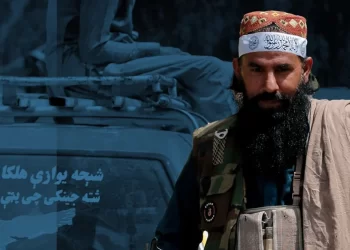
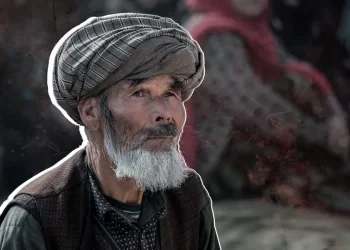
Since the Taliban’s takeover on August 15, 2021, the group has become increasingly audacious and confident in its assaults on the fundamental rights of the citizens of Afghanistan. From the severe suppression of women’s protests and widespread violations of their rights to imposing severe restrictions on the rights of ethnic and religious minorities, the Taliban have pursued a form of exclusivist tribal politics favoring Pashtun chauvinism, showing no tolerance or flexibility. This indicates that the Taliban’s policy of repression and intimidation grows harsher and more brazen with each passing day. They seem to have no fear of the possibility of igniting popular rebellion and insurrection. The Taliban are so reliant on and assured of the destructive power of their regime of fear that they believe no one can stop them and that they can remove any obstacle in their path.
The people’s apathy, having been intimidated by the Taliban’s regime of fear, is the primary factor enabling the group’s daring rampages. In the Taliban regime, fear follows you everywhere, and there is no escape from it. Ignoring this fear leads to catastrophic consequences, and taking it seriously results in a similar predicament. If you disregard the politics of fear, its enforcers will come for you, and you will eventually end up in their dreadful prisons. If you take this fear seriously, you become a wretched, disaster-stricken being who merely exhibits the act of living without truly living in the real sense of the word. Recognizing the politics of fear turns you into a complete slave of the Taliban regime, which thrives on your fear and despair. In this scenario, you lose the courage to challenge the Taliban’s regime of fear, making resistance more impossible than ever.
The people are numb and indifferent to what happens to them and around them. This apathy has turned them into beings who show no reaction even to significant political changes and are merely spectators. When hundreds of people in a Taliban Vigilante Justice are even willing to trample over one another to witness the spectacle of human degradation, it does not signify the awakening of the people but rather their moral decline and degradation. These people have been reduced to slaves of the Taliban’s spectacle of degradation and mere viewers of disaster, and their indifference to any catastrophe ensures the stability and longevity of the Taliban emirate.
Under Taliban rule, the people of Afghanistan have become an obedient and submissive force. The more pressure the Taliban exert on them, the more they bow their heads in compliance. Over the past nearly three years, despite the imposition of the most severe restrictions on the lives of citizens, we have not witnessed any widespread and extensive protests that could seriously challenge the Taliban. This is bad news for us. The increase in suicide rates, especially among women, indicates a catastrophe that has expanded in scope and severity since the Taliban came to power. Since their takeover, as unemployment and poverty have worsened and daily restrictions have been imposed on people’s lives, we have witnessed a new phase of despair and depression. Under the previous government, despair and depression were also high; however, under the Taliban regime, the factors contributing to despair and depression have multiplied. In the previous government, at least no one was punished for listening to music, shaving their beard, growing their hair long, not participating in communal prayers, or not wearing a burqa. Under Taliban rule, people are not only depressed and suicidal because of increased unemployment and poverty but also because they are not allowed to travel freely, dress as they wish, or groom themselves as they please in their restricted lives in Afghanistan. In this day and age, imposing such restrictions on people’s lifestyles is unacceptable and anxiety-inducing.
Indeed, in today’s Afghanistan, the Taliban have succeeded in transforming the people to their advantage. This transformation is due to the factors mentioned above. The people the Taliban have managed to create are fearful, depressed, hopeless, obedient, and indifferent; they lack the enthusiasm and motivation to be active and vigilant in society. Consequently, they are uninterested in political action against the current situation and have become accustomed to living in a disaster-stricken and crisis-ridden society. These people are caught up in daily survival and have no intention of rebuilding or revitalizing themselves. Thus, the Taliban can easily label any anti-human and anti-people action or decision as “the will of the people” and implement it with confidence. The Taliban know well that the people they have created lack the language of protest against any political action. In reality, a force that lacks the language of protest against systems does not exist.
In the nearly three years since the Taliban’s return to power, Afghan women have demonstrated courageous resistance against the group’s oppressive policies, proving they refuse to become the compliant populace the Taliban desires. Although these women have not yet garnered the support of the broader population, they have shown, to the best of their ability, that they do not accept the Taliban’s policies of subjugation. Despite being small and concentrated, their protests have had a significant impact, raising the cost of international engagement with the Taliban. Currently, the face of civil resistance against the Taliban emirate is female. It seems that only Afghan women possess the awakened conscience necessary to fight against the despotic and misanthropic regime ruling the country.
If the rest of the Afghan population were to follow the women’s example and join this resistance, the lifespan of the degenerate Taliban regime, which currently lacks both domestic and international legitimacy, would be much shorter than anticipated. The people we envision must not continually retreat in the face of the onslaught of barbarism, abandoning their positions one by one. If the people want to survive and build a brighter future for their country, they must learn from their defeats and prepare for a counterattack.
You can read the Persian version of this analysis here: