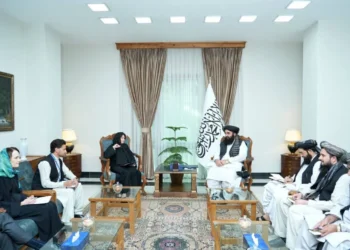
The United Nations concluded the third meeting of the Doha Process yesterday. Initially scheduled to span two days on June 30th and July 1st, an additional session was held yesterday (Wednesday, July 2nd) on the sidelines of the main event. This side session involved civil society and women’s representatives from various countries.
Chaired by Ms. Rosemary DiCarlo, the UN’s Deputy Secretary-General for Political and Peacebuilding Affairs, the third Doha Meeting omitted critical issues such as the formation of an all-inclusive government and violations of women’s rights, notably under the absence of representatives from anti-Taliban political factions, civil activists, and women.
The session sparked considerable controversy, primarily regarding the exclusion of women’s issues from the agenda and their replacement with discussions on the private sector and drug trafficking. The removal of women’s issues from the agenda of the third Doha Meeting and the failure to invite female representatives and civil activists were done at the Taliban’s insistence.
Initially not invited to the first Doha Meeting, the Taliban were invited to the second but did not attend due to the UN’s refusal to accept their conditions (such as their participation as Afghanistan’s sole representatives and a meeting with the UN Secretary-General). However, after months of negotiation, the UN eventually accepted the Taliban’s conditions to secure their participation in the third session.
The outcome of this negotiation was the removal of women’s issues and the formation of an all-inclusive government from the official agenda, as well as the exclusion of women and civil activists from the conference. These decisions have drawn significant criticism from citizens of Afghanistan and human rights organizations globally, profoundly influencing the perception and impact of the third Doha Meeting.
Since the agenda of the meeting was changed at the Taliban’s request, Afghan women and civil activists worldwide have continuously criticized this decision. From the outset, warnings were issued that holding the third Doha Meeting with a Taliban agenda and in the absence of women and civil society representatives would be a stain on the UN’s reputation. However, these warnings did not weaken the UN’s resolve to bring the Taliban to the negotiating table, even at the cost of compromising the principles of the organization and disregarding the Afghan people.
Ultimately, the third Doha Meeting proceeded with a Taliban agenda and without women and civil society present. In response to widespread criticism over the exclusion of women and civil society and the persistence of the Taliban agenda, the UN organized an informal side session after the official two-day conference. This session aimed to allow civil society and women representatives to meet with country delegates.
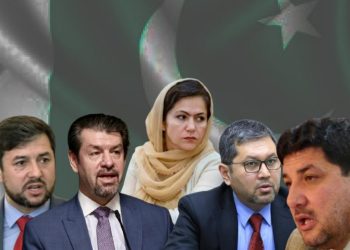
At least three women refused to participate in a protest against the Taliban’s agenda during this side session, but Ms. DiCarlo stated yesterday that eight representatives from civil society and women’s groups did attend. Later, the media disclosed the identities of these eight individuals, comprising one man and seven women. However, some have alleged that they may have affiliations supporting engagement with the Taliban, raising concerns about their connections to certain groups within the Taliban.
Afghan people, media professionals, and social media users largely consider the sideline meeting between purported representatives of Afghan women and civil society with foreign envoys as a superficial and ineffectual session organized to mitigate criticisms of the UN’s operational methods. They find the selection process of these representatives contentious. Ms. DiCarlo avoided mentioning them in her press conference, citing privacy concerns. However, Afghans believe they have a right to know who speaks on their behalf, how these representatives were chosen, and what they are saying.
Reporters in Doha noted yesterday that some countries did not participate in the sideline meeting, whereas 25 countries attended the main sessions; a UN Deputy Secretary-General for Political Affairs mentioned that 15 or 16 countries participated in the sideline conference. This underscores the perception that the meeting with foreign envoys was insignificant and theatrical.
Consequently, on social media platforms yesterday, users once again condemned the UN’s handling of Afghan women’s issues as a “stain of disgrace” on its reputation.
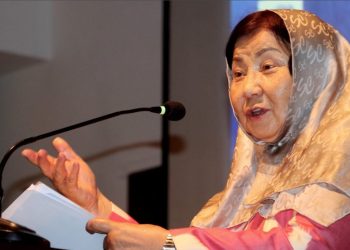
Criticism of the United Nations’ handling of this issue has been consistently raised over the past few months, by women’s protest movements, analysts, media outlets, and social media users alike. However, these protests and criticisms have not led to any changes. The UN Deputy Secretary-General acknowledged these criticisms during a press conference on the second day of the main session, stating that they were aware of the protests and criticisms, but emphasized that this was just the beginning. The UN’s primary effort, they explained, has been to push the Taliban towards negotiating with envoy countries. Although openly acknowledging the absence of civil society and women representatives in the main sessions due to Taliban opposition, they evaded providing a sincere response regarding the agenda and attempted to conflate unrelated issues with women, seeking to justify the UN’s quasi-Taliban-like actions.
During the concluding press conference of the third Doha meeting, when asked about the omission of women’s issues and the comprehensive formation of the government from the agenda, replaced by the private sector and drug control, the Deputy Secretary-General deliberately engaged in obfuscation and wordplay to create a diversion and justify their actions. In response to direct questions about women’s rights violations, they argued that women not working in the private sector would be detrimental, stating that since women constitute 50% of the population, they are inherently part of the private sector agenda. They then proceeded with another absurd argument to include women in an agenda session focused on drug control, claiming that women also cultivate drug plants and there are addicted women. Such arguments seem aimed at implying that women should be included in the context of drug control and are not excluded from the agenda.
However, the issue in Afghanistan is not whether women or men cultivate drug plants, but when discussing women’s issues, it refers to respecting all their rights and freedoms—from the right to move freely to the right to choose, engage in political activities and leadership, access education, and employment, custody rights for divorced women, right to legal representation and judgeship, and other inherent rights. Reducing women’s rights and freedoms to the existence of addicted or drug-cultivating women is a shameful attempt to absolve oneself of quasi-Taliban-like behavior by the United Nations.
You can read the Persian version of this analysis here: