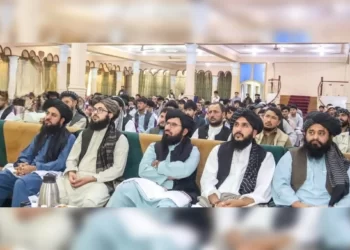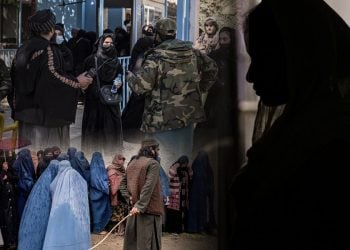

May 3 is observed globally as World Press Freedom Day. On this occasion, journalists, media organizations, and human rights groups have released statements and reports expressing deep concern over the deteriorating state of press freedom in Afghanistan. These reports describe the media environment and working conditions for journalists in Afghanistan as “critical and dangerous.” Journalists working inside the country under Taliban rule say press freedom no longer exists, and they have effectively become mere “quote relayers” of the Taliban. They emphasize that no one is allowed to publish even a single word against the Taliban’s policies. According to them, even the slightest critical remark can lead to arrest and imprisonment.
Yesterday, to mark World Press Freedom Day, journalists, media advocacy groups, and human rights organizations reacted strongly to the current media landscape in Afghanistan. Many journalists and press freedom defenders described the working conditions and access to information as dire, warning that the Taliban are gradually turning Afghanistan into a “silent and invisible” country.
Journalists Speak Out Under Taliban Rule
Adrina Behnaz, a female journalist working in Afghanistan under Taliban rule, told the Hasht-e Subh Daily that she has collaborated with domestic media since the group came to power, but that press freedom is practically nonexistent. According to her, even live and political broadcasts require prior Taliban approval. She emphasized that domestic media are forced to censor quotations from foreign governments and international organizations regarding Afghanistan, especially those related to the Taliban.
Behnaz stated, “Criticizing the Taliban is forbidden. Even referring to Afghanistan’s situation as a ‘crisis’ is prohibited. If a journalist criticizes the Taliban, even on their personal social media pages, they risk arrest.”
Sohrab Behnoosh (pseudonym), another journalist working under Taliban rule, told the Hasht-e Subh Daily: “When a journalist on World Press Freedom Day cannot even speak anonymously or without criticizing the Taliban regime, it shows how severely freedom of the press and expression have been suppressed and imprisoned.”
He added that access to information has effectively vanished, and there is no job security. The economic situation of journalists and media outlets is extremely fragile. Due to security and financial challenges, journalists work with minimal pay and resources just to survive, but even these conditions are not available to all.
Behrooz (pseudonym), another journalist, said that press freedom in Afghanistan is a myth. Despite extreme self-censorship in following Taliban orders, he noted that a deep, institutionalized fear persists: even those who comply with Taliban demands live in constant terror and are viewed by the group as outsiders or enemies. He stressed that, under current conditions, the notion of press freedom feels more like a dream. Nonetheless, journalists strive to ensure that voices are not silenced and that Afghanistan does not fade from the global image.
Reactions of Media and Human Rights Organizations
Reporters Without Borders (RSF), in its 2025 report on global media conditions, stated that press freedom is more suppressed worldwide than ever before, with media in 160 out of 180 countries facing serious financial challenges. Afghanistan ranked 175th out of 180 countries. RSF reported that this ranking reflects the dire state of media in Afghanistan under Taliban control. The country scored only 17.88 out of a possible 100.
The organization assessed Afghanistan’s situation across five key indicators: political, economic, legal, social-cultural, and security contexts, each showing severe deterioration. Afghanistan ranked 175th in the security index, 178th in the legal index, and 165th in the economic index. According to the report, many female journalists have been forced to leave the profession due to direct pressure and threats from the Taliban’s Ministry for the Propagation of Virtue and Prevention of Vice. Currently, media outlets are only allowed to publish Taliban-approved content.
RSF emphasized that since the Taliban took control of Afghanistan in 2021, media freedom has suffered immense setbacks. The group’s policies have included extreme restrictions on independent journalism, the elimination of media plurality, and targeted repression of journalists, especially women. According to the report, at least 12 media outlets in Afghanistan were forced to shut down in 2024 alone due to security threats and financial strain.
The Afghanistan Journalists Center (AFJC) also reported a significant increase in violations of journalists’ rights and stricter media restrictions over the past year. Between May 2024 and May 2025, it documented 215 violations of press freedom, including 175 instances of direct and indirect threats and 40 journalist detentions—a 58% increase compared to the previous year.
The Center added that press freedom has “seriously deteriorated” amid mounting pressures, and journalists, particularly in remote areas, face major challenges. It reported that verbal and physical threats, obstruction of news coverage, and arbitrary detentions have had a widespread negative impact on Afghanistan’s free media environment. Over the past year, the Taliban issued seven new directives in addition to 16 previous ones, imposing significant limitations on media activities.
Simultaneously, the Afghanistan Journalists Support Organization (AJSO) expressed concern over the state of press freedom and sent an open letter to Tatiana Valovaya, Director-General of the United Nations Office in Geneva, calling for urgent and effective support for Afghan journalists in neighboring and regional countries. The letter emphasized that over the past two decades, Afghan journalists played a vital role in public awareness and political and social development, despite threats and pressure, but since the fall of the republic and Taliban takeover, they have been sidelined and now face threats, discrimination, and neglect from international institutions.
The organization also highlighted the difficult conditions faced by Afghan refugee journalists in third countries, pointing to long delays in processing their immigration cases. It warned that the prolonged process has shattered many journalists’ hopes for the future and left their fates in uncertainty. The group stated that many journalists have complained about the lack of responsiveness, discriminatory treatment, and the slow pace of case reviews by the UNHCR and called on the UN to intervene directly and expedite their cases.
The United Nations Assistance Mission in Afghanistan (UNAMA), on the occasion of World Press Freedom Day, stated that it is witnessing the erosion of free and independent media in the country. In a statement marking the day, UNAMA expressed solidarity with Afghan media and called for support for press freedom. The mission noted that Taliban-imposed restrictions and economic hardships facing media outlets have severely jeopardized the public’s access to essential information.
Roza Otunbayeva, Head of UNAMA, said: “A diverse and healthy media sector is essential for transparency, public trust, and good governance. But in Afghanistan, we are witnessing the steady erosion of free and independent media.” UNAMA’s statement added that due to Afghanistan’s economic crisis, media revenues have plummeted, forcing many outlets to shut down. The mission also warned that Taliban restrictions have subjected professional media workers to threats, arrest, torture, and mistreatment. It further noted that female journalists, in particular, have faced heightened risks and obstacles.
Amnesty International also released a report on World Press Freedom Day, stating that the Taliban have systematically suppressed media freedom. Between August 2021 and September 2024, at least 336 journalists and media workers were arrested, tortured, or threatened for reporting critically on the group. Amnesty emphasized that this targeted suppression places Afghanistan among the worst countries globally in terms of press freedom.
Richard Bennett, UN Special Rapporteur on the situation of human rights in Afghanistan, also marked the day by urging the Taliban to immediately release all imprisoned journalists. In a video message on Saturday, May 03, 2025, he stressed that freedom of expression is crucial to the realization of all human rights.
Meanwhile, the European Union, in a statement on World Press Freedom Day, reaffirmed its commitment to supporting Afghan journalists, especially women. It announced plans to assist media work in Afghanistan by strengthening journalists’ technical skills across various domains. The EU also called for guarantees of journalists’ safety and free access to information.
UN Secretary-General António Guterres, in his message, stressed the importance of creating an environment where journalists can work without fear or bias. He warned that the absence of media freedom ultimately harms everyone. Guterres stated: “In a world riven by conflict and division, World Press Freedom Day underscores a fundamental truth: the freedom of the people depends on the freedom of the press.”
The United Nations General Assembly has designated May 3 as World Press Freedom Day. According to the UN, the goal of this designation is to raise awareness about the importance of media freedom and to remind governments of their duty to respect and protect the right to freedom of expression, as enshrined in Article 19 of the Universal Declaration of Human Rights.
You can read the Persian version of this report here:
واکنشها به روز جهانی آزادی مطبوعات؛ در افغانستان چیزی به نام آزادی وجود ندارد