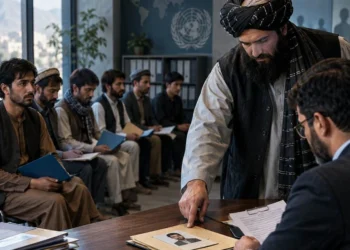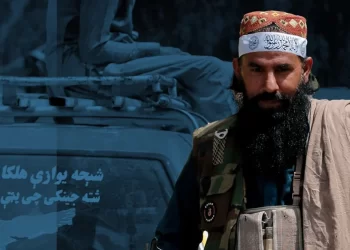

On the third anniversary of the fall of Afghanistan’s republic government, prominent domestic and foreign political figures have criticized the Taliban for continuing ethnic discrimination. They have called on the Taliban to end violence and suppression of Afghan citizens under the guise of ethnic differences. These politicians have also warned that if the Taliban do not stop their discriminatory behavior against the country’s ethnic groups, Afghanistan will face hidden insecurity, and armed conflicts will become inevitable.
Mohammad Mohaqiq, leader of the People’s Islamic Unity Party of Afghanistan, on Wednesday, August 16, 2024, emphasized the need for the Taliban to respect the rights of ethnic groups and religious sects in the country. The political leader, in a statement marking the third anniversary of the Taliban regime’s rise to power, urged the group to stop suppressing citizens who do not share their ethnic background or beliefs. He also called for peaceful negotiations with opposition politicians. Mohaqiq, who is currently living abroad, warned that if the Taliban do not heed the demands of the people of Afghanistan, armed conflict will become unavoidable. He also urged the international community to recognize Taliban opposition groups as key stakeholders in Afghanistan’s issues and to exert pressure on the Taliban to engage in peace talks.
Mohammad Karim Khalili, head of the Islamic Unity Party of Afghanistan and former vice president, also criticized the current situation in the country, stating that the ongoing state of affairs is unbearable for Afghan citizens. On Tuesday, August 15, 2024, in a statement, Khalili stressed that the Taliban must agree to a decentralized, elected government with the participation of all parties. His statement warned: “If the oppression and violation of the people’s rights continue, the country will head toward hidden insecurity, which will eventually lead to an explosion.”
Additionally, the National Resistance Council for the Salvation of Afghanistan, on Wednesday, August 16, 2024, issued a statement accusing the Taliban of committing severe human rights crimes during their first reign (in 1999) when they entered the northern provinces. According to the council, the Taliban’s behavior, actions, and ideology have not changed over the past 25 years. The statement said: “The massacre, imprisonment, capturing of women, burning of gardens, cutting down trees, and destruction of infrastructure were among the heinous crimes committed by this group in Northern Afghanistan, which history will not forget.” The council also accused the Taliban of suppressing, killing, punishing, and imprisoning Afghan citizens after retaking control of the country. The Council was formed after the Taliban seized power. Its prominent members include Marshal Abdul Rashid Dostum, Atta Muhammad Nur, Mohammad Mohaqiq, Abdul Rab Rasul Sayyaf, and Sarwar Danesh.
In addition to Afghan political figures, several foreign politicians have also criticized the Taliban’s discriminatory behavior toward non-Pashtun ethnic groups, especially the Hazara citizens of Afghanistan. David Alton, a member of the British House of Lords, condemned the Taliban’s actions, particularly their misogynistic policies, and called for the international community to take practical steps against the group’s ethnic biases toward Hazara citizens. On Thursday, August 15, 2024, Alton posted on X (formerly Twitter) that the Taliban’s rule over Afghanistan has led to the collapse of two decades of progress in human rights, particularly in women’s and minority rights. Alton added: “We must act in response to the suffering of Afghan citizens and not allow the Taliban to go unpunished for their widespread human rights violations.”
These reactions come amid repeated accusations of ethnic discrimination against the Taliban by non-Pashtun citizens and representatives over the past three years. Citizens believe that the removal of non-Pashtun commanders from the group’s military ranks and the marginalization of Tajik, Hazara, Uzbek, and other non-Pashtun ethnic groups from leadership and high-ranking government positions are clear examples of the Taliban’s ethnic biases. Numerous reports of the Taliban’s mistreatment of non-Pashtun citizens have surfaced over the past three years.
It appears that even Mullah Hibatullah Akhundzada, the Taliban Supreme Leader, is aware of his group’s ethnic discriminatory practices. He recently called on Taliban officials and members to respect the rights and dignity of all ethnic groups in Afghanistan. On Wednesday, August 14, 2024, Taliban spokesman Zabihullah Mujahid posted an audio recording attributed to Akhundzada on social media, claiming that the supreme leader made these remarks to mark the third anniversary of the “Taliban’s victory over Afghanistan at Kandahar Airport.” In his speech, Akhundzada urged Taliban members to refrain from causing division and to set aside ethnic issues. “Do not tie your hearts to positions. Among yourselves, be friends and enemies only for the sake of God, not for kinship. Do not seek power or tribalism,” he said. The Taliban Supreme Leader indirectly described ethnic division and discrimination as acts of oppression, warning his followers that oppressing the people would ultimately destroy the group’s regime.
You can read the Persian version of this new here: