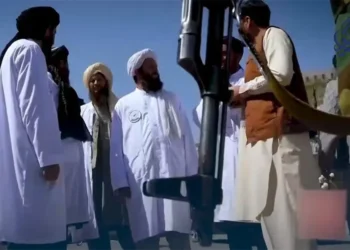
Amid the Taliban’s ongoing restrictions on educational institutions, some students at Kabul Polytechnic University have reported experiencing torture, psychological harassment, and punitive treatment by the group. These students state that entry to classrooms is conditional upon wearing traditional clothes and trousers, maintaining a long beard, and donning an Afghan cap. They also express grievances against certain Taliban-appointed instructors who, instead of teaching, engage in humiliating and insulting students, suppressing dissenting opinions, and undermining their dignity. According to the students, Islamic culture instructors at the university label trousers and shirts as “infidel attire” while describing long Afghani traditional cloths, trousers, and turbans as “heavenly attire.” They claim these instructors, predominantly affiliated with the Taliban, focus on ideological propaganda during classes rather than academic content, referring to former military personnel, particularly the National Directorate of Security (NDS)’s Zero Unit, as the “infidel unit.” Students further note that some Taliban-affiliated peers display videos of their clashes with former military forces via projectors, attempting to demonstrate power and legitimize their perspectives.
Several Kabul Polytechnic University students report that failure to comply with requirements for traditional attire, long beards, and caps results in being barred from continuing their studies. They also state that resistance or protests against these rules lead to physical confrontations and torture.
Payman (pseudonym), a young student frustrated by the university’s harsh and restrictive conditions, recounts an incident: “One day, a student wearing a shirt and trousers was denied entry by the university’s guards [Taliban fighters]. He calmly pleaded with them, promising not to repeat the act and requesting permission to attend class, but the guards refused. A heated verbal argument ensued, and soon the guard and student clashed physically. The guard [Taliban fighter] struck the student’s head and face with the butt of a Kalashnikov until he lost consciousness.”
The student adds, “His classmates carried him, bloodied, to the nearby 200-bed police hospital.” He notes that students wearing trousers and shirts are denied university entry, those with trimmed beards are expelled from classes, and those without the religious Afghani caps are marked absent. He mentions that just yesterday, some of his classmates who lacked Afghani caps were recorded as absent despite attending class.
Alongside the harsh treatment by Taliban security guards, several Islamic culture instructors emphasize wearing tunics and trousers, accusing those in trousers of adopting “infidel attire.”
Students report, “Islamic culture studies instructors insist that we avoid infidel or tight clothing that reveals the body’s contours.”
They add that students must wear white religious Afghani caps or turbans, and those who do so are deemed “heavenly” by these instructors. Peaked caps are prohibited, with instructors labeling them as infidel headwear.
An anonymous student from Kabul Polytechnic University states that most Islamic culture studies instructors are Taliban members. He notes that these instructors, despite frequent absences, spend class time disparaging former security forces and discussing political issues rather than teaching.
He recounts, “Our Islamic culture studies instructor calls the Zero Unit [former National Directorate of Security (NDS)] ‘Kafir One Unit.’ He mocks us, saying, ‘Have you seen the power of the turban and the Taliban? With the strength of this headscarf, we defeated a force of hundreds of thousands.”
Students also report that some peers linked to Taliban intelligence display videos of Taliban clashes with former military forces on classroom projectors, turning lessons into platforms for propaganda and power displays.
These students note, “These instructors are so strict that exams for these subjects are sometimes taken more seriously than core courses. The highest likelihood of failure is in the Islamic culture studies subject; many students must retake exams up to three or four times, and some even face the risk of expulsion.”
According to Kabul Polytechnic University students, individuals affiliated with Taliban intelligence are present among both instructors and students. They emphasize that most of these instructors are knowledgeable only in religious concepts from madrasas and lack academic or scientific expertise.
Meanwhile, escalating restrictions have discouraged many students from pursuing their education. Some express regret for attending university, feeling they made a grave mistake. Concurrently, several university instructors voice concerns over a sharp decline in student motivation and significantly lower exam scores.
Jahan (pseudonym), an instructor at Kabul Polytechnic University, says, “Previously, there was more vibrancy, and students were eager to learn. The university atmosphere was warm, with healthy competition among male and female students. Now, that enthusiasm has been replaced by fear, restrictions, and despair.”
He adds, “Back then, female students often outworked their male peers. When assigned factory projects, they drafted plans with such precision that differences from the original were minimal. Now, enthusiasm and motivation have plummeted. For instance, in the recent exam, only about 20 percent of my students achieved satisfactory grades.”
A Photographer and Print services who prints engineering students’ architectural maps remarks, “In the past, we earned 20,000 to 30,000 Afghanis monthly from a single machine. Now, we’re willing to sell a map costing 250 Afghanis to print for 150 Afghanis, yet students show no interest and don’t purchase.”
You can read the Persian version of this report here:
شکنجه بهخاطر پوشش؛ دانشجویان پلتخنیک زیر چکمه ایدیولوژی و ترس