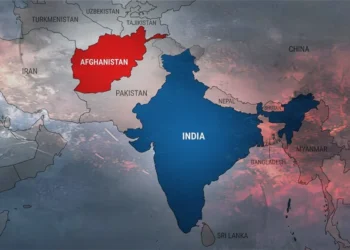
Recently, Donald Trump, the President of the United States, announced that any country trading with Iran would face a 25 percent tariff on all its trade with the United States. This statement immediately raised alarm among Afghanistan traders who rely on Iran and the port of Chabahar to trade with other countries. They explain that although Afghanistan does not trade directly with the United States, the closure of trade routes with Pakistan has already strained their businesses, and this decision adds even more pressure. Traders note that a large share of Afghanistan’s trade passes through Iran, and any new restriction turns an already difficult process into an even heavier burden.
In conversations with the Hasht-e Subh Daily, traders stress that the closure of trade and transit routes with Pakistan this year, following border clashes between the Taliban and Islamabad, has deeply damaged their livelihoods. They warn that if losses continue through these limited routes, many traders will have no choice but to shut down their operations.
Romel, a trader who redirected his business toward Iran after Pakistan’s routes closed, speaks openly about his concerns over the new tariffs. He says that even though the decision affects them indirectly, it brings fresh uncertainty and new risks.
Romel explains: “This year, we lost a lot of money in Pakistan. Now, because of the unstable situation in Iran, our goods are stuck at Bandar Abbas, and we cannot follow up properly. We do not know where our shipments are. Only the invoices have reached us, while our goods remain lost and unattended. If the same situation happens again in Iran, traders will face serious losses.”
Another trader, Geda Mohammad Kohdamani, believes Trump’s decision could push Afghanistan into a situation similar to Iran’s, where rising prices hurt both traders and ordinary consumers.
Kohdamani says, “We already suffered heavy losses in Pakistan this year, and with this new decision, we will be harmed again because our dependence on Iran has grown. Prices are already at their highest point. Before, importing foreign goods cost us about five thousand dollars. Now, using the Chabahar route, it costs eight thousand dollars. Our costs have doubled. If this 25 percent tariff is added, both traders and consumers will suffer. From every angle, the damage falls on traders and on the people, and everyone feels confused and helpless. More than 1,200 fuel tankers have been stuck on the road from Karachi to Torkham for four months.” He urges authorities to create alternative trade routes so traders can rely on more than one path and reduce their losses when problems arise.
Ghulam Yahya Meshkwani, another trader, takes a different view and says Trump’s decision does not worry him. He explains: “From what I understand, the decision affects those who export to Iran. We use Chabahar mainly as a transit route beyond Iran, so this decision does not affect us much.”
At the same time, several economic experts warn that the 25 percent tariffs imposed by Trump on countries trading with Iran will indirectly harm Afghanistan. They argue that the Taliban must open more trade and transit routes and say that resuming trade with Pakistan could help reduce these risks.
Shaakir Yaqubi, an economic analyst, explains: “Afghanistan imports much of its basic goods, including food and fuel, from Iran. From this perspective, Trump’s decision creates indirect negative effects. Banks and companies become more cautious because they fear US penalties, and this raises the cost of money and insurance. Even though Afghanistan does not trade directly with the United States, pressure on the regional supply chain can slow trade with Iran and make it more expensive.”
Another economic analyst, Qutbuddin Yaqubi, believes that Trump’s new decision could weaken Iran’s trade with other countries, including Afghanistan. He notes that Afghanistan may turn to alternative routes such as Central Asia to ease the pressure, but no alternative can fully replace Iran’s role in Afghanistan’s trade.
Seyar Quraishi, also an economic analyst, points out: “When a country depends on a single route for trade and transit, any disruption causes serious damage. Afghanistan’s biggest problem today is its heavy reliance on Iran for transit. Pakistan’s routes are closed, and fuel and food now move almost entirely through Iran.”
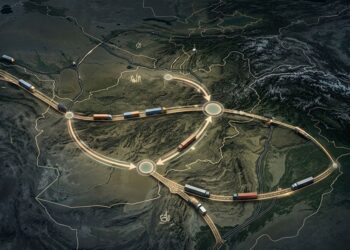
In recent months, Afghanistan’s economic dependence on Iran has clearly increased. Repeated closures and disruptions at trade crossings with Pakistan have pushed Afghanistan traders to rely more heavily on Iran as both a transit route and a trading partner. Iran’s ports and transit networks now play a critical role in Afghanistan’s imports and exports, especially for fuel, construction materials, food supplies, and access to global markets.
Earlier, Afghanistan’s Ministry of Industry and Trade, under Taliban control, announced that the country’s trade volume in 2025 had risen to more than 13.9 billion dollars despite ongoing challenges and the closure of some trade routes. According to the ministry, Iran accounted for the largest share of this trade. However, detailed figures on Afghanistan’s trade with the United States in the past year, and the types of goods involved, remain unavailable.
You can read the Persian version of this report here:
تهدید تعرفه ۲۵ درصدی ترمپ؛ بازرگانان افغانستان نگران فشار بر تجارت و وابستهگی به ایران