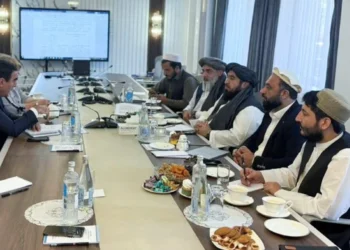
The trilateral transit corridor agreement, signed in July 2026 in the Iranian city of Mashhad by representatives of the Taliban, Iran, and Tajikistan to activate a joint road transit corridor, could represent a potentially positive step toward strengthening regional connectivity and facilitating trade. This initiative, which aims to establish a road link between Iran, Afghanistan, and Tajikistan and whose first trial shipment is also set to be transported soon, reflects the growing importance that all three parties place on developing trade and transit, reducing transportation costs, and strengthening their position within the region’s transit networks. Additionally, the establishment of a joint working group to address administrative, customs, and logistical challenges, along with the planned trilateral talks in Kabul and Dushanbe, indicates the parties’ efforts to build a more sustainable framework for long-term cooperation.
However, the fundamental question is whether the implementation of such an agreement will be legally, politically, and practically feasible and sustainable, given that the Taliban regime has not been widely recognized by the international community. Furthermore, there is the question of whether this corridor could also benefit other countries in the region, particularly India, especially at a time when tensions between India and Pakistan continue, and Pakistan has blocked or restricted its border and trade routes with Taliban ruled Afghanistan for an extended period. The closure or restriction of Pakistan’s routes with Afghanistan has significantly affected the traditional trade routes between South Asia and Central Asia, resulting in a decline in trade exchanges and an increase in transit costs. At the same time, this situation could create a suitable opportunity for India to position its large market as an alternative trade partner as well as one of the potential transit routes to Central Asia.
India’s participation in this corridor could revive and expand its trade links with Afghanistan and Central Asia, while also reducing the logistical and political obstacles arising from restrictions on the Pakistani route. India’s strategic access to Central Asia through Iran’s Chabahar Port enables the transfer of goods via Iran and Afghanistan to Tajikistan and other countries in the region. From this perspective, the proposed corridor could align with India’s broader goals of developing regional connectivity and expanding its economic and trade presence in Central Asia.
According to World Bank (WB) reports, following the disruption of the Pakistani trade route, the destination and route of Afghanistan’s trade have undergone significant changes and have become more inclined toward India, Central Asia, and Iran than before. Central Asian corridors now account for about 48 percent of Afghanistan’s imports, while Iran covers about 46 percent of the country’s imports. In contrast, Pakistan’s share of Afghanistan’s imports has fallen to nearly zero. On the other hand, the closure of the Afghanistan-Pakistan border has also caused a significant shift in Afghanistan’s export markets. India, accounting for about 33.6 percent of Afghanistan’s exports, has become one of the country’s most important export destinations, while Iran, supplying about 31.4 percent of Afghanistan’s imports, has become one of its most important sources of imports. These changes indicate that Afghanistan’s traditional dependence on the Pakistani route is declining, while alternative regional routes have gained greater importance.
If the corridor becomes operational, India could supply part of the goods needed by Afghanistan and even by Central Asian markets. Medicine, industrial machinery, vehicle parts, textiles, electronic products, and consumer goods, along with agricultural products such as pulses and spices, are among the items with high potential for export from India to these markets. India’s pharmaceutical sector, owing to its extensive production capacity and competitive prices, could play an important role in supplying the medicines Afghanistan needs. Indian industrial machinery and equipment could likewise be used in the process of reconstructing and developing Afghanistan’s infrastructure. Meanwhile, Indian consumer goods and agricultural products could replace part of Afghanistan’s traditional imports from Pakistan and help further diversify the region’s markets.
Despite considerable opportunities, several factors could challenge the success and sustainability of this corridor. The most important factor is Afghanistan’s political and security situation. Since the Taliban’s return to power in 2021, Afghanistan has faced international isolation, restricted diplomatic relations, and security problems. The Taliban lack the capacity to guarantee the security and stability of an international transit route, and this could affect the reliability and sustainability of the corridor. Western sanctions, financial restrictions, and the international community’s lack of recognition of Afghanistan have also limited the country’s access to the financial resources and international support needed for infrastructure development. As a result, any sustainable expansion of this corridor will require mechanisms capable of managing the legal, financial, and political issues arising from the country’s current situation.
The weakness of Afghanistan’s transportation infrastructure is another major obstacle to the success of this plan. Afghanistan’s road networks and border facilities have been damaged over several decades of war and instability, and in many areas they still lack the quality needed for extensive international transport. While Iran and Tajikistan have relatively better infrastructure, the Afghan section of this route could become the corridor’s vulnerable point. Poor roads, limited customs facility capacity, delays at borders, and a shortage of logistical services could increase the time needed to transport goods and reduce the economic advantage of this route. Without significant investment in infrastructure and the provision of international technical and financial support, improving the capacity of this route will be difficult, particularly since Afghanistan’s current political and legal situation has limited its ability to attract foreign investment and secure international financing.
Administrative coordination among the three countries is also of fundamental importance. An effective transit corridor requires the harmonization of customs procedures, simplified visa issuance for drivers, reduced waiting times at borders, the establishment of joint insurance mechanisms, and the standardization of transport documentation. The creation of a joint working group could help resolve part of these problems. However, harmonizing the regulations and procedures of three countries with different political and administrative structures will require political will, mutual trust, and continuous cooperation. Otherwise, differences in customs regulations and procedures could reduce the corridor’s economic benefits.
From a geopolitical perspective, the creation of this corridor reflects important shifts in the region’s connectivity structures. Iran is seeking to strengthen its position as a key transit hub between Central Asia, the Middle East, and open waters, and to reduce the region’s trade routes’ dependence on certain paths under the influence of major powers. For landlocked Tajikistan, this corridor could provide an alternative route for access to the Persian Gulf and southern markets. Diversifying trade routes could reduce transportation costs and lessen Tajikistan’s vulnerability to disruptions in other transit routes. Afghanistan, too, could use this initiative to revive its historical capacity as a connecting bridge between Central and South Asia, though achieving this goal will depend largely on the country’s political, security, and economic stability.
From India’s perspective, this corridor could provide an important opportunity to strengthen its ties with Central Asia. Due to its geographic position and tense relations with Pakistan, India faces serious constraints in achieving direct overland access to Central Asia. India’s investment in Chabahar Port should also be understood precisely within the framework of its efforts to create alternative routes for connecting to Afghanistan and Central Asia. If the corridor becomes operational, Indian goods could enter Iran through Chabahar Port and then be transported via Iran and Afghanistan to Tajikistan and other Central Asian countries. Such a route could reduce the cost and time of transporting goods and increase India’s exports in pharmaceuticals, industrial machinery, consumer goods, and other products. From a strategic standpoint, strengthening India’s trade relations with Iran and the Central Asian countries could also expand New Delhi’s economic and diplomatic presence in the region and allow India to build more balanced relations with Central Asian countries in the face of growing Chinese and Pakistani economic and geopolitical influence.
Despite these opportunities, India’s participation in such a corridor is not without risk. The Taliban’s political status and the international community’s non-recognition of the group’s regime complicate direct engagement between India and the Taliban administration. India previously maintained close relations with the former Islamic Republic government of Afghanistan and must now balance its economic needs against its political and security considerations. Security concerns, including terrorist threats and potential instability along this route, could put the safety of shipments at risk. Weak infrastructure, administrative corruption, customs problems, and the possible rise in informal costs could also diminish the route’s economic benefits. In addition, India must take into account considerations related to international sanctions and complex regional relations in its dealings with Iran. Therefore, India’s success in utilizing this corridor will require a cautious, flexible approach grounded in active diplomacy.
Overall, the trilateral transit agreement among the Taliban, Iran, and Tajikistan, if operationalized, could become one of the key initiatives for strengthening regional connectivity and facilitating trade among Central Asia, Afghanistan, and Iran. However, its success depends on numerous factors, including Afghanistan’s political and security stability, infrastructure development, customs and administrative coordination, the securing of financial resources, and the building of trust among the parties involved. The issue of the international community’s non-recognition of the Taliban regime also remains a fundamental challenge. Nevertheless, regional trade in many cases is shaped by economic interests and practical needs, and Afghanistan’s neighboring countries may continue practical engagement with the Taliban regime to preserve their trade routes, without such engagement necessarily implying formal political recognition.
For India, this corridor could provide an alternative and strategic route for accessing Afghanistan and Central Asia, particularly at a time when existing restrictions on the Pakistani route have increased the cost and complexity of regional trade. Connecting Chabahar Port to the road networks of Iran, Afghanistan, and Tajikistan could, in the long term, strengthen India’s position within the region’s trade and transit network. Ultimately, this corridor cannot be regarded merely as a transportation project; rather, it is part of a broader competition to shape new trade routes, transit corridors, and geopolitical influence in South and Central Asia. Its success or failure could affect the roles of Iran, Afghanistan, Tajikistan, and India within the region’s evolving connectivity structure. From this perspective, India’s role, alongside that of Iran and the Central Asian countries, could prove decisive in determining the future of this corridor and shaping a new transit order in the region.
You can read the Persian version of this report here: