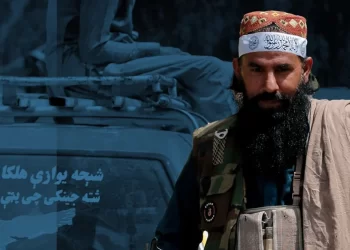
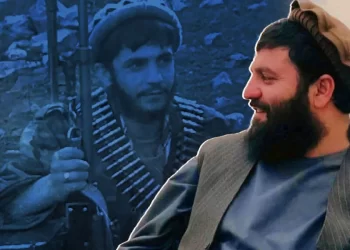
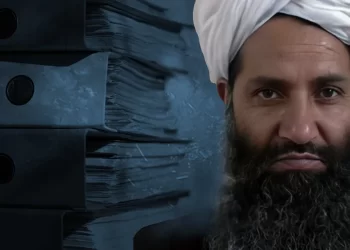
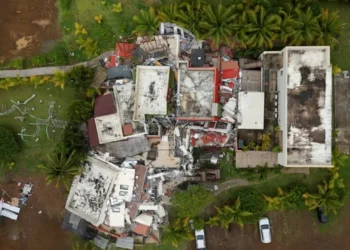
The assassination of Khalil-ur-Rahman Haqqani, the Taliban’s Minister of Refugees and Repatriation, signals that the power struggle between Mullah Hibatullah Akhundzada, the Supreme Leader of the Taliban, and Sirajuddin Haqqani, the group’s Minister of Interior and the head of the Haqqani Network, has entered a new phase. This phase seems unlikely to be confined to verbal tensions alone. The power struggle has intensified to the point where the solution appears to lie in the physical elimination of rivals rather than mere rhetoric. If Sirajuddin Haqqani’s uncle was indeed assassinated as part of this power struggle an interpretation supported by certain signs. We can expect a response from the Haqqani Network, which is far more adept at assassination and suicide bombings than other Taliban factions. The Haqqani Network has yet to unleash its full terrorist potential against its adversary. If Mullah Hibatullah, as reported by an Indian media outlet, intends to remove Sirajuddin Haqqani from his position, the coming weeks and months could witness an escalation in the power struggle, potentially culminating in a confrontation. In this brief analysis, I aim to examine the strengths and weaknesses of both sides in this long-standing power struggle and assess which faction possesses greater power and resources to prevail over the other
A Rivalry As Old As Afghanistan’s History
The history of Afghanistan has always been marked by a persistent and enduring rivalry, sometimes overt and at other times covert, between the Durrani and Ghilzai tribal factions. This power struggle has never lost its significance at any point in Afghanistan’s history. There has never been a time when both tribal branches have genuinely set aside this chronic and often deadly political competition in a spirit of goodwill and brotherhood. A glance at Afghanistan’s war-torn and crisis-ridden history reveals that the Durranis have maintained a more illustrious political track record compared to the Ghilzais. The Ghilzais are often associated with tribalism, prejudice, and narrow-mindedness, which have hindered their ability to perform effectively. From Noor Mohammad Taraki to Ashraf Ghani, Ghilzai leaders have typically played short-lived roles in Afghanistan’s political arena, eventually exiting in defeat and humiliation. In contrast, the Durranis, from Abdur Rahman Khan under whom Afghanistan’s current territorial boundaries were shaped—to Hamid Karzai, has left behind a relatively more successful legacy. However, this observation is not an endorsement of Abdur Rahman Khan’s iron-fisted tyranny and his atrocities against the Hazaras, nor of the rampant incompetence and corruption that plagued Hamid Karzai’s administration, which significantly contributed to the Taliban’s gradual resurgence. Rather, the intention here is to highlight a comparative analysis of governance between the Durranis and the Ghilzais, where the former have demonstrated greater success, stability, and sustainability.
This conclusion is in no way a defense of Durrani’s governance but rather an objective assessment of its relative achievements and resilience when compared to the Ghilzai leadership.
The long-standing rivalry between the Durranis and Ghilzais now manifests sharply within the Taliban as well. Mullah Hibatullah Akhundzada, hailing from the Noorzai tribe of the Durrani branch, currently leads the group and is increasingly working to expand his power. On the other hand, Sirajuddin Haqqani, a member of the Zadran tribe of the Ghilzai branch, has firmly resisted Akhundzada’s monopolistic tendencies, signaling his unwillingness to accept a diminished role in the distribution of power. An analysis of their respective stances reveals that among the Taliban, the Ghilzais represented by the Haqqani network are flying the banner of “pragmatism” and “moderation.” This approach has been so prominent that mainstream Western media have labeled Sirajuddin Haqqani as the “lone dissenting voice” within the Taliban, portraying him as a “moderate” figure. Meanwhile, countries like Russia, Iran, and China considered backers of the Taliban have repeatedly urged the group to establish an inclusive and moderate government. In this context, Haqqani appears better positioned to garner external support if such support materializes compared to Mullah Hibatullah, who stubbornly defies the international community and boldly declares, “Even if you use nuclear weapons, I won’t engage with you.” However, it remains uncertain whether the international community will actively back the so-called “moderate” faction of the Taliban in this escalating power struggle or limit itself to issuing statements and resolutions to address demands such as upholding human rights, lifting restrictions on women’s lives, forming an inclusive government, combating terrorism, and more the extent to which global actors will intervene or if they will at all remains unclear.
“Conservatives” and “Pragmatists” within the Taliban
The Taliban are often divided into two primary factions: “conservatives” and “pragmatists.” Both factions include members from the Durrani and Ghilzai tribes, with a Durrani leader heading one group and a Ghilzai leader heading the other. This complexity adds a layer of intrigue to the current tensions between Mullah Hibatullah Akhundzada and Sirajuddin Haqqani. The question arises: will all Durrani “conservatives” and “pragmatists” side with the Taliban Supreme Leader, and all Ghilzai “conservatives” and “pragmatists” back the interior minister in this power struggle? If the answer is yes, Mullah Hibatullah Akhundzada can confidently challenge the Ghilzai faction, as he would have broad Taliban support, significantly increasing his chances of defeating Haqqani in this power struggle. However, if the answer is no, Akhundzada’s chances of emerging victorious against the Ghilzai leader diminish considerably. Currently, the number of “pragmatist” Taliban has increased compared to the group’s first regime. These pragmatists recognize that unless they address international demands regarding human rights, women’s rights, counterterrorism, and forming an inclusive government, they will remain unrecognized, and the Taliban regime will lack durability. The fear of stagnation and eventual collapse is so severe that it has intensified internal discord among Taliban leaders, to the point where it could lead to armed conflict. That said, within the Taliban’s current structure, the “hardline” faction holds significantly more power than the “moderate” faction. Even among the Durrani leaders who are considered “pragmatists,” there has been noticeable silence regarding the ongoing power struggle between Hibatullah and Haqqani, leaving their positions unclear. The most recent statement from one such pragmatist, Mullah Baradar, during the funeral of Khalil-ur-Rahman Haqqani in Paktia, indicates that the “pragmatists” within the Taliban are avoiding taking explicit stances. Instead, they seek to downplay internal disputes and call for unity within the group. Baradar’s remarks suggest that his primary concern is not the country’s dire situation but the potential collapse of the “Islamic system” envisioned by the Taliban in Afghanistan. This concern alone underscores how severe and perilous the internal divisions have become. Contrary to Baradar’s public denial of significant rifts, his statements reveal the growing awareness among Taliban leaders of the imminent risk to their regime. This fear has likely reached its peak as internal tensions escalate, threatening the group’s cohesion and long-term survival.
The High Cost of Opposing the “Amir al-Mu’minin”
In ideological movements, Supreme Leaders hold decisive and transformative roles, making them central to the group’s existence and direction. Challenging such leaders comes with a steep price that not everyone can afford. The only action that carries no cost allowing individuals to retain their existing power and position is blind and unconditional obedience to the leader’s commands. When Mullah Yaqoob, the Taliban’s defense minister, declared that obedience to the Supreme Leader should be akin to a lifeless body on a washing board, he was referring to one of the immutable and sacrosanct principles of the regime he supports. Similarly, the Taliban’s Minister of the Promotion of Virtue and Prevention of Vice once stated that obedience to the “Amir” is obligatory. Within the Taliban’s framework, the “Amir al-Mu’minin” is considered the highest religious and political authority. This religious dimension makes challenging the leader exceptionally difficult. In this context, Sirajuddin Haqqani faces significant obstacles in posing a formidable challenge to Mullah Hibatullah Akhundzada. According to the Taliban’s internal rules, the leader has the authority to dismiss his interior minister. However, the minister even someone as prominent as Sirajuddin Haqqani—lacks the power to reciprocate by dismissing the leader. Thus, Haqqani must meticulously plan and exert considerable effort to legitimize any action against Mullah Hibatullah. This structural imbalance not only highlights the entrenched hierarchy within the Taliban but also underscores the high stakes involved in any internal power struggle. Haqqani’s efforts to confront the “Amir al-Mu’minin” will require not only a significant investment of resources and energy but also careful maneuvering to challenge the leader’s authority without provoking widespread backlash.
Fear of Establishing a Harmful Precedent
If Haqqani were to attempt a coup against Mullah Hibatullah Akhundzada, he could unintentionally set a precedent reminiscent of the cycle of intra-party coups that plagued the People’s Democratic Party of Afghanistan (PDPA). The PDPA, which itself came to power through a military coup against Mohammad Daoud Khan, became entangled in a destructive tradition of power struggles and internal coups, unable to extricate itself from this harmful legacy. During the PDPA’s rule, military coups became so ingrained in the political culture of the time that even Maoist factions attempted to seize power through similar means. An example of this was the Bala Hissar Uprising, orchestrated by the Liberation Organization in collaboration with some Islamist factions, which was brutally suppressed by the Soviet-backed regime. However, this coup culture not only failed to save the PDPA from eventual collapse but also accelerated its downfall. The more the party relied on internal coups to cling to power, the closer it edged to the brink of disintegration. Despite their efforts, the regime seemed to have no alternative but to resort to internal power struggles, earning the PDPA the nickname “Coup Regime.”
Drawing lessons from this bitter history, if one Taliban faction were to stage a military coup against another, it would likely revive this destructive tradition in Afghanistan’s political landscape. Even if such a move offered short-term gains for the Taliban, it would inevitably hasten the group’s eventual collapse in the long term. The Taliban leadership might already be aware of this risk, calculating that once the precedent of a coup is set, there is no guarantee that the coup’s initiators won’t themselves fall victim to a similar plot later. This cycle of power struggles could persist until the regime collapses entirely.
For this reason, the likelihood of a military coup within the Taliban’s ranks appears slim for now. However, given the ongoing crisis and the fragile state of the Taliban’s governance, no scenario including a military coup can be entirely ruled out in the future.
You can read the Persian version of this analysis here:
چه کسی در جنگ قدرت برنده خواهد شد، هبتالله یا حقانی؟ | روزنامه ۸صبح