The Taliban have continued to hold their Kangaroo Courts, recently issuing a stoning sentence for a woman in the Balkh province. The process of addressing the charges against this woman in the primary Taliban court in the Sholgara district of Balkh province clearly shows that no principles of fair trial are observed in this group’s judicial system. The Taliban courts, which claim to establish justice and order in society, disregard the most basic principles of a fair trial in their judicial processes, sentencing the accused to punishments that violate human dignity, completely contrary to human rights values. Additionally, the prosecution, one of the pillars of a fair trial, has been renamed and its powers altered by the Taliban. Currently, Taliban judges both issue verdicts and advance prosecutions, and in most cases, they are also involved in crime detection, making access to justice impossible.
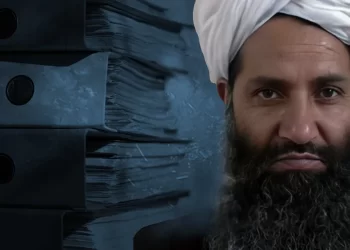
Hibatullah Akhundzada, the hidden supreme leader of the Taliban, has transformed the Attorney General’s Office from a judicial institution into a supervisory body solely responsible for enforcing his decrees. The Attorney General’s Office has been renamed the ” The General Directorate of Supervision and Enforcement of Orders and Decrees.” This body is now tasked with ensuring the enforcement of Hibatullah’s decrees, whereas the prosecution is recognized as one of the fundamental components of the judicial system in legal systems worldwide. In all legal and judicial systems, crimes are detected by the police, investigated by the prosecution, and the court issues a verdict based on the prosecution’s investigation by the law. This process was explicitly stated in Article 3 of the Law on the Organization and Competence of the Prosecution in the previous government. According to this article, the prosecution has the primary duties of investigating crimes, initiating criminal prosecution, pursuing the accused in courts, overseeing the investigation of crimes, and enforcing final court rulings and prison sentences. With the renaming and alteration of this body’s powers, a fundamental pillar of fair trials in Afghanistan has been eliminated.
Furthermore, none of the fair trial standards are observed in Taliban courts. The principles of impartiality, judicial independence, non-discrimination, protection against arbitrary arrest, and the legality of punishment are among the key components of fair trial standards, which were considered in Afghanistan’s previous criminal justice system. However, the Taliban’s criminal justice system is based on unwritten fatwas and discriminatory practices rooted in gender, ethnicity, language, and ideology, and the group’s judges lack the legal and juridical foundation to issue rulings based on these principles. The Taliban’s courts rely on fatwas and jurisprudential rulings that are doubted by many scholars, one of which is the stoning sentence that, according to religious scholars, is not mentioned in the Quran and is questionable even in hadiths. The elimination of the prosecution, the absence of independent and trained police, arbitrary arrests, and the lack of legal definitions for crimes and punishments have cast doubt on the legitimacy of the group’s judicial process. Currently, many individuals remain in prison for months without a legal case due to the absence of clear definitions for crimes and punishments, and some are eventually released after paying bribes or offering guarantees, which has devastating consequences.
This is happening even though the Constitution of the Islamic Republic of Afghanistan, the Criminal Procedure Code, and the Penal Code all emphasize the observance of fair trials. According to these laws, the accused must be treated impartially and without discrimination during arrest, investigation, and trial, and judicial bodies are obliged to try the accused regardless of gender, ethnicity, religion, or belief, without psychological or mental threats, and in compliance with the principles of non-discrimination and the legality of crime and punishment.
Another important element of a fair trial is the respect for human dignity, which must be observed at all stages of the process, from arrest to the issuance of the court’s verdict—something that is not only disregarded in the Taliban’s judicial and criminal system but is also actively undermined. The group seeks to torture and punish the accused in the most primitive and summary manner possible, in stark contrast to human dignity. The Taliban torture, beat, and threaten the accused during arrest, and in many cases, the accused do not even know the charges against them. The accused are not informed of the charges, nor are their families notified. At the same time, the accused are deprived of the right to remain silent in court, the right to an interpreter, the right to protection from torture, and the right to legal defense. Taliban judges issue verdicts under psychological pressure, creating fear and intimidation based on ideological and discriminatory beliefs.
Moreover, a fair trial is considered a fundamental principle in the judicial process, where justice, fairness, and impartiality are observed in the trial of individuals. In international law, a fair trial is defined as one where justice, fairness, and order are maintained by an impartial judge. Article 10 of the Universal Declaration of Human Rights, Article 6 of the European Convention on Human Rights, and other human rights instruments emphasize the importance of a fair trial and obligate member states of the United Nations to implement mechanisms that ensure fair trials. The Universal Declaration of Human Rights states that everyone has the right to full equality before an independent and impartial court for the determination of their rights and obligations. Article 6 of the Human Rights Covenant states that the right to a fair trial means that the accused and the public should be able to understand the judgment. Pre-trial interrogation and investigation must be completed. Furthermore, according to Article 9 of the International Covenant on Civil and Political Rights, no one shall be arbitrarily arrested, and according to paragraph 2 of this article, anyone who is arrested must be informed of the reasons for their arrest and any charges against them must be promptly communicated. However, the Taliban’s judicial process over the past three years shows that none of the standards of a fair trial are observed. Therefore, any trial that lacks the standards of a fair trial is, from the perspective of human rights values, a summary trial.
The Taliban courts are not only not independent and impartial, but they also serve as the ideological brain of the Taliban. Anyone who holds opposing views to the group is put on trial. In what part of the world is political activity and criticism of government actions considered a crime that the Taliban have declared as such, punishing political activists for it?
You can read the Persian version of this analysis here: