• 8AM.MEDIA
  • ویب‌سایت فارسی
  • پښتو ویب‌پاڼه
  • اۉزبېکچه ویب‌سایت
  • Podcast
Tuesday, October 20, 2026
Hasht-e Subh
  • Home
  • News
    • Afghanistan News
    • World News
  • Opinion
    • Editorial
    • Analysis
  • Reports
    • Daily Reports
    • Investigative Reports
  • Society
    • The story of people
  • Women’s Word
  • Columns
    • Three Years After Afghanistan’s Fall: The Taliban’s Resurgence
    • Towards Equality
    • The Resurgence of the Taliban: Two Years Since Afghanistan’s Fall
    • Hebatullah Report Special Edition
    • Resistance for Education Special Edition
    • Special Column on Taliban’s Education Curriculum
    • Nawroz
  • Interviews
  • Contact Us
    • About Us
    • 8AM MEDIA Annual Awards
    • Submit an Article to Hasht-e-Subh
  • 8am.mediaBack
Subscribe
No Result
View All Result
  • Home
  • News
    • Afghanistan News
    • World News
  • Opinion
    • Editorial
    • Analysis
  • Reports
    • Daily Reports
    • Investigative Reports
  • Society
    • The story of people
  • Women’s Word
  • Columns
    • Three Years After Afghanistan’s Fall: The Taliban’s Resurgence
    • Towards Equality
    • The Resurgence of the Taliban: Two Years Since Afghanistan’s Fall
    • Hebatullah Report Special Edition
    • Resistance for Education Special Edition
    • Special Column on Taliban’s Education Curriculum
    • Nawroz
  • Interviews
  • Contact Us
    • About Us
    • 8AM MEDIA Annual Awards
    • Submit an Article to Hasht-e-Subh
  • 8am.mediaBack
No Result
View All Result
Hasht-e Subh
No Result
View All Result

Why the United States Is Not Truly Seeking the Collapse of Iran’s Regime

Yousuf Yousufi Yousuf Yousufi
17 January 2026 - Solar Hijri Date: 1404/10/27 [t_time:1768668017]
Silhouette of Donald Trump against the backdrop of the Iranian and American flags. (Photo Credit: REUTERS)

REUTERS

In recent weeks, U.S. officials have once again spoken of a “potential attack on Iran” and of a “military option on the table.” Yet a close examination of American behavior over the past four decades reveals a deep gap between Washington’s rhetoric of threat and its actual conduct. This contradiction raises a fundamental question: Is the United States genuinely intent on dismantling Iran’s ruling system, or does the regime’s survival, largely in its current form, align more closely with U.S. strategic interests?

In my view, political, security, and economic evidence clearly indicate that the United States does not want Iran’s regime to collapse. On the contrary, the Islamic Republic has become one of the key factors underpinning U.S. interests in the Middle East. Iran is not merely an adversary; it is, in strategic terms, a highly functional threat.

First, Iran has been the principal driver of the Middle East’s permanent securitization. The Iranian threat, whether real or exaggerated, has kept Arab states in the Persian Gulf in a constant state of fear and uncertainty. The direct consequence has been their growing dependence on the U.S. security umbrella and a rush to purchase American weapons, arms deals that would have been politically and strategically difficult to justify in the absence of the “Iranian threat.”

For example:

  • Saudi Arabia has signed arms contracts with the United States worth more than $100 to $140 billion in recent years.
  • The United Arab Emirates has spent tens of billions of dollars, including roughly $23 billion on F-35 fighter jets and drones.
  • Qatar has concluded contracts worth around $20 billion for advanced fighter aircraft and military systems.
  • Kuwait and Bahrain have spent billions of dollars on air and missile defense systems, particularly Patriot and THAAD.
  • Israel alone has received more than $30 billion in U.S. military assistance in recent years.

These figures are not coincidental. The common denominator in all of these deals is Iran. Without Iran, neither such massive arms sales nor such intense security dependence on the United States would have been possible. Put simply, the Islamic Republic has become a permanent engine of America’s defense economy and strategic influence in the Middle East.

Second, the United States benefits from an “enemy Iran that is controlled,” not from a collapsed Iran, and not from a democratic and independent one. The total of Iran’s regime could impose far higher costs on Washington: internal disintegration, civil war, large-scale migration, or even the emergence of a political system that might not align with U.S. interests. By contrast, a hostile yet predictable regime is a far more manageable option for regional governance.

Third, the constant threat posed by Iran has enabled the United States to continuously justify its military presence in the Middle East, from military bases and naval fleets to security alliances and defense agreements. This presence serves not only to contain Iran, but also to maintain broader regional control and to counter the influence of powers such as China and Russia.

As a result, U.S. military threats against Iran should be understood not as evidence of a genuine appetite for war, but as tools for crisis management, balance-of-power adjustment, and the maximization of economic and geopolitical interests. By keeping Iran at a certain level of threat, neither too strong nor too weak, Washington derives the greatest benefit.

Preliminary Conclusion

The United States seeks neither a powerful Iran nor a destroyed one. Rather, an Iran that is threatening yet intact represents the most favorable scenario for Washington’s Middle East policy. In this framework, the Islamic Republic of Iran paradoxically functions not only as America’s adversary but also as one of the principal pillars of its regional interests

Why Has the United States Recently Supported Protests in Iran?

In recent weeks, as public protests in Iran have intensified, the United States has adopted more explicit rhetorical positions in support of demonstrators. At first glance, this stance may appear to reflect a commitment to “human rights” or “the freedom of the Iranian people.” From a strategic perspective, however, such support should be seen as part of a calculated American approach rather than a purely moral or humanitarian posture.

Washington supports popular protests in Iran, not intending to immediately overthrow the regime, but to apply controlled pressure. The objective is to keep Iran’s ruling system in a state of attrition, weakness, and crisis of legitimacy, without allowing that crisis to escalate into total collapse.

From the U.S. viewpoint, domestic unrest in Iran serves several simultaneous purposes:

  • It weakens the Iranian regime without the costs of direct military intervention. Through political and media support, the United States draws the government into internal crises, reducing its ability to focus on regional policy, missile development, and the nuclear file.
  • Active protests sustain the image of Iran as an unstable threat. A regime that is internally turbulent yet externally aggressive is precisely the image Washington needs to justify its military presence and arms sales in the region.
  • Protests become leverage in behind-the-scenes negotiations, whether over the nuclear issue, prisoner exchanges, or limiting Iran’s regional influence. The implicit message is clear: Iran’s internal stability itself is part of America’s pressure equation.
  • Rhetorical support for protests carries low costs and high propaganda value for the United States. Washington can present itself as a “defender of the people” without assuming responsibility for the real consequences of regime change.

Final Assessment

Within this analytical framework, U.S. support for protests in Iran is not a sign of solidarity, but part of a broader strategic game, one aimed not at Iran’s liberation, but at keeping the country in a condition of permanent yet manageable crisis, a condition that continues to serve America’s political, security, and economic interests.


You can read the Persian version of this analysis here:
چرا امریکا واقعاً خواهان نابودی رژیم ایران نیست؟

ShareTweetSendSendShare

Related Posts

A rocket launching in a desert area leaving a large pile of smoke behind (Photo: US CENTRAL COMMAND (CENTCOM) / AFP) 
World News

US Senators Demand Disclosure of the “True Cost” of Iran War

20 October 2026 [t_time:1792487954]
Iran's national flag waves in the wind (Photo: Hamshahrionline)
World News

Iran’s UN Representative Warns of ‘Continuous Threats’ from US and Israel

20 October 2026 [t_time:1792475671]
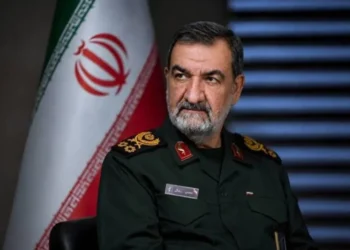
Mohsen Rezaei, secretary of Iran’s Supreme National Security Council (Photo: Tasnim) 
World News

Iranian Official Emphasizes Expansion of Strategic Ties with Russia

20 October 2026 [t_time:1792471504]

Latest

Loading latest news...

Popular stories

  • Donald Trump – U.S. President with Benjamin Netanyahu – Israeli Prime Minister in a gathering of people (Photo: Getty Images) Donald Trump – U.S. President with Benjamin Netanyahu – Israeli Prime Minister in a gathering of people (Photo: Getty Images)

    US Senator Criticizes Netanyahu’s Remarks Justifying War Against Iran

    Share
    Share Tweet
  • Trump Again Says War with Iran Will End “Very Soon”

    Share
    Share Tweet
  • US Defense Secretary Warns Iran of “Destruction”

    Share
    Share Tweet
  • UN Report Reveals Shifts in Family Attitudes and Rise in Domestic Violence in Afghanistan

    Share
    Share Tweet
  • Russian Foreign Intelligence Chief Arrives in Kabul

    Share
    Share Tweet

Podcast

Insights
Insights

Join Lynne O’Donnell for 8AM’s podcast series, Insights.
Lynne talks with generals, diplomats, soldiers, journalists, politicians, activists, people who have front row seats for conflicts around the world, and citizens with a story to tell, happy or sad. For this first series, Afghanistan is the focus. Lynne and her guests talk about the collapse of the republic in August, 2021, and the impact since — for the people of Afghanistan, for the security of the region, for the safety of the world. It’s important, interesting and insightful.

Insights/22: Controlling the Narrative with Mina Sharif
byinsights8am

Controlling the Narrative

Lynne O’Donnell talks with Mina Sharif, author, activist, women’s rights campaigner, educator and mentor. They discuss who controls the narrative and who speaks for Afghanistan’s people when the Taliban appear to have seized control not only of the country but of the message, too.

Have a listen

Insights/22: Controlling the Narrative with Mina Sharif
Episode play icon
Insights/22: Controlling the Narrative with Mina Sharif
Episode Description
Episode play icon
Insights/21: Media Meltdown with Zahra Joya
Episode Description
Episode play icon
Insights/20: Terror Inc with Scott Richards
Episode Description
Episode play icon
Insights/19: Busting Stereotypes with Bushra Gohar
Episode Description
Episode play icon
Insights/18: Media Matters with Waliullah Rahmani
Episode Description
Episode play icon
Insights/17: What Goes Around Comes Around with Sima Samar
Episode Description
Search Results placeholder
Hasht-e Subh

8AM Media, also known as Hasht-e-Subh Daily, stands as Afghanistan's premier independent and non-profit newspaper, resonating as a beacon of journalistic integrity since its establishment in June 2007 by esteemed Afghan journalists and human rights advocates. With a steadfast commitment to citizen journalism and civic education, Hasht-e-Subh Daily has earned its place as the most esteemed publication in the nation.

Publisher: Sanjar Sohail
Email: [email protected]
Executive Director: Parwiz Kawa
Email: [email protected]

Read More

US Senators Demand Disclosure of the “True Cost” of Iran War

Trump’s Envoy to Visit Russia and Norway for Ukraine War Talks

US Congresswoman Calls for Arrest of Israeli Soldier over Palestinian Girl’s Killing

Guterres Expresses Concern Over Persistent Global Hunger

Clashes in Badghis’ Qadis District: Sources Report Two Taliban Members Killed

Editor’s Choice

Every Saturday morning, 8AM MEDIA English Services Department will guide you through the week’s biggest stories from Afghanistan and the international community.

Subscribe

© 2026 - ©Hasht-e Subh Daily

No Result
View All Result
8am.Media
پښتو ویب‌پاڼه
ویب‌سایت فارسی
اۉزبېکچه ویب‌سایت
  • Home
  • News
    • Afghanistan News
    • World News
  • Opinion
    • Editorial
    • Analysis
  • Reports
    • Daily Reports
    • Investigative Reports
  • Society
    • The story of people
  • Women’s Word
  • Columns
    • Three Years After Afghanistan’s Fall: The Taliban’s Resurgence
    • Towards Equality
    • The Resurgence of the Taliban: Two Years Since Afghanistan’s Fall
    • Hebatullah Report Special Edition
    • Resistance for Education Special Edition
    • Special Column on Taliban’s Education Curriculum
    • Nawroz
  • Interviews
  • Contact Us
    • About Us
    • 8AM MEDIA Annual Awards
    • Submit an Article to Hasht-e-Subh
  • 8am.media

© 2026 - ©Hasht-e Subh Daily