Part I: Wisdom, Institutions and the Future of Islamic Civilization
The fundamental issue is an institution’s ability to keep working and to correct its own course. This ability is not easily seen in calm conditions. Its importance becomes apparent when a crisis arrives. In Afghanistan, several decades of war and instability have repeatedly imposed such crises on institutions. A university whose professors have scattered, a hospital that has lost its experienced staff, and a school that has stayed closed for years need a great deal of time and resources to rebuild, even after reopening. Sometimes what has been lost is recorded in no official list: the experience of a professor who knew how to experiment with limited means, the skill of a technician who had kept an old device running for years, or the insight of a physician who had found ways to care for patients under difficult conditions.
With the dispersal of these people, part of the institution’s practical memory is also lost. The emigration of specialists in such circumstances is a complex experience. A researcher who moves to another country to continue their work may find new opportunities there and still stay in contact with students and colleagues in their homeland. But remote cooperation does not make up for all institutional shortcomings. A laboratory needs equipment and staff, and a hospital without infrastructure and specialized personnel cannot operate on virtual consultation alone. Alongside these problems, insecurity of property and forced displacement also affect the economic future of families. Someone who lost the deed to their land during the war may spend years trying to prove their right to it. A family that has been uprooted from its home faces, upon return, relationships that took shape in its absence. In such a situation, the decision to build a house, invest, or continue farming carries risks that go beyond the individual’s control. It is these experiences that gradually change the time horizon of people’s lives.
Someone who does not know where they will be living next year finds it harder to plan for ten years ahead. A family uncertain about the future of its child’s education may spend all of its resources on finding a way to emigrate. A researcher who is not sure the university will continue to operate may turn to a short-term project and give up research that takes years. But the shortening of the time horizon does not mean the complete disappearance of hope and creativity. Even under conditions of war and restriction, people find ways to carry on with life. Families help with their children’s education, writers record their experiences, and specialists try to maintain their professional ties. What has become difficult is turning these scattered efforts into a lasting capacity that can be passed on.
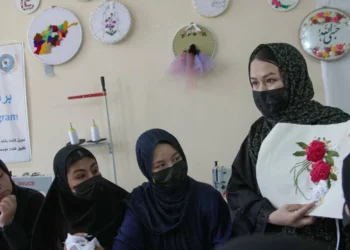
In Afghanistan today, the deprivation of girls and women of educational opportunities has deepened this difficulty. A girl who has been kept out of school passes each day through a period of her life in which she was meant to learn new knowledge and skills. If the chance to continue her studies becomes available years later, her life circumstances may have changed. Some opportunities depend on a specific time in a person’s life, and making up for them is not easy. The plunder and confiscation of the future, if we wish to use that expression, takes on a tangible meaning in such an experience. A person is deprived of the ability to plan for years that have not yet arrived. Calendar time keeps moving forward, but the range of their choices narrows. This concept can be applied in examining governments that subordinate people’s present lives to long-term political and ideological promises.
Nevertheless, a distinction must be made between different historical experiences. War, poverty, economic crisis, and political restrictions each affect a person’s ability to plan in different ways. In Afghanistan, these factors have accumulated on top of one another over decades. War and emigration have damaged part of the educational and economic infrastructure. Property disputes have reduced the security of families’ assets. Educational restrictions have also limited the possibility of building a professional future for a large number of girls and women. In people’s daily lives, this situation appears as a series of difficult decisions. A family is torn between staying and leaving. A young person does not know whether the field they are studying will one day provide them with employment. A professor tries to stay in touch with students who can no longer attend class regularly. Hence, sometimes a family’s entire future depends on a decision that must be made within a few days.
In such circumstances, talking about the future of a civilization without paying attention to people’s lives easily turns into a collection of grand slogans. We speak of scientific flourishing, economic independence and the reconstruction of institutions, but for a person who needs education or medical treatment today, these concepts must acquire meaning in real life. Amartya Sen, in his capability approach, directs attention to people’s real opportunities to choose and pursue a life they have reason to value. This view can also be useful in examining the future of Muslim societies. An increase in economic output or the expansion of infrastructure gains greater social significance when it expands people’s real opportunities. In today’s world, this question is also tied to new technologies. Artificial intelligence, biotechnology,y and new energy systems have created broad possibilities. But access to advanced tools, without education, infrastructure and the ability to conduct independent research, may create new dependencies.
A country can import advanced equipment and remain dependent on foreign companies for repair, redesign or the production of sensitive parts. A university may increase the number of its published papers but fail to turn its research findings into industrial capacity or public services. This gap does not disappear simply through increased budgets or the purchase of technology. It requires a network of universities, workshops, businesses and public institutions that can share their experiences with one another. Here, the issue we encountered in Baghdad and in al-Jazari’s workshops becomes important again. The relationship between hand and mind, between written knowledge and practical experience, is still one of the main issues in scientific development. Advanced technology also needs craftsmen, technicians, and researchers who can work together. But this cooperation takes shape more easily in a stable environment.
Researchers must have the opportunity to pose questions and publish their findings. Craftsmen need markets and infrastructure. Students must be able to continue their education and make decisions about their professional future. Language also plays an important role in this. Producing scientific resources in Persian, Dari, Arabic, Turkish, Urdu, and the other languages of Muslim societies can reduce the distance between specialized knowledge and public life. But translation turns into lasting scientific capacity only when the next generation can conduct research on its basis and produce new findings.
In the Abbasid period, translators, by transmitting scientific works, laid the groundwork for a wider conversation. Later generations read the same texts and raised new questions. Today as well, access to information is only the beginning. Society must be able to take part in the production, evaluation, and correction of knowledge. Artificial intelligence has made this necessity more apparent. A system can produce a fluent text about history or medicine in a few seconds, but fluency of language does not guarantee the accuracy of the information. A student who has not learned to evaluate sources may accept a ready-made answer in place of independent understanding. In schools and universities, there must be room to ask, to test, and to make mistakes. A student who is afraid of disagreeing with the teacher may memorize the answers in the book well, but will need other skills to face a new problem. This issue also relates to society’s relationship with the past. If Ibn Sina, al-Biruni, or Ibn al-Haytham are merely names to take pride in, a large part of the value of their legacy is lost. Their works find their way into the intellectual life of the present generation when they are read and critiqued. Today’s generation must be able to learn from their achievements and, at the same time, pursue questions that had not yet been raised in their own time.
Understanding the past is also incomplete without examining its failures and limitations. A society that remembers only its historical victories may be more vulnerable to the errors of the past. Both scientific and political history require examination of decisions that did not produce a desirable result. But writing such a history is difficult. In many societies, collective memory is tied to narratives of heroes and great victories. The study of failures may be mistakenly regarded as an attack on the historical dignity of a group or civilization. In such an environment, a researcher needs independence and security to be able to examine documents and write freely about the outcome of their research. In Afghanistan, this issue is also connected to a history of discrimination, war, and ethnic conflict. Historical narratives must record the experience of victims and make clear the responsibility of the perpetrators of violence. At the same time, understanding the shared life of people, their economic and cultural relations and their experiences of cooperation is also part of the work of historiography.
Archives are of great importance on this path. Property documents, administrative files, scientific works, family letters and oral accounts each preserve a part of society’s memory. Their destruction or dispersal makes it harder to understand the past and to resolve today’s disputes. Preserving this memory is as much a cultural task as it is one connected to people’s economic and legal lives. A family that needs an old deed to prove its ownership faces a problem that ties history and present-day life together.
Islamic civilization, throughout its history, has repeatedly faced war, shifts in centers of power, and the displacement of populations. Some scientific centers disappeared, and others continued their activity in new environments. Languages changed, books traveled from one city to another, and skills that had taken shape in one workshop sometimes continued in a distant land. But only a part of all these experiences has reached us. We know the books that were copied, the devices whose models or plans survive,e and the names of the scholars whose works were read by later generations. Of many of the errors, unfinished efforts, and practical experiences of those who came before, nothing remains. Sometimes we do not even know how much of the knowledge of a scientific center was lost along with the people who were killed or displaced in war.
These very unknowns should make us more cautious in judging the past. In the future as well, the fate of knowledge may depend less on the names of a few famous figures and more on the quality of the institutions that make the transmission of experience possible. A university that preserves its research data, a workshop that passes on its masters’ skills to apprentices, and a school whose students can ask questions freely each build a part of this future. For a society that has experienced war and instability, such a future begins with small decisions. Preserving an archive, keeping a class running, recording a medical experience or fairly resolving a land ownership dispute may seem a limited achievement compared with grand development plans. But these very acts can restore the possibility of long-term planning to people’s lives.
Perhaps one day a student in Kabul, Baghdad or Cairo, while studying the history of science, will also read about the contemporary researchers of their own land: those who managed, in stable environments, to pass scientific work from one generation to the next. Perhaps their names will not be as well known as those of past rulers, but their findings may be present in the treatment of disease, the preservation of water resources or the building of new instruments. At the beginning of this history, we saw a translator who had paused to understand a word in a medical text. He did not know that centuries later, the works of the scholars of his time would be read in distant lands. Perhaps he only wanted to understand a sentence correctly and write it in such a way that the next reader would not be misled.
On the other side of history, one can imagine a student who opens a book today and encounters a question whose answer is not found in the pages before them. Perhaps they will turn to another source, perhaps they will ask their teacher, and perhaps years later they will become a researcher whose works others read. Centuries lie between these two people. Governments have come and gone, cities have been destroyed and rebuilt, and languages have changed. What that translator began has continued to live on in various forms.
But the fate of today’s student is still unclear. They may have a library at their disposal and a teacher who takes their question seriously. Perhaps they will be forced to leave their studies unfinished. They may one day emigrate from their homeland and continue their work at a distant university. Their future depends on decisions, many of which are not currently in their own hands. History has no ready answer for them. It can only show under what conditions those who came before were able to understand the world better, where the path to questioning was closed, and what, despite all the ruptures, reached later generations.
References
- Saliba, G. (2007). Islamic science and the making of the European Renaissance. MIT Press.
- Brentjes, S. (2018). Teaching and learning the sciences in Islamicate societies (800-1700). Brepols.
- Al-Jazarī. (1974). The book of knowledge of ingenious mechanical devices (D. R. Hill, Trans. & Ed.). D. Reidel.
- Kuran, T. (2011). The long divergence: How Islamic law held back the Middle East. Princeton University Press.
- Gutas, D. (1998). Greek thought, Arabic culture: The Graeco-Arabic translation movement in Baghdad and early ʿAbbāsid society (2nd-4th/8th-10th centuries). Routledge.
- Sen, A. (1999). Development as freedom. Oxford University Press.
You can read the Persian version of this article here: