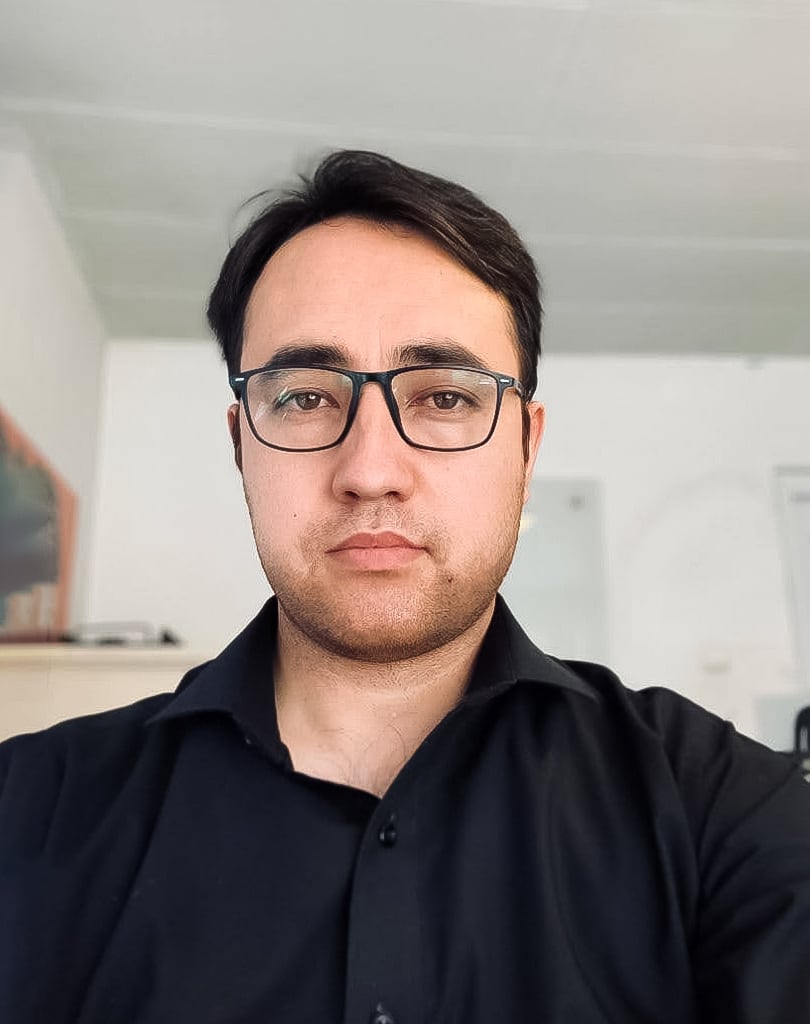

Note from the Hasht-e Subh Daily: On the eve of the fifth anniversary of the collapse of the Islamic Republic of Afghanistan and the Taliban’s return to power, the Hasht-e Subh Daily is publishing a series of exclusive interviews. This particular interview was conducted in writing with General Mohammad Yasin Zia, commander of the Afghanistan Freedom Front(AFF). The questions in this conversation were put forward by a number of female journalists and writers at the Hasht-e Subh Daily.
Note from General Zia: I would like to thank the Hasht-e Subh Daily, and especially the female journalists and writers of this outlet, who raised important and, in some cases, difficult questions with precision and clarity. A significant portion of these questions, despite differences in how they were framed, revolve around shared themes such as the rights and status of women, the future political system, accountability for experience, the future of power, preventing monopolization and civil war, coordination among anti-Taliban movements, and the prospects for change in Afghanistan.
For this reason, rather than answering each question separately, which would inevitably lead to repetition and an overly long conversation, I have grouped the questions into several core themes based on their shared content and have tried to address the collective concerns and questions raised under each theme. This approach avoids repetition and provides greater opportunity to focus on fundamental issues and our vision for Afghanistan’s future.
I believe, especially on the eve of the fifth year since the fall of the Republic and the Taliban’s return, the answers to these questions should not simply be a set of promises or repeated slogans. The people of Afghanistan, particularly women and the young generation who have paid the highest price in these years, have the right to demand clear and measurable answers from any movement that claims to be fighting for change and freedom, about the past, its current program, and the picture it holds of Afghanistan’s future.
One: Women, fundamental rights, and a guarantee against political bargaining
First, we must clarify one principle: women’s rights are not a privilege granted by a government or political movement. Education, work, freedom of choice, political participation, and presence in decision-making are among the natural and civic rights of women, and they must be explicitly and non-negotiably guaranteed in any mechanism designed for the transitional phase, as well as in the constitution of the period that follows.
One of the bitterest lessons of Afghanistan’s political history has been that women’s rights have repeatedly become the subject of political deals and expediencies. This mistake must not be repeated. Any political agreement, even one framed as a comprehensive peace process, must treat women’s rights to education, work, and political participation as one of its core and foundational pillars.
In a post-Taliban transitional period, revoking all discriminatory decrees against women and reopening schools, universities, and workplaces to women without preconditions must be among the first decisions taken. Girls who have been deprived of education for years will also need compensatory educational programs to help them recover part of the opportunity they have lost.
But the ultimate guarantee cannot rest solely on the promise of a single leader or movement. A genuine guarantee lies in the constitution, independent courts, accountable institutions, civil society, a free press, and the meaningful presence of women in centers of decision-making.
Two: If I were a girl in Afghanistan, what would I demand from political leaders?
If I were a girl who has been deprived of school, university, work, and a large part of social life for five years, I would most likely no longer trust the promises of political leaders.
I would not say Give me my rights. I would say recognize the rights that have belonged to me from the very beginning.
I would demand that no leader, cleric, commander, or politician has the right to decide on my behalf about my education, my work, and my future. I would also ask where women stand in your decision-making today, rather than what promises you have for them in a possible government of tomorrow.
For this reason, we should not ask women to simply trust our words. That trust must be earned through the genuine presence of women in decision-making structures, enforceable laws, and measurable performance.
Three: Women’s presence in the political structure and in decision-making
Here, a distinction must be made between “supporting women” and “the participation of women.” Women in Afghanistan should not merely be the subject of support from political movements. They themselves will be the leaders and decision-makers of Afghanistan’s present and future.
The goal must be for women’s role to move beyond an advisory or symbolic level and to become a genuine presence in political decision-making, policy formulation, diplomacy, public administration, and leadership structures.
We too must measure our own performance by this same standard. Wherever women’s presence in our political structures is insufficient or disproportionate, the right response is not to justify the current state of affairs; it is to correct it. One cannot speak of equality in Afghanistan’s future while failing to practice that same principle within one’s own political structures today.
As far as the Afghanistan Freedom Front is concerned, our current situation is not an ideal one. The battlefield struggle against the misogynistic Taliban group is difficult and complex. Many women and girls stand alongside men at every level of the Front. At the request of these courageous women, the Afghanistan Freedom Front refrains from disclosing their identities and positions within the Front, but in the not-too-distant future, the people of Afghanistan will hear the stories and accounts of the heroism, sacrifices, and dedication of these heroic women and girls of our country along this difficult and dangerous path.
The heroism of Afghanistan’s girls and women in supporting and standing alongside their fighting brothers on the battlefields and in the struggle for their country’s freedom has repeatedly reminded me of the Kurdish girls of Kobani, whose bravery and struggle in defending their land against ISIS stand as an exemplary model.
Four: If the Taliban step aside, who will govern?
No political or military movement gains the right to rule Afghanistan simply by virtue of having fought the Taliban.
One of the historical mistakes of previous political and military movements has been the assumption that fronts and organizations victorious on the battlefield also become the owners of political power. In our view, this cycle must be broken.
With the end of Taliban rule, the country will need a limited transitional period with a defined timeline. The task of such a transitional administration should not be to establish and entrench the dominance of a single group in power, but rather to provide security, revive the essential institutions of the state, create the conditions for the return of refugees, open space for political freedom, and prepare the country to choose its future system through a legitimate national process.
At the end of this process, the people must decide, through free elections, a referendum, or any other democratic mechanism provided for by law, who will lead the future government. Even movements that have played a role in changing the situation and defeating Taliban rule must, like everyone else, go before the people and seek their vote if they wish to govern.
Afghanistan is not, and must not be, the spoils of war for any group. That said, the broad outlines of AFF’s vision for the struggle are set out in the “Afghanistan Freedom Charter.” In the Front’s view, the future political system should be a decentralized structure in which institutions of power, from the center down to the provinces and districts, are chosen by the people. Even so, I want to reiterate that AFF is not seeking to impose its own version of Afghanistan’s future on the country. The Front’s efforts and struggle are focused on enabling the people to once again govern their own land and destiny. The Afghanistan Freedom Front works with other fronts and with political, civil, cultural, and social movements within various frameworks, including the Vienna process, to reach comprehensive and inclusive mechanisms that reflect the demands and needs of all segments of society, for Afghanistan’s future and especially for the transitional phase away from the Taliban, so that we can achieve a democratic and lawful order.
Five: The future political system and preventing the monopolization of power
Changing the Taliban must happen without repeating the structures that have repeatedly produced a monopoly of power.
Afghanistan needs a system in which power can be divided, monitored, and transferred. Genuine separation of powers, an independent judiciary and courts, an effective parliament, free elections, independent media, and a rational distribution of authority between the center and local units are among the essential elements of such a system.
We support an Afghanistan in which Tajiks, Pashtuns, Hazaras, Uzbeks, Turkmens, Baloch, Nuristanis, Pashais, and other citizens are, above all, holders of equal and uncontested civic rights. No ethnicity, sect, language, or gender should feel that it needs the protection of an ethnic commander or leader to enjoy its rights. I believe we must move from a collective-centered stage to an individual-centered stage. In other words, the citizens of the republic must, in the structure of society and politics, take the place of ethnicity, ideology, and traditional collectivist structures.
Nor should the precise shape of the future system be imposed on the people in advance by a single front, party, or political movement. This matter must be addressed through a national, free, and legitimate process.
Six: Why should the people, especially women, trust past leaders and political forces again?
No one has the right to demand unconditional trust from the people of Afghanistan without accountability.
We have repeatedly emphasized that the Republic did not fall solely because of an external agreement. Corruption, the excessive concentration of power, the politicization and factionalization of state institutions, weak management, patronage networks, and the distance between the government and the people also contributed to weakening it. The withdrawal of international forces and the Doha agreement accelerated the process of collapse, but the internal mistakes and the missed opportunities of politicians competing over power cannot be denied in any way.
Those who held responsibility within the Republic’s structure must accept their share of that responsibility. I do not consider myself exempt from this rule either.
The difference today must be that we have learned from that experience: power must not once again be concentrated in the hands of a few individuals, institutions must not be sacrificed to the personalities of individuals, criticism must not be treated as betrayal or hostility, and no political movement should consider itself exempt from accountability to the people.
Therefore, my answer to the women and youth of our country is not “trust us.” My answer is: judge us by our program, our structure, and our performance.
Seven: Unity among anti-Taliban movements and the risk of civil war
Differences in outlook among anti-Taliban movements are a reality, and denying this solves nothing. Part of these differences is rooted in the bitter experience of the past several decades, mistrust among leaders, differing political tastes, and rivalry over the future of power.
But unity does not necessarily mean that all movements must merge into a single organization or have a single leader. What Afghanistan needs is agreement on shared rules for the political game. These rules could include preserving territorial integrity, popular sovereignty, equal rights for citizens, women’s rights, a ban on retaliation, avoidance of ethnic, religious, and linguistic hate speech, acceptance of elections, and a commitment to the principle that political disputes after the Taliban will no longer be resolved through weapons and force.
The most important guarantee against civil war is precisely this: no armed group should retain its own permanent private army after a political transition. Afghanistan must have a national, professional, and nonpartisan security structure that is subordinate to the law and to an elected government.
If we cannot agree on these principles today, the people have every right to ask whether, in the aftermath of the Taliban, the existing military and political forces will not end up fighting one another over power.
Eight: Negotiation, political opponents, and the Taliban’s place in the future
We must not equate peace with surrender, nor equate negotiation with bargaining away the rights of the people.
If a genuine political process can lead to an end to the monopoly of power, the return of popular sovereignty, women’s rights, and the establishment of an elected system, then dialogue must be preferred over the continuation of violence.
Let me draw a distinction here between the Taliban and the Taliban emirate. Dialogue with the Taliban emirate is in no way an option for peace and a peaceful transition, because this regime has, in essence, functioned as a force opposed to citizens’ fundamental rights, popular institutions, and republican order. The Taliban, however, are undoubtedly part of the people of Afghanistan, have a social base, and may, in Afghanistan’s future political life, take part as an unarmed political movement committed to the democratic rules of the political game.
In the Afghanistan of the future, a political opponent must not be treated as an enemy. As stated, if individuals from the Taliban lay down violence, accept the constitution and the rules of the new political order, and wish to engage in peaceful political activity like other citizens, they should not be deprived of political rights merely because of their past affiliation. That said, the right of victims of crime and violations of individual rights to seek justice and redress, in other words the rights of citizens, or haqq al-‘ibad (the individual’s private claim under Islamic law), will remain protected and must be examined by impartial courts.
Likewise, the commission of international crimes such as war crimes, crimes against humanity, and genocide remains subject to review under international law and the conventions to which Afghanistan is a party. The reason for this qualification is that governments do not have the authority to pardon these individual claims, and the international crimes mentioned above fall within the jurisdiction of bodies such as the International Criminal Court (ICC), of which Afghanistan is a member. In short, criminal responsibility is individual and must be examined by an independent judiciary. Neither collective revenge nor collective immunity is acceptable.
The goal must be to break the cycle in which every victorious force eliminates the defeated one, only for those who were eliminated to return years later with weapons. It is on this basis that we have rigorously observed, and will continue to observe, international humanitarian law and the protection of civilians from harm during military operations.
Our struggle for the freedom of the country, in both its goals and vision as well as its methods and tactics of war, differs fundamentally from the Taliban group, which has committed acts of terror, killing, war crimes, and crimes against humanity in both its pursuit and now its retention of power, and which does not recognize any moral, ethical, or legal boundaries whatsoever.
Nine: When can the people expect tangible results?
This is a matter that must be discussed responsibly and realistically. Setting a date for political change or promising victory within six months or a year, if not backed by real substance, amounts to little more than propaganda and will only cause confusion and disillusionment among the people regarding the freedom fighters.
The measure of progress must be something that can be assessed. The expansion of territory freed from Taliban control, growing political organization, an expanding social base, increased coordination among anti-Taliban forces, a clear plan for the transitional period, greater participation by women and youth, and the building of domestic and international trust are the key indicators for winning the people’s confidence. No single, isolated action will by itself determine Afghanistan’s future. Lasting change becomes possible only when political pressure, armed struggle, civic activity, diplomacy, and the formation of a credible political alternative move together, in the same direction and in a coordinated manner.
Therefore, we must not give the people an imaginary date. We must provide a path, a set of standards, and an opportunity for accountability.
Ten: What is the ultimate goal, changing the Taliban or changing the political system?
If the goal is simply for the Taliban to leave and for other individuals or groups to take their place within the same monopolistic power structure, Afghanistan will have gained nothing. Afghanistan’s crisis runs deeper than the names of governments and leaders. The core issue is the relationship between power and the citizen.
The goal must be to build a country in which legitimacy derives from the people, power is limited and transferable, women and men hold equal rights, ethnic groups and regions have a genuine share in decision-making, the law stands above the leader, and no individual or group can declare itself the country’s permanent ruler by force of arms.
Our goal in dismantling the Taliban regime must not be to take the Taliban’s place ourselves. The standard by which our success should be judged is whether Afghanistan no longer needs a front, a commander, or an armed resistance to change its government, but instead can change its government, its rulers, and its public officials, from the capital down to the provinces and districts, through the ballot. This must be the ultimate destination of any responsible struggle for Afghanistan.
You can read the Persian version of this interview here:
گفتوگوی اختصاصی با جنرال محمد یاسین ضیا، فرمانده جبهه آزادی افغانستان