
UNESCO, the United Nations Educational, Scientific, and Cultural Organization, designated October 5 as World Teachers’ Day to remind the global community of the vital role teachers play in society. In today’s fast-paced world, especially amid crises like wars, displacement, and widespread turmoil, many important issues are often pushed aside or forgotten. By dedicating a global day to a particular profession, society is given a chance to briefly focus on and recognize their significance, contributions, and the neglect they may face.
In developed and stable countries, teachers enjoy significant rights and high status because it is widely understood that the well-being of future generations relies on the dedication of educators. These countries take a comprehensive approach to education, not only providing opportunities for teachers to enhance their skills and attract top talent but also ensuring they live free from the daily struggles of life. This allows them to focus on their critical mission of shaping future generations with peace of mind. Teachers in these societies hold a special role and are recognized as key pillars of national development, social stability, and the improvement of people’s lives.
In Afghanistan, however, the situation is drastically different. Years of neglect have devalued the work of teachers, and their efforts often go unappreciated. As a result, talented individuals have left this noble profession in search of better-paying jobs. Assigning teaching to those with no other career options has severely reduced its effectiveness and productivity in Afghanistan. Governments must create an environment that attracts top talent to the field and ensures that the best efforts are devoted to this critical mission.
Despite the neglect, Afghanistan still has many skilled and dedicated teachers. These educators work tirelessly to keep the flame of knowledge burning. They deserve respect and recognition. Governmental and civic institutions must support them so that, like in developed countries, teachers in Afghanistan can improve their conditions and attain the status they rightfully deserve.
The first step to improving conditions for teachers is to ensure their salaries and benefits meet their basic needs and enhance their living standards. When teachers constantly worry about making ends meet and are forced to take on part-time jobs alongside teaching, they cannot effectively focus on their work. In such cases, many talented teachers will feel compelled to leave the profession, leaving it to those who have no other career options. Addressing teachers’ material needs is the most crucial step, and nothing else can replace this necessity.
Respect and social status, as Maslow’s hierarchy of needs shows, are fundamental to all humans, and teachers should receive the same in any society. Establishing teachers’ social status requires widespread cultural efforts so that society acknowledges the importance of their work. Respect for teachers will be upheld when government institutions treat them with the dignity they deserve. Government officials must set this example, leading the public to rethink its attitudes and adopt a more respectful approach toward teachers.
In Afghanistan, teachers not only face worsening poverty but also increasing disrespect. The ruling mullahs see teachers as rivals and fear the knowledge taught in formal schools. Today, mullahs govern while teachers remain oppressed, creating a relationship between rulers and the ruled that is neither balanced nor constructive. Those who look down on teachers and seek to keep them in a lower status cannot foster a productive relationship. In Afghanistan, teachers are humiliated and punished for crimes they did not commit.
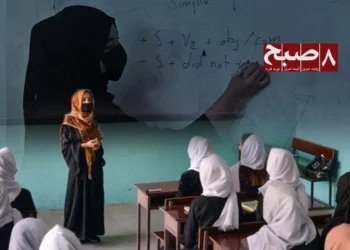
The situation for female teachers in Afghanistan is especially dire. Over the past three years, many have lost their jobs and been excluded from social participation. In that society, as in much of the world, losing a job not only means losing income but also losing social status and personal dignity. Many female teachers who have managed to keep their jobs have seen their salaries cut by 50%. With severe restrictions on their economic activities, they have no way to make up for this loss. As a result, thousands of families have lost their primary breadwinners, who were once dedicated teachers, and now struggle with worsening poverty.
Afghan teachers today face systemic discrimination, humiliation, and psychological abuse because the fanatical mullahs leading the Taliban harbor hostility toward modern education and traditional schools. Globally, progress in industry, economics, politics, and security is largely attributed to the education provided by teachers. However, the knowledge of these mullahs contributes neither to economic prosperity nor industrial growth, social development, or political vitality. Yet, those equipped with this ineffectual knowledge have taken control of the country and are particularly targeting teachers—the very individuals upon whom society’s future depends. Keeping Afghan teachers in poverty and deprivation, while funneling substantial state budgets into jihadist schools and training extremist fighters, is a deliberate plan now being executed with government resources in Afghanistan.
You can read the Persian version of this editorial here: