• 8AM.MEDIA
  • ویب‌سایت فارسی
  • پښتو ویب‌پاڼه
  • اۉزبېکچه ویب‌سایت
  • Podcast
Wednesday, September 30, 2026
Hasht-e Subh
  • Home
  • News
    • Afghanistan News
    • World News
  • Opinion
    • Editorial
    • Analysis
  • Reports
    • Daily Reports
    • Investigative Reports
  • Society
    • The story of people
  • Women’s Word
  • Columns
    • Three Years After Afghanistan’s Fall: The Taliban’s Resurgence
    • Towards Equality
    • The Resurgence of the Taliban: Two Years Since Afghanistan’s Fall
    • Hebatullah Report Special Edition
    • Resistance for Education Special Edition
    • Special Column on Taliban’s Education Curriculum
    • Nawroz
  • Interviews
  • Contact Us
    • About Us
    • 8AM MEDIA Annual Awards
    • Submit an Article to Hasht-e-Subh
  • 8am.mediaBack
Subscribe
No Result
View All Result
  • Home
  • News
    • Afghanistan News
    • World News
  • Opinion
    • Editorial
    • Analysis
  • Reports
    • Daily Reports
    • Investigative Reports
  • Society
    • The story of people
  • Women’s Word
  • Columns
    • Three Years After Afghanistan’s Fall: The Taliban’s Resurgence
    • Towards Equality
    • The Resurgence of the Taliban: Two Years Since Afghanistan’s Fall
    • Hebatullah Report Special Edition
    • Resistance for Education Special Edition
    • Special Column on Taliban’s Education Curriculum
    • Nawroz
  • Interviews
  • Contact Us
    • About Us
    • 8AM MEDIA Annual Awards
    • Submit an Article to Hasht-e-Subh
  • 8am.mediaBack
No Result
View All Result
Hasht-e Subh
No Result
View All Result

Afghanistan’s Internet Crisis: High Costs, Poor Quality, Frustrated Users

Translated by Farhad Farhaad | Originally reported in Persian by Nima

Mohammad Farhaad Mohammad Farhaad
20 July 2026 - Solar Hijri Date: 1405/04/29 [t_time:1784553305]
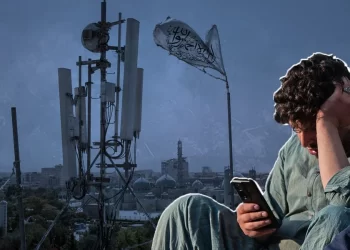
A user checks a "No internet connection" notice on a smartphone near a telecommunications tower in Afghanistan amid sharply rising internet prices. (Photo credit: Pexels)

Pexels / AFP

Decreasing internet quality, low speeds, and frequent outages in Afghanistan have created serious problems for a number of users, particularly journalists and others whose daily work depends on the internet. They say that despite paying high costs for internet packages and Wi-Fi services, the quality of these services has declined and, in many cases, no longer meets their needs. Users complain about packages running out early, rising costs, and the lack of effective accountability from telecommunications companies, saying that internet instability has disrupted their work, education, and communication.

Samira (pseudonym), a journalist in Kabul, says the quality of internet service has sharply declined and is accompanied by repeated disconnections and reconnections. She adds: “This problem has created serious difficulties for me, since I work online. Even though I pay the full cost of Wi-Fi every month, because of the constant disruptions, I am forced to use mobile internet at the same time so that my work and reports are not delayed.”

This journalist says: “In addition, the Wi-Fi data volume or credit always runs out earlier than expected, and it is usually no longer usable 10 to 15 days before the renewal date. This situation has led to higher costs, wasted time, and disruption of my professional duties, especially for journalists and others whose daily work and income depend on stable internet.”

Mohammad, another journalist in Kabul, says: “Constant internet outages and reconnections also severely affect the quality and speed of work. In journalism, news must be published in the shortest possible time, but it has happened many times that I have prepared a story for publication, only for the Wi-Fi to cut off at that exact moment, delaying its release.”

This journalist adds: “One of the most important principles of journalism is speed in reporting. If the publication of a news story is delayed, it largely loses its value and impact. It is very important for me to publish news before other media outlets and to provide accurate and timely information to the audience, but weak and unstable internet has repeatedly prevented me from fulfilling this professional responsibility on time.”

Narges (pseudonym), a Kabul resident, says: “Over the past few days, the internet quality was quite good, but today it has gotten a bit worse and is not working properly at all. I cannot allow my work to be delayed, so I also activated a mobile internet package for myself for 800 Afghanis a month. This situation is truly difficult, because I have to pay for Wi-Fi and also keep my phone’s internet active.”

Ghazal (pseudonym), a Herat resident, says: “The price of internet packages is genuinely high, but their quality and speed are very poor. The packages run out earlier than expected even with normal use, and sometimes money is deducted from subscribers’ balances for no clear reason. How much longer must people pay extra costs while receiving poor-quality service? Why does no institution hold the telecommunications companies accountable?”

Avista (pseudonym), a Kabul resident, says: “We use Wi-Fi internet and pay 1,100 Afghanis a month. Overall, since the fall of Afghanistan to the Taliban, internet quality has declined sharply and is no longer satisfactory. Especially when we want to download or upload a video, the internet does not work properly. Before, private companies provided better services, but now they are not allowed to operate. Currently, most internet services are provided to the public by Afghan Telecom. For several months now, private companies have not been permitted to operate. I think some companies whose contracts are still valid continue to operate, but overall, the quality and responsiveness of the companies also vary.” According to her, the contract of the company “Net Zone” has also ended, and the Taliban are not signing new contracts with these companies, though she does not know the reason for this decision.

This Kabul resident says: “I currently use the Roshan telecommunications network for internet, but its speed is very weak and its internet packages are also expensive. A 20 gigabyte package that should be enough for a month does not even provide the equivalent of 10 gigabytes of usable data.”

These concerns come as the Taliban’s Ministry of Communications summoned domestic telecommunications companies on Monday, September 29, 2025, and told them that, based on a verbal order from Hibatullah Akhundzada, the Taliban Supreme Leader, fiber optic internet should be cut off across Afghanistan.

The Taliban’s Ministry of Communications had also announced last year that the cost of one gigabyte of internet, which had previously been 110 Afghanis, had been reduced to 95 Afghanis, and that the cost of calls and messages had also been reduced by up to 50 percent.


You can read the Persian version of this report here:

انترنت در افغانستان؛ هزینه‌های بلند، کیفیت پایین و کاربران ناراضی
ShareTweetSendSendShare

Related Posts

A view of the city
Afghanistan News

Hibatullah Halts Fiber-Optic Project in Kandahar

20 September 2026 [t_time:1789904549]
A telecommunications tower stands over Kabul's skyline as a man scrolls his phone amid the city's ongoing internet disruptions. (Photo credit: AFP)
Daily Reports

Internet Speeds Plummet in Afghanistan as Users Report Constant Wi-Fi Outages

13 September 2026 [t_time:1789316631]
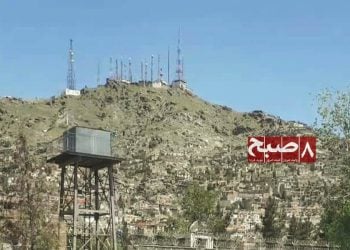
Telecommunication towers stand on a hilltop overlooking a residential neighborhood in Kabul, where residents complain of costly and low-quality internet services. (Photo credit: 8am.media)
Daily Reports

Deadline Passes With No Result: Internet in Afghanistan Remains Costly and Poor in Quality

16 July 2026 [t_time:1784214948]

Latest

Loading latest news...

Popular stories

  • Surveillance footage shows Taliban fighters surrounding and shooting a bound man in Herat. (Photo credit: Social Media)

    Taliban Shoot Young Man from Herat After Torturing Him with Hands Tied

    Share
    Share Tweet
  • Al-Qaeda Releases Hamza bin Laden Message on 9/11 Anniversary

    Share
    Share Tweet
  • UN Report Reveals Shifts in Family Attitudes and Rise in Domestic Violence in Afghanistan

    Share
    Share Tweet
  • Sources: Kandahar Bombing Leaves Seven Dead and Eight Injured at Mirwais Hospital

    Share
    Share Tweet
  • Afghanistan’s Empty Seat at the Annual UN General Assembly

    Share
    Share Tweet

Podcast

Insights
Insights

Join Lynne O’Donnell for 8AM’s podcast series, Insights.
Lynne talks with generals, diplomats, soldiers, journalists, politicians, activists, people who have front row seats for conflicts around the world, and citizens with a story to tell, happy or sad. For this first series, Afghanistan is the focus. Lynne and her guests talk about the collapse of the republic in August, 2021, and the impact since — for the people of Afghanistan, for the security of the region, for the safety of the world. It’s important, interesting and insightful.

Insights/22: Controlling the Narrative with Mina Sharif
byinsights8am

Controlling the Narrative

Lynne O’Donnell talks with Mina Sharif, author, activist, women’s rights campaigner, educator and mentor. They discuss who controls the narrative and who speaks for Afghanistan’s people when the Taliban appear to have seized control not only of the country but of the message, too.

Have a listen

Insights/22: Controlling the Narrative with Mina Sharif
Episode play icon
Insights/22: Controlling the Narrative with Mina Sharif
Episode Description
Episode play icon
Insights/21: Media Meltdown with Zahra Joya
Episode Description
Episode play icon
Insights/20: Terror Inc with Scott Richards
Episode Description
Episode play icon
Insights/19: Busting Stereotypes with Bushra Gohar
Episode Description
Episode play icon
Insights/18: Media Matters with Waliullah Rahmani
Episode Description
Episode play icon
Insights/17: What Goes Around Comes Around with Sima Samar
Episode Description
Search Results placeholder
Hasht-e Subh

8AM Media, also known as Hasht-e-Subh Daily, stands as Afghanistan's premier independent and non-profit newspaper, resonating as a beacon of journalistic integrity since its establishment in June 2007 by esteemed Afghan journalists and human rights advocates. With a steadfast commitment to citizen journalism and civic education, Hasht-e-Subh Daily has earned its place as the most esteemed publication in the nation.

Publisher: Sanjar Sohail
Email: [email protected]
Executive Director: Parwiz Kawa
Email: [email protected]

Read More

The Triumph of “Display” Over “Caution”

Banking Restrictions Keep Afghanistan’s Citizens and Traders Reliant on Exchange Shops and Hawala

Taliban Torture Children in Spin Boldak Over Alleged Smuggling to Chaman

Abdul Salam Hanafi Meets Chinese Ambassador in Kabul

Afghanistan Journalists Center: Taliban Have Detained Around 300 Journalists and Media Workers

Editor’s Choice

Every Saturday morning, 8AM MEDIA English Services Department will guide you through the week’s biggest stories from Afghanistan and the international community.

Subscribe

© 2026 - ©Hasht-e Subh Daily

No Result
View All Result
8am.Media
پښتو ویب‌پاڼه
ویب‌سایت فارسی
اۉزبېکچه ویب‌سایت
  • Home
  • News
    • Afghanistan News
    • World News
  • Opinion
    • Editorial
    • Analysis
  • Reports
    • Daily Reports
    • Investigative Reports
  • Society
    • The story of people
  • Women’s Word
  • Columns
    • Three Years After Afghanistan’s Fall: The Taliban’s Resurgence
    • Towards Equality
    • The Resurgence of the Taliban: Two Years Since Afghanistan’s Fall
    • Hebatullah Report Special Edition
    • Resistance for Education Special Edition
    • Special Column on Taliban’s Education Curriculum
    • Nawroz
  • Interviews
  • Contact Us
    • About Us
    • 8AM MEDIA Annual Awards
    • Submit an Article to Hasht-e-Subh
  • 8am.media

© 2026 - ©Hasht-e Subh Daily