Hibatullah Akhundzada, the Taliban Supreme Leader, during a meeting with scholars of the group in Kandahar Province, rejected any engagement with the international community, asserting that he would not take “even a single step” toward cooperation with them. In his speech, Akhundzada expressed strong opposition to any form of interaction with foreign nations, declaring that even if a nuclear weapon were used against him instead of the “Mother of All Bombs,” he would not bow to global demands. He emphasized that he preferred death over surrendering to international expectations. Akhundzada described global efforts to pressure the Taliban as interference in the group’s regime and firmly stated that no engagement with the international community would be accepted. Addressing the international community, he asked, “What business do you have with our affairs, system, land, or principles?”
For over three years, many countries have conditioned their engagement with the Taliban on respect for human rights and combating terrorist groups operating in Afghanistan.
This segment of Akhundzada’s speech has been widely shared on Taliban-affiliated social media pages. He underscored that under the Taliban regime, the gap between “scholars and the government” has been eliminated, warning that those seeking to create such a gap would be controlled. Akhundzada repeatedly used the term “subjects” instead of “citizens,” stressing that the separation between the “government and subjects” had been abolished.
The Taliban Supreme Leader claimed that Afghanistan, under the group’s control, is “free and independent.” He warned that he would not accept global demands, stating, “This is our land, our system; we are free and independent.”
Addressing the group’s scholars, Akhundzada asked, ‘If I were an ignorant person who knew nothing about governance, would you still prefer that we follow our path rather than the decisions of others? Today, Afghanistan stands independent and charts its course, free from anyone’s directives.’
He accused the world of opposing Afghanistan’s independence under the Taliban regime and attempting to dictate their actions. Akhundzada said, “Today, the world does not want Afghanistan’s government [the Taliban regime] to act independently. They want us to act on their signals. They advise on what to do and what not to do.”
To the international community and nations engaging with the Taliban, he issued a stern warning, questioning their authority to interfere in the group’s affairs. He declared, “What role do you have in our affairs, system, land, or principles? I am not here to fulfill your orders. I do not accept your directives.”
In his speech, Akhundzada reiterated that he would neither advance nor engage with the international community, adding, “I will not take a single step with you, nor will I engage with you. I will not compromise Sharia with you, even if you use the Mother of All Bombs [referring to the U.S. attack in Achin, Nangarhar, against ISIS] or nuclear weapons. Life and death are in God’s hands, and you [the international community] are nothing in this regard.”
In a recent speech released by the Hasht-e Subh Daily, Akhundzada criticized modern schooling, though the exact date of the recording is unclear. He argued that schools “corrupt people’s morals and change their views,” suggesting that they should be closed. Akhundzada claimed that schools conflict with madrassas and urged the Taliban to build madrassas instead of schools and send their children there.
Previously, in August of this year, Akhundzada ratified the Taliban’s “Law on the Propagation of Virtue and Prevention of Vice,” which sparked widespread reactions domestically and internationally. The majority of the UN Security Council members called for the law’s repeal, but the Taliban ignored the demands and intensified restrictions against women. According to this law, the Taliban declared that a woman’s entire body, including her face and voice, is considered “awrah” (private) and must be concealed.
Following the implementation of this law, the UN Security Council held a meeting on Tuesday, September 17, to assess its impact on women and girls in Afghanistan. Roza Otunbayeva, head of the UN Assistance Mission in Afghanistan (UNAMA), stated during the session that the law’s enforcement had weakened the Taliban’s engagement with the international community.
While Akhundzada rejects engagement with the international community, Feridun Sinirlioğlu, the former UN Secretary-General’s Coordinator for Afghanistan, submitted a report in early November 2023 to Antonio Guterres and the UN Security Council, emphasizing the need for national dialogue in Afghanistan and normalization of relations with the Taliban.
The report highlighted the possibility of full normalization and Afghanistan’s reintegration into the international system through adherence to international commitments, the establishment of an all-inclusive government, and intra-Afghan dialogue.
The report stated that the current approach to international engagement with the Taliban was ineffective and failed to address the humanitarian, economic, political, or social needs of the people of Afghanistan. It called for a new engagement strategy based on lessons from previous efforts and tailored to Afghanistan’s present realities.
Despite the Doha Agreement with the U.S., where the Taliban pledged to respect women’s rights and combat terrorist groups in Afghanistan, they have, over the past three years, issued numerous decrees that completely exclude women from public life. Most recently, the Taliban have barred women and girls from medical institutes after previously prohibiting education, employment, travel, recreation, and sports.
Rather than combating terrorist groups, the Taliban have provided sanctuary to foreign fighters in Afghanistan. For example, Ayman al-Zawahiri, the former al-Qaeda leader, was sheltered in a luxurious guesthouse in Sherpur, Kabul, before being killed in a U.S. drone strike on Wednesday, August 31, 2022.
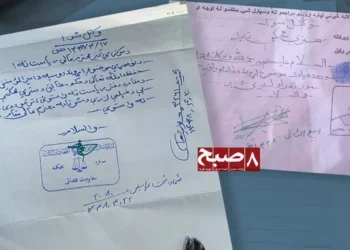
A report by the Hasht-e Subh Daily revealed that the Taliban built four settlements in Ghazni Province exclusively for al-Qaeda and the Tehrik-e-Taliban Pakistan (TTP). The UN had previously warned that Afghanistan under Taliban control had become a “haven” for groups such as al-Qaeda and ISIS.
The UN Security Council’s sanctions committee reported that al-Qaeda operated eight training camps in Ghazni, Laghman, Parwan, and Uruzgan, and a weapons storage facility in Panjshir Province. The report also mentioned religious schools linked to al-Qaeda operating in Laghman, Kunar, Nangarhar, Nuristan, and Parwan. It concluded that ties between the Taliban and al-Qaeda remain close, with the latter maintaining a presence in Afghanistan and posing a significant regional and global threat.
You can read the Persian version of this daily report here:
هبتالله به جامعه جهانی: اگر «سلاح اتمی» هم استفاده کنید تعامل نمیکنم | روزنامه ۸صبح