
Over the past three years, numerous reports have highlighted tensions between Hibatullah Akhundzada, the Taliban Supreme Leader, and Sirajuddin Haqqani, the group’s Interior Minister. Recently, Hasht-e Subh Daily obtained information indicating that Akhundzada summoned several local Taliban commanders from various provinces and warned them about their loyalty to Haqqani. Akhundzada reportedly told some of these commanders that they should go to Kandahar rather than Kabul if they sought positions and privileges.
Credible sources informed Hasht-e Subh Daily that some Taliban commanders from Nimruz and Farah provinces recently traveled to Kabul to meet Sirajuddin Haqqani, the Taliban Interior Minister and leader of the Haqqani Network. These commanders reportedly expressed dissatisfaction with recent changes implemented by Akhundzada, particularly the reshuffling of Taliban ranks in Farah and Nimruz, which they discussed with Haqqani.
According to the sources, Sardar Mohammad Ayoubi, the former Taliban police chief of Nimruz, was dismissed from his position by Akhundzada and reassigned as the commander of the Third Brigade of the Taliban’s 215 Azam Corps in Helmand. Ayoubi reportedly sought to express his discontent with this decision to Haqqani.
The sources noted, “Sardar Ayoubi is a powerful figure in Farah and Nimruz, commanding approximately 700 armed men. He led a faction of Farah-based Taliban in Nimruz but was removed from his position as the Nimruz police chief and appointed as the commander of the Third Brigade of the 215 Azam Corps.”
The sources also added, “In addition to serving as the Nimruz police chief, Ayoubi appointed most of the Farah-based Taliban members to key administrative positions in Nimruz. Even the deputy governor of Nimruz was one of his men, significantly increasing his influence. This is why he was removed from the province.”
According to the sources, Ayoubi has close ties with Iran’s Islamic Revolutionary Guard Corps (IRGC) and is involved in leading drug trafficking operations in Nimruz. Dissatisfied with Akhundzada’s decision, he and other Taliban commanders were invited to Kabul by Sirajuddin Haqqani after being removed from Nimruz.
After several meetings with Haqqani’s circle in Kabul, the dissatisfied commanders returned to Nimruz and Farah. However, shortly afterward, Hibatullah Akhundzada summoned them to Kandahar.
Sources confirmed that Akhundzada questioned the commanders about their visit to Kabul and meeting with Sirajuddin Haqqani. He reportedly told them, “Kabul is not the place to address your demands. Whatever you seek should be pursued in Kandahar.”
The sources further explained: “When Akhundzada summoned these commanders to Kandahar, he first asked why they had gone to Kabul. They responded that it was at the request of Khalifa Sirajuddin Haqqani. But Mullah Hibatullah replied, ‘If you are looking for positions, you should know that appointments are made only from here, and we make the decisions.’”
Akhundzada reportedly emphasized to the commanders, “From now on, whatever you need must be addressed here in Kandahar. Other places cannot fulfill your requests.”
The sources also mentioned that Akhundzada reassured the dissatisfied commanders, including Sardar Mohammad Ayoubi, that they would eventually be reinstated to their previous roles or assigned new positions.
These developments come amid growing divisions among Taliban leaders, especially between Sirajuddin Haqqani and Mullah Hibatullah Akhundzada. Recently, Haqqani indirectly criticized Akhundzada during a public gathering, stating, “Representing religion should not monopolize the truth. We must invite people to religion and bring them closer to it, just as the Prophet attracted people to Islam through forgiveness and leniency.”
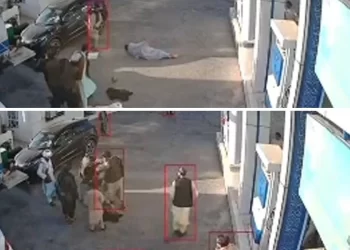
Following these remarks, on Wednesday, December 11, Khalil-ur-Rahman Haqqani, the Taliban Minister for Refugees and Repatriation, and Sirajuddin Haqqani’s uncle, was killed in a suicide attack at the ministry’s headquarters. Many political analysts and social media users have linked his assassination to the power struggle between Akhundzada and Haqqani.
The Taliban attributed Khalil-ur-Rahman Haqqani’s death to ISIS, and the group claimed responsibility for the attack, stating that several other Taliban members were also killed in the incident.
You can read the Persian version of this daily report here: