
Several residents of Badakhshan province are complaining about the sale of agricultural land to mining companies and the seizure of parts of this land by individuals and companies linked to the Taliban. They say that many people, driven by poverty and economic hardship, are forced to sell their farmland without considering the long-term consequences for livelihoods, the environment, and food security.
These Badakhshan residents add that individuals and companies affiliated with the Taliban are buying up people’s farmland, and in cases where landowners refuse to sell, the land is seized by force. According to them, mining has brought no benefit to the local population; instead, it has caused environmental destruction, the loss of farmland, and the disappearance of pastureland. They stress that Taliban-linked companies are carrying out unprofessional and unregulated mining operations, and that if this continues, it will pose a serious threat to agriculture, livestock, and the livelihoods of the province’s residents.
Speaking to the Hasht-e Subh Daily, these residents say that Badakhshan’s mineral resources could have been a foundation for the province’s economic growth and development. Instead, in the absence of laws, oversight, and transparency, the sector has become an arena for plundering natural resources and spreading corruption. They say the revenue from these mining operations, rather than being spent on development, infrastructure, and improving people’s lives, is flowing into the pockets of local strongmen and networks tied to the Taliban.
Nazim, a resident of Badakhshan province, expresses concern over the sale and seizure of agricultural land for gold mining. He says many people, because of poverty and economic hardship, sell their land to mining companies without considering the long-term consequences of doing so. He adds that farmland is people’s main asset and the source of food for their families, and that its loss could, in the future, create hardship for thousands of families who depend on farming and livestock herding.
This Badakhshan resident says: “Many people think only about the money they make in the short term, while farmland is their main asset. If this land is lost, people will face even greater difficulties in the future.” According to Nazim, gold mining in some parts of Badakhshan is carried out in a substandard way, without advanced equipment, and its main benefit does not reach the local population.
This young man from Badakhshan adds: “Companies linked to the Taliban extract these resources, but the benefit does not reach the local population. We call on Taliban officials to stop this process and take serious action to protect farmland and natural resources.”
Baqer, a resident of the district of Shahr-e Bozorg in Badakhshan, says that several residents’ farmland in this district has been seized by strongmen linked to the Taliban and is now being used for gold mining. He adds that these mining activities are being carried out without regard for necessary standards and have caused significant damage to farmland and the environment. According to him, the local population gains no benefit from the mining, and its revenue, instead of being invested in regional development, ends up in the hands of individuals and companies linked to the Taliban.
Baqer says: “We have repeatedly said that people’s land should not be taken by force and that mines should not be extracted without planning and oversight, but no one has paid attention to the people’s demands. The benefit from these mines does not reach the local population; only individuals and companies from outside Badakhshan benefit from them, while the destruction of land and the environment falls on residents. Right now, certain individuals and companies, including Chinese firms and the Taliban, are engaged in mining, and our mineral resources are being used in an unregulated way. In the past, local people worked in gold panning, but now they are not allowed to do so.” He stresses that residents of Shahr-e Bozorg have repeatedly called for an end to land seizures and unregulated mining, but their demands have not been addressed so far.
Bibi Zarina, a resident of Shaghnan district in Badakhshan, says the sale of farmland for gold mining has spread more widely in the Shewa area of this province compared to other regions.
She adds that several residents of this area, due to economic needs, sell land where gold may be present, or take up gold mining themselves.
Bibi Zarina says, “People in Shewa believe there is gold in their land, so they either sell it or start extracting it themselves to get money.”
Meanwhile, several agricultural experts warn that unregulated mining on farmland and pastureland, without effective management and oversight, poses a serious threat to food security, the environment, and people’s livelihoods. They say that if this trend continues, it will not only destroy natural resources but also reduce the capacity for agricultural and livestock production.
According to these experts, changing the use of farmland for mining should be carried out in accordance with laws, environmental assessments, and with due regard for landowners’ rights; otherwise, irreparable damage will be done to natural resources and people’s lives.
Qutbuddin Yaqoubi, an agricultural expert, says that farmland and pastureland are among Afghanistan’s national assets and valuable resources, and that substandard mining in these areas has wide-ranging consequences for agriculture and livestock farming.
This expert says: “When farmland and pastureland are destroyed without management and planning, agricultural production declines and food security is seriously threatened. The loss of pastureland also damages livestock farming and affects the lives of thousands of families who depend on farming and animal husbandry for their livelihood.”
Yaqoubi stresses that any change in land use and the region’s topography should be carried out in accordance with laws and technical standards, and that landowners’ rights must also be respected. He adds: “Farmland and mineral resources are both national assets, and seizing or destroying them runs counter to the public interest. The government must exercise serious oversight of the mining process, prevent the destruction of arable land, and, where people suffer losses, fairly compensate them.”
These complaints come after residents of Sheki district in Badakhshan had previously staged widespread protests over the seizure of their land by Jumakhan Fateh, a local Taliban commander.
Afghanistan is among the countries with vast natural resources, particularly precious and semi-precious stones. The Ministry of Mines, under the former republic government, had announced that Afghanistan’s natural resources were estimated to be worth around three trillion dollars.
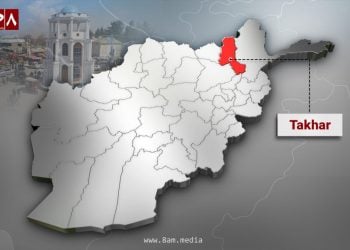
Following the Taliban’s takeover and the reduction in foreign aid, gold and precious stone mining activities have increased in several provinces, particularly Takhar and Badakhshan. This trend has raised concerns in some areas about environmental destruction, damage to natural resources, and its impact on the lives of the local population.
You can read the Persian version of this report here:
چپاول منابع در سایه فقر؛ زمینهای کشاورزی بدخشان به بهای طلا از دست میرود