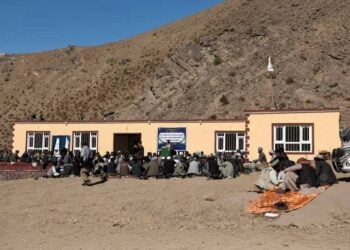
Several residents in Ghazni province have expressed concern over the increasing sale of agricultural lands for residential construction, warning that this trend could seriously threaten food security and livelihoods in the future. They call for strict oversight and control over the conversion of agricultural land use. These residents emphasize that continuing this trend could have alarming consequences for people’s livelihoods and domestic production.
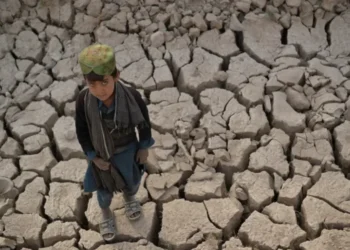
In interviews with the Hasht-e Subh Daily, some Ghazni residents cited a lack of oversight, population growth, the return of migrants, and economic poverty as the main reasons for the expansion of construction on agricultural lands. According to them, consecutive droughts have also reduced land productivity, prompting many farmers to sell their lands.
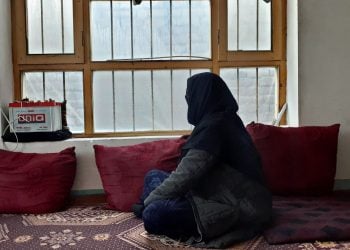
Marzia Hussaini, a resident of Bekawol village in Ghazni province, expressed concern about the growing trend of converting agricultural lands into residential properties. This young woman, a graduate of agricultural studies, warns that if this trend continues, both food security and agricultural jobs in Afghanistan will face serious threats. Marzia believes that there is no clear law in Afghanistan to protect agricultural lands, and many people lack a forward-looking approach to agricultural resources.
She continues, “In Afghanistan, there is no clear law to protect agricultural lands, and people do not pay attention to what will happen to the country’s food supply in the future, especially in a country like Afghanistan, where the economy depends on agriculture. People only think about money and do not consider the consequences.”
Ali, another resident of this village, said that with the return of Afghanistan citizens from Iran and Pakistan in recent months, the price of agricultural lands has significantly increased. According to him, the rising prices have led some farmers to sell their lands without considering the long-term consequences.
“I have lived and worked on these lands for over four decades. My family’s livelihood came from this soil, but now farming is under serious threat. Instead of cultivation, tall cement walls have sprung up here, and their number increases every day.” He adds.
Sayed Shabbir, a resident of Bekawol village in Ghazni province who once grew barley, corn, and wheat on his land, has been forced to sell it due to consecutive droughts. He said that despite his efforts, he could not preserve his land and decided to sell it to start a business and cover his living expenses.
Shabbir stated, “I used to grow barley, corn, and wheat on this land, but over time, the irrigation canal dried up, and we could no longer produce crops. So, we decided to sell the land to generate some income. The new owner is now building a house on it.”
Najmuddin, another resident of Ghazni province, said that widespread awareness campaigns are needed to prevent the conversion of agricultural lands into residential properties. He added, “When land that produces 20 to 30 sacks of wheat annually for a farmer is turned into a house, it naturally harms food security. Instead, there should be an exchange between those who need houses and those who own land. People should not only think about their gain; they must also consider the future of the region and make decisions that align with the public interest.”
Meanwhile, environmental experts say that the trend of converting agricultural lands into residential properties is not limited to Ghazni but is occurring in other provinces of Afghanistan as well.
Sayed Muhammad Soleimankhel, an expert on environmental issues and climate change, said that construction on agricultural lands in Afghanistan has significantly increased, becoming a serious concern. He added that this phenomenon is not confined to certain provinces but is clearly visible in most parts of the country, including Kabul, the capital of Afghanistan.
Soleimankhel does not attribute this situation solely to population growth but also to the lack of precise urban planning and weak enforcement of laws. He warns that building residential houses on agricultural lands threatens food security and causes environmental degradation.
This environmental expert stated, “When vegetation is destroyed, it paves the way for heavy and uncontrollable rainfall, which can lead to floods, soil erosion, and contamination of water resources. This is a direct threat to the ecosystem, water resources, and people’s livelihoods.”
In a context where Afghanistan is grappling with a climate crisis, the conversion of agricultural lands into residential properties exacerbates the food crisis. This trend not only reduces food production resources but also increases the country’s vulnerability to climate change.
Given that over 60 percent of Afghanistan’s population depends on agriculture, the loss of agricultural lands could lead to reduced agricultural production, higher food prices, and ultimately increased poverty and hunger.
You can read the Persian version of this report here:
خانهسازی بر زمین زراعتی؛ بحران غذایی و اقلیمی را در غزنی افزایش میدهد