Street vendors and shopkeepers across the city now struggle with falling sales and shrinking customer purchasing power. They point to rising food prices, higher house rent, expensive fuel, low incomes, and fewer job opportunities as the main reasons for this crisis. Some producers have tried to attract buyers by offering discounts, but even these efforts have failed to stop the decline in sales. At the same time, economic experts say that weaker consumption and production have slowed investment and placed even more pressure on the labor market.
In Kabul, many sellers openly worry about the steady fall in both purchasing power and sales. They say that fewer job opportunities and higher raw material costs have forced families to give up many of their basic needs.
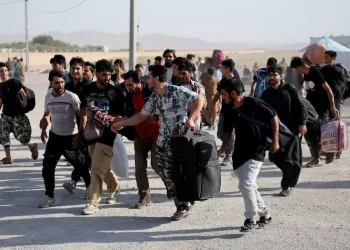
Juma Gul, a young vendor in Kabul, describes the market as painfully stagnant. He says he has not sold a single item in the past two days. Alongside his studies, he helps his father sell secondhand clothes. Juma Gul once hoped colder weather would bring more customers, but instead, the market has grown even quieter. At times, he must lower his prices just to make a sale. He believes the closure of the Torkham crossing and the rise in raw material prices have sharply reduced people’s ability to buy.
He says, “Business has become very weak these days. For two days, I haven’t sold anything. People come, touch the clothes, look at them closely, but they leave without buying. They like the clothes for themselves or their daughters and truly need them, but they don’t have enough money. Even though secondhand clothes are far cheaper than new ones, they still can’t afford them. In these conditions, I have no choice but to offer discounts. If they had the money, they would surely buy new clothes.”
Hilal, another young man who repairs mobile phones, shares the same struggle. Like Juma Gul, he says his income has dropped sharply and no longer covers his family’s basic needs.
He explains, “Three of my brothers are unemployed, and I am the only one who works. Business has slowed down, food prices and house rent have gone up, and you can see for yourself how bad the market is. I can barely take care of even our most necessary needs. All of this creates a heavy pressure that a person must live with. Last month, I had to borrow money just to pay the rent.”
Morawat, a child who carefully hangs ironed secondhand clothes on a wooden rack beside the roadside, tells a similar story. “We are ten people in our family, and only my father works, so the financial burden on him is very heavy,” he says. “I asked him to bring auctioned clothes from Chawindol market area so I could sell them and help with household expenses, but business is no longer like it was in summer.”
He adds, “During the summer, people showed interest, and our sales were better. Now they have grown indifferent. I iron the clothes my parents bring so I can sell them at a fair price, but this week my sales were very low. The clothes sit covered with dust, and all that remains is the tiring work of carrying them back and forth.”
Economic observers warn that falling demand weakens both production and the labor market. As jobs disappear and businesses suffer, the cycle continues, driving poverty and unemployment even higher.
Shaakir Yaqubi, an economic analyst, explains that purchasing power falls when incomes stay the same or decrease while the prices of goods and services rise every day. He says unemployment and limited job opportunities also reduce the money that reaches families, even as the costs of food, house rent, and fuel continue to grow. As a result, families abandon many non-essential purchases and sometimes even necessities.
Yaqubi says, “When people buy less, producers lose sales, and factories and shopkeepers face the risk of bankruptcy. To survive, many are forced to lay off workers. This harms production and shrinks the labor market at the same time. The negative cycle then continues, pushing poverty and unemployment even higher. An economy cannot grow or survive when the people’s purchasing power is weak.”
Seyar Quraishi, another economic observer, adds, “Low incomes have weakened people’s purchasing power, while raw material prices have risen. In the past, infrastructure projects were active, and many foreign institutions operated in the country. People had jobs, income, and stronger buying power. Now, as consumption falls, production also declines. This slows investment and increases pressure on the labor market. Companies hire fewer workers and may even reduce their staff. As a result, job opportunities become even more limited. In the end, falling purchasing power creates a harmful cycle: demand drops, production falls, and jobs disappear.”
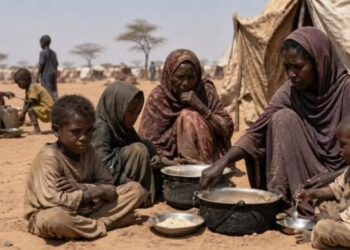
All of these concerns come at a time when the United Nations Food and Agriculture Organization (FAO), the World Food Programme (WFP), and the United Nations Office for the Coordination of Humanitarian Affairs (OCHA) have warned in separate reports that Afghanistan is facing one of the most severe hunger crises in the world.
You can read the Persian version of this report here: