• 8AM.MEDIA
  • ویب‌سایت فارسی
  • پښتو ویب‌پاڼه
  • اۉزبېکچه ویب‌سایت
  • Podcast
Monday, October 5, 2026
Hasht-e Subh
  • Home
  • News
    • Afghanistan News
    • World News
  • Opinion
    • Editorial
    • Analysis
  • Reports
    • Daily Reports
    • Investigative Reports
  • Society
    • The story of people
  • Women’s Word
  • Columns
    • Three Years After Afghanistan’s Fall: The Taliban’s Resurgence
    • Towards Equality
    • The Resurgence of the Taliban: Two Years Since Afghanistan’s Fall
    • Hebatullah Report Special Edition
    • Resistance for Education Special Edition
    • Special Column on Taliban’s Education Curriculum
    • Nawroz
  • Interviews
  • Contact Us
    • About Us
    • 8AM MEDIA Annual Awards
    • Submit an Article to Hasht-e-Subh
  • 8am.mediaBack
Subscribe
No Result
View All Result
  • Home
  • News
    • Afghanistan News
    • World News
  • Opinion
    • Editorial
    • Analysis
  • Reports
    • Daily Reports
    • Investigative Reports
  • Society
    • The story of people
  • Women’s Word
  • Columns
    • Three Years After Afghanistan’s Fall: The Taliban’s Resurgence
    • Towards Equality
    • The Resurgence of the Taliban: Two Years Since Afghanistan’s Fall
    • Hebatullah Report Special Edition
    • Resistance for Education Special Edition
    • Special Column on Taliban’s Education Curriculum
    • Nawroz
  • Interviews
  • Contact Us
    • About Us
    • 8AM MEDIA Annual Awards
    • Submit an Article to Hasht-e-Subh
  • 8am.mediaBack
No Result
View All Result
Hasht-e Subh
No Result
View All Result

Discriminatory Treatment: Muqur Residents in Ghazni Lament Medicine Shortages and Ethnic Bias

Elina Qalam Elina Qalam
30 June 2025 - Solar Hijri Date: 1404/04/09 [t_time:1751270030]
Residents gather outside a public clinic in Muqur District, Ghazni Province, amid complaints about inadequate healthcare services. (Photo Credit: 8am.media)

Residents of Muqur District in Ghazni Province have expressed concerns about the poor quality of healthcare services at the district’s public clinic. They report that most clinic staff are unqualified individuals appointed in place of specialized doctors. According to them, these appointments are often based on ethnic affiliations or personal connections rather than professional qualifications. This situation has created significant challenges for patients, who say the lack of skilled staff and effective healthcare services forces them to seek treatment in Ghazni’s provincial capital or other provinces, a costly and burdensome endeavor for many families.

Some residents of Muqur, in interviews with the Hasht-e Subh Daily, also complained about inappropriate behavior by certain healthcare workers toward Persian-speaking patients. They claim that these workers treat ordinary people disrespectfully while providing preferential treatment and special accommodations to their relatives and acquaintances.
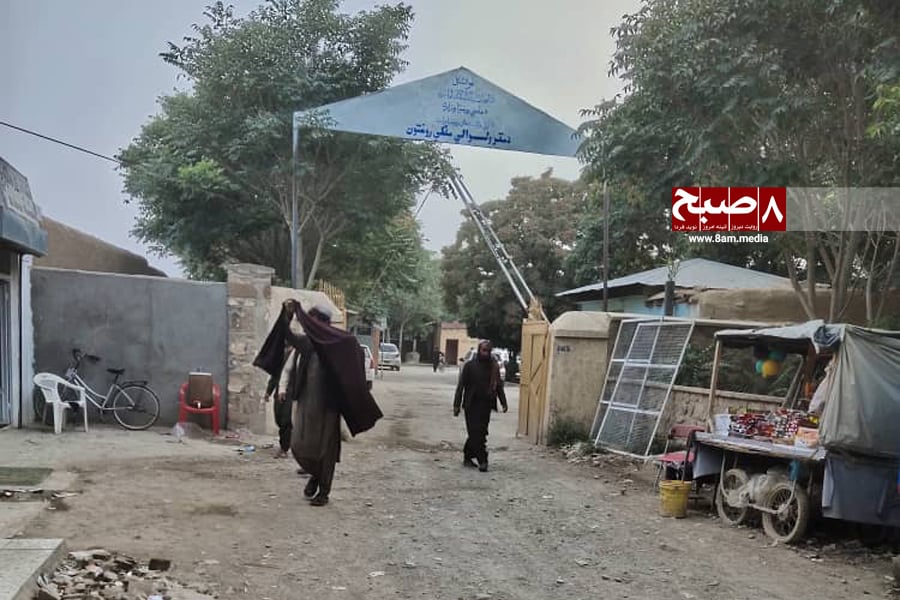
Residents walk past a healthcare facility in Muqur District, Ghazni Province, amid ongoing concerns over service quality. (Photo Credit: 8am.media)
Residents walk past a healthcare facility in Muqur District, Ghazni Province, amid ongoing concerns over service quality.

Gul Muhammad (pseudonym), a resident of Muqur District, voiced concerns about the lack of specialized staff at the district’s healthcare facility. He stated that most clinic employees are appointed not based on merit or expertise but through connections and ethnic favoritism. As a result, residents are compelled to travel to Ghazni’s provincial capital or other provinces for treatment.

He added, “One of the main issues at the Lasgin-Lasu Clinic is the lack of specialized medical staff. Most of those appointed here have been hired due to connections or ethnic biases, not professional qualifications. Additionally, there is discrimination and ethnic favoritism at the clinic. Patients who are relatives of the doctors receive better services, while others face delays or neglect in care.”

Sayed (pseudonym), another resident of Muqur District, noted that the entire district lacks even a single specialist in ear, nose, throat, or eye care. He urged the Taliban to hire a specialist for the district’s public clinic to address the healthcare needs of residents unable to travel outside the district.

He further explained, “A few days ago, I had to take my nephew to Kabul for ear treatment, which was very costly. There isn’t a single ear, throat, or eye specialist in the entire Muqur District. We ask the authorities to address this issue seriously.” Sayed also alleged that the public clinic in Muqur practices ethnic and linguistic discrimination, with Persian-speaking patients facing unfair treatment.

He stated, “When we visit the district’s public clinic for treatment, we face severe discrimination. There are neither proper medications nor adequate healthcare services for Persian speakers. It feels as though we come from a different tribe or ethnicity.”

Residents also highlighted other significant issues, including a shortage of medicines, inadequate medical equipment, and unsanitary conditions at healthcare facilities. They say these problems not only degrade the quality of medical services but also endanger patients’ health. The residents of Muqur District are calling for urgent and serious action from responsible government institutions to address these challenges.

Muhammad, a resident of Muqur District in Ghazni Province, stated that the district’s healthcare facilities suffer from a severe shortage of specialized staff and medications. He added that many healthcare workers lack the necessary skills and qualifications to provide adequate care. In the absence of doctors and medicines, people are forced to turn to private pharmacies, which are financially burdensome and difficult for many families.

Muhammad reiterated, “We urge health institutions to provide professional staff, medicines, and necessary equipment to the healthcare centers in Muqur District and to cooperate seriously with the people of this district.”

Saadiq, another resident of Muqur, said that patients struggle to secure initial appointments with doctors, as these are either sold or reserved for the relatives of clinic staff. He added that discrimination in the distribution of medicines is prevalent, with Persian-speaking patients rarely receiving complete prescriptions. According to Saadiq, this situation has caused widespread dissatisfaction among the population.

He continued, “The clinic staff lack even the basic ability to insert an IV cannula. I wish a delegation from the health directorate would visit, not officially, but anonymously, to witness the people’s struggles firsthand. Even in the medicine queue, there is ethnic discrimination. They took my prescription and gave it to someone else, who received all their medications, while I was given only half of what I needed.” He added that in cases where patients do receive medicines from the clinic, they are often ineffective. Saadiq noted that when patients seek care at larger medical facilities, doctors criticize them for not starting treatment earlier.

The public clinic in Muqur District serves not only hundreds of families in the area but also residents of neighboring regions such as Gilan, Nawa, Paito, Shinkai, Kuhband, and Auband, who rely on it for healthcare services.

Previously, the World Health Organization (WHO) reported the closure of several healthcare centers it supported in Afghanistan this year. However, in its latest report, the organization stated that it continues to support 131 primary healthcare centers across 20 provinces in the Afghanistan.

You can read the Persian version of this report here:

درمان با تبعیض؛ باشنده‌گان مقر غزنی از کمبود دارو و برخورد قومی شکایت دارند 
ShareTweetSendSendShare

Related Posts

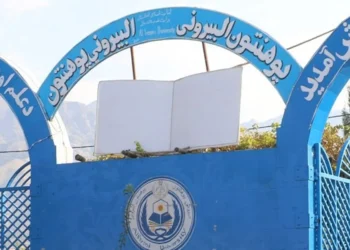
The blue entrance gate of Alberuni University in Kapisa province, where students say a Taliban official denies living allowances over beards and caps. (Photo credit: Social Media)
Daily Reports

Beard and Cap Required to Receive Living Allowance at Alberuni University

3 October 2026 [t_time:1791021610]
Officials from Belarus and the Taliban exchange gifts during a meeting on expanding health cooperation. (Photo credit: @MoPH_afg)
Afghanistan News

Belarus Ready to Expand Health Cooperation with Taliban

29 September 2026 [t_time:1790685648]
Afghan migrants receive assistance during a return process facilitated by the International Organization for Migration (Photo: IOM)
Afghanistan News

6.4 Million Afghans Have Returned; 69 Percent of Returnees Are Unemployed

29 September 2026 [t_time:1790682158]

Latest

Loading latest news...

Popular stories

  • An Afghan woman gazes out of her home, reflecting the isolation and challenges faced by women in Afghanistan under Taliban rule. (Photo Credit: 8am.media)

    UN Report Reveals Shifts in Family Attitudes and Rise in Domestic Violence in Afghanistan

    Share
    Share Tweet
  • Taliban Shoot Young Man from Herat After Torturing Him with Hands Tied

    Share
    Share Tweet
  • Al-Qaeda Releases Hamza bin Laden Message on 9/11 Anniversary

    Share
    Share Tweet
  • Afghanistan Journalists Center: Taliban Have Detained Around 300 Journalists and Media Workers

    Share
    Share Tweet
  • The Silencing of Afghanistan

    Share
    Share Tweet

Podcast

Insights
Insights

Join Lynne O’Donnell for 8AM’s podcast series, Insights.
Lynne talks with generals, diplomats, soldiers, journalists, politicians, activists, people who have front row seats for conflicts around the world, and citizens with a story to tell, happy or sad. For this first series, Afghanistan is the focus. Lynne and her guests talk about the collapse of the republic in August, 2021, and the impact since — for the people of Afghanistan, for the security of the region, for the safety of the world. It’s important, interesting and insightful.

Insights/22: Controlling the Narrative with Mina Sharif
byinsights8am

Controlling the Narrative

Lynne O’Donnell talks with Mina Sharif, author, activist, women’s rights campaigner, educator and mentor. They discuss who controls the narrative and who speaks for Afghanistan’s people when the Taliban appear to have seized control not only of the country but of the message, too.

Have a listen

Insights/22: Controlling the Narrative with Mina Sharif
Episode play icon
Insights/22: Controlling the Narrative with Mina Sharif
Episode Description
Episode play icon
Insights/21: Media Meltdown with Zahra Joya
Episode Description
Episode play icon
Insights/20: Terror Inc with Scott Richards
Episode Description
Episode play icon
Insights/19: Busting Stereotypes with Bushra Gohar
Episode Description
Episode play icon
Insights/18: Media Matters with Waliullah Rahmani
Episode Description
Episode play icon
Insights/17: What Goes Around Comes Around with Sima Samar
Episode Description
Search Results placeholder
Hasht-e Subh

8AM Media, also known as Hasht-e-Subh Daily, stands as Afghanistan's premier independent and non-profit newspaper, resonating as a beacon of journalistic integrity since its establishment in June 2007 by esteemed Afghan journalists and human rights advocates. With a steadfast commitment to citizen journalism and civic education, Hasht-e-Subh Daily has earned its place as the most esteemed publication in the nation.

Publisher: Sanjar Sohail
Email: [email protected]
Executive Director: Parwiz Kawa
Email: [email protected]

Read More

On World Teachers’ Day, Pay Cuts and Economic Pressure Leave Teachers Demoralized

India and Afghanistan: Quiet Diplomacy in the Shadow of the Taliban-Pakistan Tensions

UN Human Rights Council Extends Richard Bennett’s Afghanistan Mandate for One Year

Mohammad Sadiq at Moscow Meeting: Pakistan’s Operations in Afghanistan Are ‘Defensive’ in Nature

Human Rights Watch: U.S. Has Failed to Provide Compensation for Afghan War Crimes After 25 Years

Editor’s Choice

Every Saturday morning, 8AM MEDIA English Services Department will guide you through the week’s biggest stories from Afghanistan and the international community.

Subscribe

© 2026 - ©Hasht-e Subh Daily

No Result
View All Result
8am.Media
پښتو ویب‌پاڼه
ویب‌سایت فارسی
اۉزبېکچه ویب‌سایت
  • Home
  • News
    • Afghanistan News
    • World News
  • Opinion
    • Editorial
    • Analysis
  • Reports
    • Daily Reports
    • Investigative Reports
  • Society
    • The story of people
  • Women’s Word
  • Columns
    • Three Years After Afghanistan’s Fall: The Taliban’s Resurgence
    • Towards Equality
    • The Resurgence of the Taliban: Two Years Since Afghanistan’s Fall
    • Hebatullah Report Special Edition
    • Resistance for Education Special Edition
    • Special Column on Taliban’s Education Curriculum
    • Nawroz
  • Interviews
  • Contact Us
    • About Us
    • 8AM MEDIA Annual Awards
    • Submit an Article to Hasht-e-Subh
  • 8am.media

© 2026 - ©Hasht-e Subh Daily