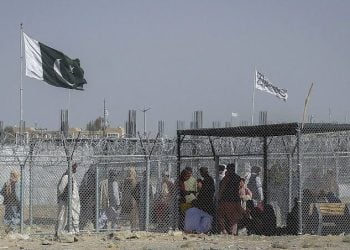
After clashes erupted along the border between the Taliban and Pakistan and political tensions intensified, Pakistan shut down its borders with Afghanistan. These crossings have remained closed to commercial trade ever since. The Taliban had earlier claimed that the closures did not affect the domestic market, but many Kabul residents now say otherwise. They report a sharp rise in the price of Pakistani cement across the city. According to them, sellers have taken advantage of the situation, and the lack of market oversight by the Taliban has allowed prices to soar. As a result, the cost of each bag of cement has increased by 300 to 400 Afghanis. Residents also say that imported Iranian cement now sells at high prices, while Pakistani cement has nearly vanished from the market. When it does appear, its price often doubles.
In interviews with the Hasht-e Subh Daily, residents called for the construction of new cement factories and for expanding the capacity of existing ones. They said they had paused their construction work in hopes that the border crossings would reopen. Instead, the closures dragged on, and the price of cement climbed even higher.
Ahmad Ghafour, a resident of Kabul, said that once transit routes with Pakistan closed, cement prices in the market doubled. He added that the Taliban exert no real control over the market. According to him, sellers offer Pakistani cement at extremely high prices, while the cost of Iranian cement, which he described as low in quality, has also risen. Ghafour warned that if the crossings remain shut, builders will continue using poor-quality materials, which could become dangerous in the future.
He said, “After cement prices went up, people stopped their construction work. Now, not only have projects come to a halt, but many buildings stand half-finished. People do not want to use Iranian cement because of its low quality. We ask the Taliban to coordinate with the neighboring country at the Torkham border, to keep trade running, and to allow high-quality cement back into the market so people can finish what they started.”
Asadullah Shirzad, another Kabul resident, said the Taliban should not turn ordinary people into victims of their poorly planned policies toward Pakistan. He explained: “I needed to build a kitchen, but when cement prices rose, I had no choice but to use Iranian cement. Now I regret it, because it broke down very quickly. It costs more than Pakistani cement, yet its quality does not compare to the Fauji Cement at all. Every government has its own foreign policy, and we do not interfere with that. But the Taliban must understand that the people should not pay the price for these policies.”
Meanwhile, several cement sellers in Kabul said that the continued closure of trade routes, the halt in Pakistani cement imports, and rising demand have all pushed prices upward. Some added that prices have dropped slightly compared to a week ago. They also said cement shipments from India may arrive soon.
Shekab and Samim, two sellers in Kabul’s cement market, said they are currently the only ones with Pakistani cement in stock. Although they did not import it themselves, they now sell it at high prices. Both warned that if the routes remain closed, prices will rise even further.
Shekab said, “We have Pakistani cement. Each bag costs between 750 and 800 Afghanis. We did not have it before. It came from a building where someone had stored it and later resold it. We bought it and now sell it. Because demand is high, the price has gone up. It is not our fault. We only make 8 to 10 Afghanis per kilogram in profit. We also sell Iranian Baqeran cement for 700 Afghanis.”
Samim added, “Because the roads are closed and the quality is good, the price of Pakistani cement has increased. Iranian cement is poor and does not bond well, yet it still sells for only slightly less than Pakistani cement, between 650 and 700 Afghanis.”
Meanwhile, Sultan and Amir, two other cement sellers in Kabul, said cement prices have fallen in recent days and that they do not have any Pakistani cement in their shops.
Sultan said: “The price of Iranian Baqeran cement is now 540 Afghanis, and loose cement sells for 100 to 120 Afghanis. Prices have dropped. The Taliban signed a contract with Iran. Otherwise, even the price of Iranian cement would have gone up. Compared to last week, its price has fallen by 250 Afghanis. At this level, we earn only 5 to 6 Afghanis in profit. We are not making much.”
Amir added: “We sell Iranian Baqeran cement for 650 Afghanis, and sometimes for 630 if we give a discount. It comes through the Chabahar route, which makes it costly for us. The Pakistan route was simple and cheap. The cement now coming from Iran and India is not low in quality. We also sell domestic cement. Ghor cement is currently out of stock, but its quality is very good.”
At the same time, several economic experts said the country must focus on building new factories and expanding existing ones to meet domestic needs.
Qutbuddin Yaqubi said: “The Taliban must build cement factories in other provinces as well, especially in Herat and Badghis, which have strong production potential. Even if these factories are built, they will not meet all demand. The country can also import cement from neighboring states like Iran, Tajikistan, and Uzbekistan as alternatives to Pakistan.”
In the markets of Kabul, the price of Iranian cement now ranges between 550 and 700 Afghanis per bag, depending on the shop. Pakistani cement, sold under the name “Cherat Askari,” remains scarce and sells for 750 to 850 Afghanis.
Earlier, the Taliban Ministry of Finance claimed that the closure of Pakistan’s borders had “no negative impact” on trade in Afghanistan.
Afghanistan’s main cement factories are Ghor Cement and Jabal Saraj, located in the provinces of Baghlan and Parwan. The Ghor Cement factory produces about 600 tons of cement each day, while the Jabal Saraj factory has a daily capacity of about 100 tons.
You can read the Persian version of this report here:
پیامدهای تنش طالبان و پاکستان؛ در بازارهای کابل سمنت کمیاب شده است