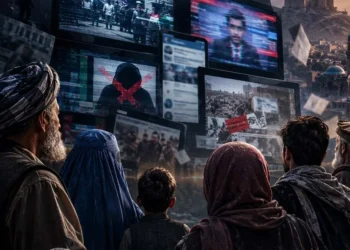
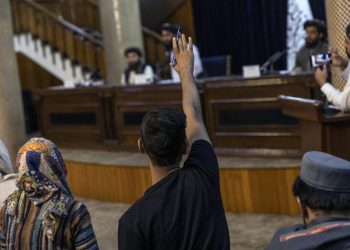
In societies where political stability, democratic institutions, and freedom of expression are deeply rooted, the survival of a media outlet for twenty years might be considered merely a professional achievement. In Afghanistan, however, a country whose contemporary history is bound up with successive collapses, structural violence, censorship, extremism, and instability, the continued existence of an independent media outlet for two decades is not simply the continuation of a journalistic enterprise. It is a form of historical resistance.
In such a context, the Hasht-e Subh Daily cannot be regarded as just a newspaper or a news website. Over the past twenty years, it has become part of Afghanistan’s political and cultural memory, an institution that has not only documented events but has also played a significant role in shaping public awareness, advancing critical discourse, and defending civic values.
If the history of media in post-Taliban Afghanistan were to be studied, the Hasht-e Subh Daily would undoubtedly stand as one of the most important reference points in that history. This outlet was born during a period when Afghanistan had just emerged from one of the darkest phases of its political life, a phase in which there was no free press, no possibility of holding power to account, and no space for the production of ideas. A society that had lived for years under the dominance of violence and ideology had yet to develop a deep familiarity with the concept of independent media. In such an environment, the emergence of an outlet that emphasized analysis, inquiry, and intellectual independence was not an ordinary event. It was part of the process of rebuilding collective consciousness in Afghanistan.
The defining characteristic of the Hasht-e Subh Daily from the very beginning was its departure from superficial journalism and its movement toward analytical reporting. While a large portion of the media at the time was primarily engaged in republishing news, reflecting the positions of those in power, or producing content for passive consumption, the Hasht-e Subh Daily sought to forge a connection between “news” and “understanding.” It did not merely want to report events; it sought to explain the hidden structures behind them. This approach gradually transformed the outlet into the media of choice for a significant segment of the academic community, intellectuals, and the urban younger generation, a generation that was searching for a new language through which to understand Afghanistan.
In truth, the Hasht-e Subh Daily was one of the very few outlets that did not narrate Afghanistan solely through the lens of security and official politics. It had recognized that Afghanistan’s crisis was not only a crisis of war but also a crisis of narrative, a crisis of awareness, and a crisis of intellectual institutions. For this reason, alongside its political coverage, it addressed issues such as social justice, women’s rights, civil liberties, culture, education, identity, migration, discrimination, and structural violence. This multi-layered perspective set the Hasht-e Subh Daily apart from many of its contemporaries.
The true significance of the Hasht-e Subh Daily, however, becomes clearer when its role in confronting power is examined. In fragile societies, media outlets typically find themselves trapped between two fates: either they become tools of propaganda in the service of power, or they retreat into marginality and silence. What distinguishes the Hasht-e Subh Daily is its persistent effort to maintain a critical distance from structures of power. This outlet stood repeatedly against corruption, monopoly, abuse, and destructive policies, even when the price of that stance was steep.
In Afghanistan, truth has never come cheaply. Journalism in this country, unlike in many parts of the world, is not simply a profession. It is an existential risk. A journalist in Afghanistan faces not only economic pressure and media competition but also threats, erasure, censorship, and even death. In such conditions, the survival of an outlet like the Hasht-e Subh Daily for twenty years cannot be understood without recognizing the costs it has borne. This endurance has been the result of a moral commitment to truth, a commitment that, at many junctures, has gone beyond the level of professional activity and taken the form of civic resistance.
One of the most important achievements of the Hasht-e Subh Daily is its contribution to institutionalizing a culture of criticism in Afghanistan. Societies that have experienced prolonged authoritarianism and violence typically suffer from a weak tradition of critique. In such societies, criticism is either suppressed or interpreted as hostility. The Hasht-e Subh Daily, however, sought to make criticism a part of public dialogue: criticism of power, of society, of traditions, and even of movements that claimed to champion democracy. This matters because without a culture of criticism, no society can possess the capacity to reform itself.
Alongside this, the role of the Hasht-e Subh Daily in amplifying the voices of women in Afghanistan deserves attention. In a society where women have consistently faced systematic exclusion, the outlet did not limit itself to reflecting their suffering. It created a platform for their intellectual and written presence. Many women writers, civil activists, and journalists were able to enter the public sphere through it. In a country whose social structure is deeply patriarchal, this was not merely an editorial choice but an act of cultural and political intervention.
The developments of 2021 and the fall of the republic represented yet another historical test for Afghanistan’s media. Many outlets went dark, scores of journalists fled into exile, and fear once again settled over the public sphere. In these circumstances, the continued activity of the Hasht-e Subh Daily acquired a meaning that went beyond the perpetuation of a media brand. The outlet demonstrated that a media institution is not simply dependent on geography; it is, above all, dependent on the will to preserve truth. Its continued work in exile, in dispersal, and under pressure shows that some institutions can maintain their historical role even after losing their offices and physical presence.
From a sociological perspective, the Hasht-e Subh Daily can be regarded as part of Afghanistan’s contemporary memory. Media outlets are not only producers of news; they are also producers of memory. What is recorded today will become part of history tomorrow. In a country where the official narrative has repeatedly sought to distort or erase the truth, outlets like the Hasht-e Subh Daily have played a vital role in documenting reality. Its archive is, in effect, a record of part of the suffering, hopes, failures, and struggles of the people of Afghanistan.
Perhaps most importantly of all, the Hasht-e Subh Daily has been able to define a kind of “media ethics” for part of the new generation of Afghanistan. In an environment where media had at times been reduced to a tool of commerce, propaganda, or partisan politics, it sought to demonstrate that journalism can still rest on the foundations of professional principles, social responsibility, and commitment to truth. Many young journalists and writers in Afghanistan either grew professionally within this outlet or were shaped by its professional culture. This legacy may prove more enduring than any political achievement.
No media outlet is infallible, and the Hasht-e Subh Daily has naturally not been free from error or limitation. But the fundamental difference here is that this outlet has always strived not to stand on the side of silence. In societies where fear has become part of daily life, perhaps the most important task of a media outlet is precisely this: preventing the normalization of silence.
Today, Afghanistan needs independent intellectual and media institutions more than ever. A society that loses the ability to ask questions will gradually lose the capacity to think. In such circumstances, the existence of an outlet like the Hasht-e Subh Daily is not merely a professional necessity; it is a necessity for the survival of collective consciousness.
The twentieth anniversary of the Hasht-e Subh Daily is, in reality, the twentieth anniversary of a part of the dream of freedom of expression in Afghanistan, a dream that was broken many times but never died. This anniversary is not merely a celebration of one outlet’s survival. It is a reminder that even in the darkest of periods, the power of the word can still be defended.
Afghanistan’s history is full of political failures, but amid those failures, the endurance of institutions like the Hasht-e Subh Daily shows that the people of Afghanistan have not yet fully surrendered. There are still those who believe that truth is worth writing, even at a cost. There are still those who know that silence is more dangerous than defeat.
And perhaps that is precisely the most important meaning of the Hasht-e Subh Daily: its insistence on the right to know, at a time when many wish for truth to remain silenced.
The twentieth anniversary of the Hasht-e Subh Daily is not a celebration for a media outlet alone. It is a congratulations for all those in this land who still believe in truth, freedom, and awareness.
You can read the Persian version of this analysis here: