Introduction
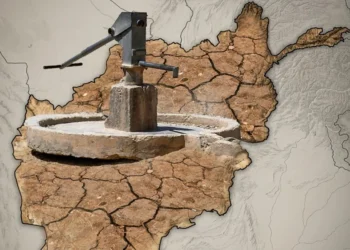
Imagine a city of more than six million people where the ground beneath their feet sinks a little more each day. Kabul, the capital of Afghanistan, is experiencing land subsidence, a slow-moving yet devastating disaster that, if left unchecked, could displace millions by 2030 and erase the historical identity of a nation. This is not a fictional scenario, but a scientific projection based on satellite data and reports by international organizations. Excessive groundwater extraction, climate change, and uncontrolled construction under Taliban rule are pushing Kabul toward a major crisis. Are we prepared to confront this unfolding catastrophe?
The Science Behind Land Subsidence in Kabul
Groundwater in Kabul functions like the foundation of a massive building. The city rests on thousands of natural pillars made up of soil and water. These pillars are saturated with water and support the city’s weight. But when residents extract millions of cubic meters of water each year, far more than rainfall and rivers can replenish, by drilling deep wells 150 to 200 meters underground, groundwater levels decline. As a result, the gap between the earth’s surface and the water table widens, voids increase, and the foundational layers begin to collapse. The consequence is gradual land subsidence, much like a building whose weakened foundations cause it to tilt or collapse. This process is irreversible, as compacted soil loses its capacity to retain water.
The current rate of subsidence in central Kabul is about five centimeters per year, occasionally reaching as much as 15 centimeters. While these figures may appear modest, they are extremely dangerous. Over the course of five years, subsidence can reach 25 centimeters, enough to crack walls, rupture pipelines, and destabilize building foundations. For ordinary homes, this sinking can lead to water accumulation during heavy rains or collapse during minor earthquakes. Reports by the United Nations, UNICEF, and Al Jazeera predict that by 2030, the rate of subsidence could double.
New Risks and Unchecked Construction
In an effort to project an image of “progress,” the Taliban have authorized the construction of high-rise buildings of up to 18 stories, even in areas highly vulnerable to severe subsidence. These projects are carried out without proper scientific or environmental assessments, and Kabul’s weakened ground is incapable of bearing such pressure.
Population Displacement and the Loss of Historical Identity
If current water consumption trends continue, an estimated three million people will be forced to leave Kabul by 2030. The heaviest impact will be felt in the densely populated central and southern districts of the city. This displacement will trigger a humanitarian crisis, forced migration, and the erosion of Kabul’s historical identity.
Global Parallels: Disasters That Repeat Themselves
Mexico City, Jakarta, and Tehran offer real-world examples of the consequences of land subsidence. The experience of these cities demonstrates that neglecting water and land management leads to severe human and economic costs.
Scientific Projections: Will Kabul Collapse by 2030?
According to satellite data and reports from international organizations, Kabul’s groundwater reserves will decline sharply by 2030, and cumulative land subsidence could reach several tens of centimeters.
Solutions: From Illusory Water Transfers to Real Management
Sustainable solutions include effective water-use management, artificial groundwater recharge, preventing water source contamination, expanding green cover, and constructing rainwater harvesting basins.
Conclusion
Kabul is sinking, a slow but devastating disaster. There is still time to act, but without immediate and decisive measures, Afghanistan’s capital will face gradual collapse and the loss of its historical heritage.
Sources
- UNICEF (2025): Reports on Groundwater Depletion in Kabul
- Mercy Corps: Environmental Analysis of Afghanistan
- IPCC: Climate Change Models for South Asia
- Al Jazeera: Subsidence in Kabul
- Guardian: Migration Forecasts for Afghanistan
- Kabul Now: Local Water Crisis Reports
- ICIMOD & UNEP (2025): Himalayan Glaciers Melting
- UNESCO: Cultural Heritage Risks in Conflict Zones
- IOM: Displacement Due to Environmental Disasters
- Afghanistan Analysts Network: Taliban Economic Policies
You can read the Persian version of this analysis here:
کابل در آستانه فروپاشی: زمین زیر پای میلیونها نفر در حال نشستن است