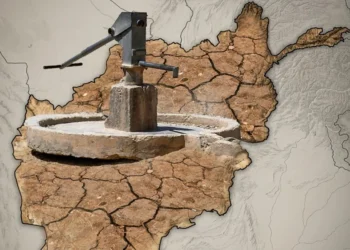
United Nations agencies have warned of an unprecedented drop in Kabul’s groundwater levels. In a joint statement, UNAMA and UNICEF reported that, without immediate action, Kabul’s groundwater could be depleted by 2030 due to rapid urbanization and climate change. Irregular rainfall, climate shifts, population growth, and rising water demand—exacerbated by outdated water infrastructure—have worsened the situation. Pollution from sewage and waste has further degraded drinking water quality. Poor water management and ineffective distribution planning have intensified the crisis, negatively impacting agriculture and livelihoods. Resolving Kabul’s water crisis requires international cooperation, infrastructure investment, and sustainable water management programs. Meanwhile, the Taliban lack a comprehensive plan to address the population’s drinking water needs, casting a bleak outlook on daily life. Despite viewing climate change as “God’s work or a foreign conspiracy,” the Taliban are participating in a UN climate conference.
Over the past three years, the Taliban have introduced no environmental crisis management plans, yet they have consistently pursued attendance at UN climate conferences. Recently, Taliban Foreign Ministry spokesperson Abdul Qahar Balkhi announced the group’s intent to join the UN climate change conference from November 11 to 22 this year in Baku, Azerbaijan. According to Reuters, Taliban officials from the National Environmental Protection Agency (NEPA) have already arrived in Baku.
This climate change conference is one of the United Nations’ most significant annual events, but the Taliban’s agenda remains unclear. The group has yet to present any environmental crisis plan, and, as reported by The Washington Post, they attribute climate change in Afghanistan to either “God’s will or a foreign conspiracy.”
Meanwhile, Tajudeen Oyewale, a UNICEF Representative in Afghanistan, and Roza Otunbayeva, head of UNAMA, visited a Kabul neighborhood, issuing a severe warning about the city’s water crisis. In a joint release, they emphasized that without immediate intervention, Kabul’s groundwater could be depleted by 2030 due to rapid urbanization and climate change.
UN agencies have highlighted that the water crisis increases risks of waterborne diseases such as cholera and dysentery, especially in areas with inadequate access to clean water and sanitation. UNICEF and UNAMA also noted that women and children are the most affected. Women, often responsible for water collection, face greater health risks and physical burdens as water sources decline.
The United Nations Children’s Fund reported that children are more susceptible to illnesses from contaminated water, which impacts their health, safety, and development. The agency has urgently called on partners to assist, emphasizing the need for swift, coordinated action to address this humanitarian crisis.
Water expert Najibullah Sadeed told Hasht-e Subh Daily that Kabul’s water crisis is not new; researchers have raised alarms over the past two decades. Kabul has expanded by 1.5 times in planned development and 4.5 times in unplanned growth, with a population increase of 2.8 to 3 times, putting extreme pressure on water resources. Mr. Sadeed noted that over 250 beverage factories in Kabul draw from groundwater. Additionally, 400 hectares are dedicated to greenhouses and vegetable production, all relying on groundwater. Swimming pools, car washes, and other large consumers depend solely on groundwater, doubling the rate of extraction.
The expert explained that in Kabul, water is delivered not through a piping network but by tankers and motorcycles, causing noise pollution and traffic congestion. This method, coupled with excessive water consumption, raises costs for consumers and forces many residents to relocate due to water scarcity. He warned that over-extraction could not only harm residents but also lead to land subsidence, fissures, sinkholes, and potentially catastrophic ground collapses.
Sadeed stressed the need for urgent solutions to Kabul’s water crisis, suggesting that piping water from the Panjshir River could offer short-term relief. In the long term, constructing the Shahtoot Dam could help replenish resources. Additionally, restoring riverbanks, cleaning the Kabul River, and preventing sewage and waste contamination could raise groundwater levels.
A resident of Kabul’s District 5 told Hasht-e Subh Daily that local water levels have declined in recent years, and many household wells have dried up. He said, “We live in Khushal Khan, District 5 of Kabul. In recent years, the water level here has dropped significantly. Five years ago, we had enough water from a well in our yard. When it dried up, we dug several meters deeper, eventually reaching over 100 meters. It supplied water for another year but then dried up again. Now we rely on the city water network. The situation is challenging; water flows in the pipes only twice a week for a few hours, and residents store it for later use.”
The UN previously reported that 8 out of 10 Afghans drink unsafe water, and 93 percent of Afghan children—15.6 million—live in high-risk areas. Additionally, 92 percent of schools lack basic handwashing facilities, around 4.2 million people practice open defecation, and only half the population has access to basic hygiene facilities. About 35 percent of health centers lack adequate drinking water.
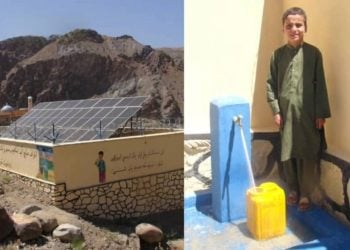
Afghanaid, a British humanitarian organization active in Afghanistan’s remote areas, has reported that water scarcity is a pressing issue nationwide, particularly affecting women and girls as climate change intensifies. The organization stated that only 42 percent of Afghans have access to safe drinking water.
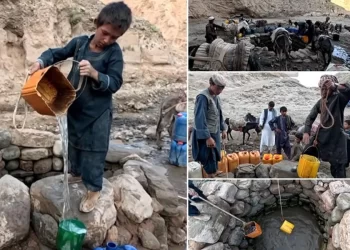
Due to drought-related surface water shortages, Kabul now relies primarily on groundwater for drinking water. Only 20 percent of the population has access to piped water, while the rest depend on shallow wells with hand pumps.
Save the Children recently reported that extreme weather events in the first half of this year displaced at least 38,000 Afghans, about half of whom are children. This figure exceeds the total number of climate-related displacements in 2023.
Additionally, on August 13, the Taliban’s Environmental Protection Department announced that 21 million Afghans lack access to safe drinking water due to climate change. The agency stated that it is working with other Taliban-controlled entities on a joint plan to channel Panjshir River water to Kabul.
You can read the Persian version of this daily report here:
بحران آب در کابل؛ برنامه طالبان در کنفرانس تغییرات اقلیمی سازمان ملل روشن نیست | روزنامه ۸صبح