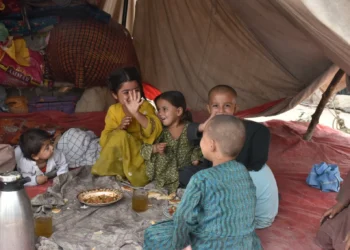
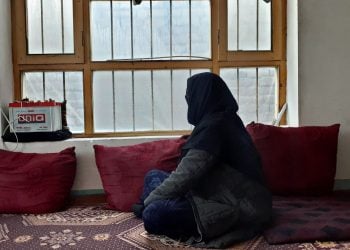
The deadly earthquake in Kunar and its continuous aftershocks, in addition to widespread human casualties, have left thousands homeless. Earthquake victims say they have been deprived of even basic life necessities, and most earthquake-affected areas live below the poverty line. They say children, pregnant women, and elderly people are trapped in critical conditions, and due to the slow pace of relief efforts and difficult access routes, a large portion of them remain without shelter and food supplies. Meanwhile, several economic experts warn that this earthquake exacerbates poverty and emphasize the need for proper management of international aid.
Local sources in the Dara-i-Nur district of Nangarhar province complain about the slow pace of relief efforts by sending video recordings. According to them, as a result of last Thursday’s earthquake, more than 300 houses were destroyed, and people spent day and night in the open air without any kind of shelter.
Faisal Behrooz (pseudonym), one of the residents of this district, says that all aid has been concentrated in Kunar, and they have been forgotten. He claims that people in this district have mostly lost their homes and have not received any initial assistance regarding shelter. Behrooz specifies that many people have bought or rented tents at their personal expense, and some have remained without any shelter alongside the roads.
He continues: “In last night’s earthquake, five people were injured and more than 300 houses were destroyed. Please come once and see closely – the situation is very difficult. Many want to leave their homes and go to the center, but with children, pregnant women, and elderly people, movement is difficult. The route from the village to the district is about a 2 to 2.5 hours’ walk, and reaching the destination is impossible without transportation.” He adds that the earthquake has also caused him enormous losses, and their house has been destroyed.
Faisal says: “In this incident, six heads of our cattle and sheep were lost, agricultural lands were destroyed, and about 10 to 15 jeribs of land and 10 to 12 trees were destroyed.”
Meanwhile, the United Nations Food and Agriculture Organization (FAO) in Afghanistan also says that 500 hectares of agricultural land were destroyed following the Kunar earthquake in this province, and 1,500 head of livestock perished.
Khairullah, one of the earthquake victims in Dara-i-Nur district, who was severely affected by last night’s earthquake, says the damage to his house amounts to nearly 1.2 million afghanis. He says his house cracked and completely collapsed, and he has not received any assistance to date. This earthquake victim adds that all their food supplies and even their clothes have been buried under debris, and they have nothing to eat.
Meanwhile, some economic experts warn that the earthquake will intensify humanitarian and economic crises in the affected areas. They ask international organizations to invest in building standard shelters and creating sustainable livelihoods.
Mir Shekab Mir, former head of financial services development at Afghanistan’s Central Bank, says that people in rural areas mostly live below the poverty line. According to him, losing shelter, family breadwinners, and having many injured remaining will intensify economic problems. He adds that psychological damage from this incident will also have a long-term impact on productivity and ultimately on people’s economic welfare.
Mr. Mir says: “International relief organizations should better take action in building standard and disaster-resistant shelters against natural disasters such as earthquakes and floods so that the main problem of the affected people is addressed. One of the effective solutions for creating sustainable livelihoods is strengthening infrastructure such as roads, schools, hospitals, electricity, and transportation services. Since a large portion of people in rural areas are engaged in agriculture, mechanizing agriculture and employing new technologies in irrigation, seeds, harvesting, and crop storage can help increase productivity and sustainability of agricultural activities.”
The former head of financial services development at Afghanistan’s Central Bank specifies that, given the lack of capacity and transparency in institutions under the control of the Taliban regime, these organizations should act independently so that countries’ trust in sending aid increases.
Simultaneously with complaints about a lack of timely access to humanitarian aid, serious concerns about the misuse and mismanagement of this aid have also been raised. Many of the affected people doubt the transparency and fair distribution of aid and demand sound and transparent management of this aid by credible international institutions.
This is while the U.S. Special Inspector General for Afghanistan Reconstruction (SIGAR) had previously reported that the Taliban had forcibly confiscated a significant portion of international aid and used it for their own purposes. The United Nations has also confirmed this report, announcing that this group’s interference has severely troubled the relief process.
You can read the Persian version of this report here:
پسلرزههای زلزله کنر؛ باشندهگان درهنور ننگرهار: «فراموش شدهایم»