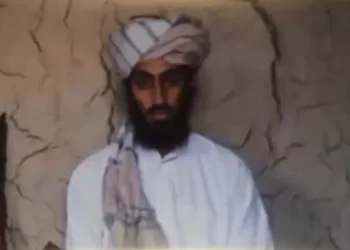
In Afghanistan’s contemporary history, Ahmad Shah Massoud stands out as a figure whose name has become inseparably linked with diverse intellectual and political narratives. He is remembered as a leader who embraced moderate Islam and remained committed to a balanced interpretation of religion. Yet, after his death, a wide spectrum of groups ranging from Islamists to technocrats, democrats, secularists, and ethnic factions sought to claim his legacy and frame him within their own ideological or political constructs.
This raises a central question: what qualities transformed Massoud into a figure who transcended narrow discourses and bridged multiple intellectual and political traditions?
Religious Moderation
Massoud came from a community often associated with religious conservatism and rigid interpretations of Islam. Nonetheless, his practical approach leaned toward moderation and consistently stood in contrast to extremism. Early in his youth, when he joined the Islamist student movement at Kabul University, he was deeply influenced by radical Islamic thought, measuring other intellectual currents against the strict religious yardsticks of the time. But this phase did not last long. Immersed in the wider student movement, Massoud gradually found himself at the heart of a broader struggle for freedom against the regime of the day, a turning point in the evolution of his more moderate persona.
Once he assumed command and leadership responsibilities, Massoud encountered an array of groups, individuals, and ideologies, many far beyond the horizons of his personal experience. Exposure to this new intellectual world, combined with the practical demands of war, gradually shaped him into a multidimensional leader distinct from his early days as a student activist. As a commander, he spent his days and nights not only planning military operations and training fighters, but also studying the works of renowned military theorists and strategists. Through radio, journals, and other media, he closely followed global debates in both East and West about the jihad of which he had become a central figure. This combination of intellectual engagement, exchange of ideas, and practical interaction with diverse groups was instrumental in molding the moderate and pragmatic image that came to define him.
One of the most decisive forces in shaping Massoud’s pluralist and multifaceted outlook was the rise of the Taliban. Following the jihad against Soviet forces and during the Islamic State government led by Burhanuddin Rabbani, a new movement emerged with the backing of certain intelligence services in the West, Pakistan, and Saudi Arabia. The Taliban entered the stage under the banner of Islam, but in practice, pursued political and strategic goals steered by Islamabad and supported by Arab allies. Exploiting religious slogans, fueling ethnic divisions, and capitalizing on weak leadership and infighting within the Afghan government, the Taliban rapidly consolidated power and expanded their control.
Standing in direct opposition to the Taliban, Massoud was compelled not only to fight them militarily but also to define the ideological distinctions that set his movement apart. The Taliban’s brutal and violent brand of Islam left no room for compromise. To establish a clear boundary between his cause and theirs, even within the shared framework of Islam, Massoud drew on the Hanafi tradition of jurisprudence, the rich heritage of the Persian language and culture, and the civilizational identity of Greater Khorasan. This intellectual grounding became the foundation for differentiating his struggle from that of the Taliban and, by extension, from other radical Islamist groups.
Attention to Culture and Literature
Few in Afghanistan have not heard of Massoud’s famous phrase: “Operations for literature.” One of his most distinctive qualities was his deep regard for culture and literature, even in the midst of war. Massoud loved poetry and books. He often spent time with writers and intellectuals listening, exchanging views, and sharing in their conversations. In moments free from his military responsibilities, he immersed himself in poetry, reading, and dialogue with men of letters. It is rare to find a commander who, at the height of battle, maintained such passion for culture and literature. This interest was rooted in his upbringing within the Persian literary tradition: born into a family that valued knowledge and refinement, Massoud had been acquainted with Persian epic works and poetry.
Ethics, Honor, and Chivalry
What set Massoud apart from many other leaders was his moral integrity and adherence to the Afghan traditions of honor and chivalry. Both friend and foe acknowledged these traits. One story from the first resistance recounts a mother from Helmand whose son, a Taliban fighter, had been captured by Massoud’s forces. She went to Panjshir and pleaded with him. Massoud responded: “Even if your son were Mullah Omar himself, I would set him free.” In another account, when his fighters divided grapes among themselves, Massoud noticed a Russian prisoner nearby. He called the man over and gave him his own share. His conduct toward prisoners, including Russians and a man named Islamuddin, who later became his bodyguard, was a vivid expression of ethics in the midst of war. Conflict, by its nature, thrives on deceit and brutality, which made Massoud’s commitment to moral principles all the more remarkable.
Deep Human Compassion
Wherever a street is named after Massoud or a book about him is published in different countries, the theme of his profound humanity often emerges. French writers, Iranian and American mayors, Tajik singers and athletes have all evoked his compassion. Hundreds of books, poems, and essays have been written about him, testifying to this quality. A statement often quoted in the media captures his ethos: “We are by no means in favor of war and violence; our struggle is born of necessity and compulsion.” That sentence alone reflects the depth of his human compassion.
The Politician
Whenever Massoud’s name is invoked, he is recalled not only as a commander but also as a seasoned political leader. Battle-hardened, he understood the complexities of Afghanistan’s political, ethnic, and regional dynamics and analyzed them with maturity. While his politics were shaped by the demands of war, he recognized the injustices inflicted on non-Pashtun groups and sought balanced solutions to secure their rights. Unlike many contemporaries, he never pursued narrow ethnic or parochial politics. He evaluated Afghanistan’s relations with its neighbors and the wider world in proportion to his broader objectives.
Flexibility
Despite his strong religious convictions, Massoud adopted a flexible outlook toward human affairs, an approach that even set him apart from fellow Islamists of his generation. Asked about the future political system after the war, he would respond without hesitation: “A system based on the will of the people.” He articulated this vision at a time when many Islamists, both hardline and moderate, rejected democratic governance.
Engagement with Diverse Voices
Massoud believed that dialogue with people of different views was essential for the well-being of society and for peaceful coexistence within a pluralistic framework. He welcomed the educated class and helped thousands pursue studies at universities in both East and West. He even reached out to many leftists, encouraging their participation in development, progress, and awareness-raising. Doing so required courage: he collaborated with individuals who had once fought against him, people whose battles had cost him comrades and family members. Yet Massoud gathered diverse voices, regardless of their past, and aligned them with the greater interests of the Afghan people. For this reason, one can state with confidence that he believed deeply in pluralism.
You can read the Persian version of this analysis here: