• 8AM.MEDIA
  • ویب‌سایت فارسی
  • پښتو ویب‌پاڼه
  • اۉزبېکچه ویب‌سایت
  • Podcast
Saturday, September 12, 2026
Hasht-e Subh
  • Home
  • News
    • Afghanistan News
    • World News
  • Opinion
    • Editorial
    • Analysis
  • Reports
    • Daily Reports
    • Investigative Reports
  • Society
    • The story of people
  • Women’s Word
  • Columns
    • Three Years After Afghanistan’s Fall: The Taliban’s Resurgence
    • Towards Equality
    • The Resurgence of the Taliban: Two Years Since Afghanistan’s Fall
    • Hebatullah Report Special Edition
    • Resistance for Education Special Edition
    • Special Column on Taliban’s Education Curriculum
    • Nawroz
  • Interviews
  • Contact Us
    • About Us
    • 8AM MEDIA Annual Awards
    • Submit an Article to Hasht-e-Subh
  • 8am.mediaBack
Subscribe
No Result
View All Result
  • Home
  • News
    • Afghanistan News
    • World News
  • Opinion
    • Editorial
    • Analysis
  • Reports
    • Daily Reports
    • Investigative Reports
  • Society
    • The story of people
  • Women’s Word
  • Columns
    • Three Years After Afghanistan’s Fall: The Taliban’s Resurgence
    • Towards Equality
    • The Resurgence of the Taliban: Two Years Since Afghanistan’s Fall
    • Hebatullah Report Special Edition
    • Resistance for Education Special Edition
    • Special Column on Taliban’s Education Curriculum
    • Nawroz
  • Interviews
  • Contact Us
    • About Us
    • 8AM MEDIA Annual Awards
    • Submit an Article to Hasht-e-Subh
  • 8am.mediaBack
No Result
View All Result
Hasht-e Subh
No Result
View All Result

Minimal Representation of Ethnic Groups in the Taliban Regime: ‘Pro-Taliban Figures Do Not Represent Tajiks, Uzbeks, and Hazaras’

Mohammad Mohammad
27 June 2024 - Solar Hijri Date: 1403/04/07 [t_time:1719491372]
Minimal Representation of Ethnic Groups in the Taliban Regime: ‘Pro-Taliban Figures Do Not Represent Tajiks, Uzbeks, and Hazaras’

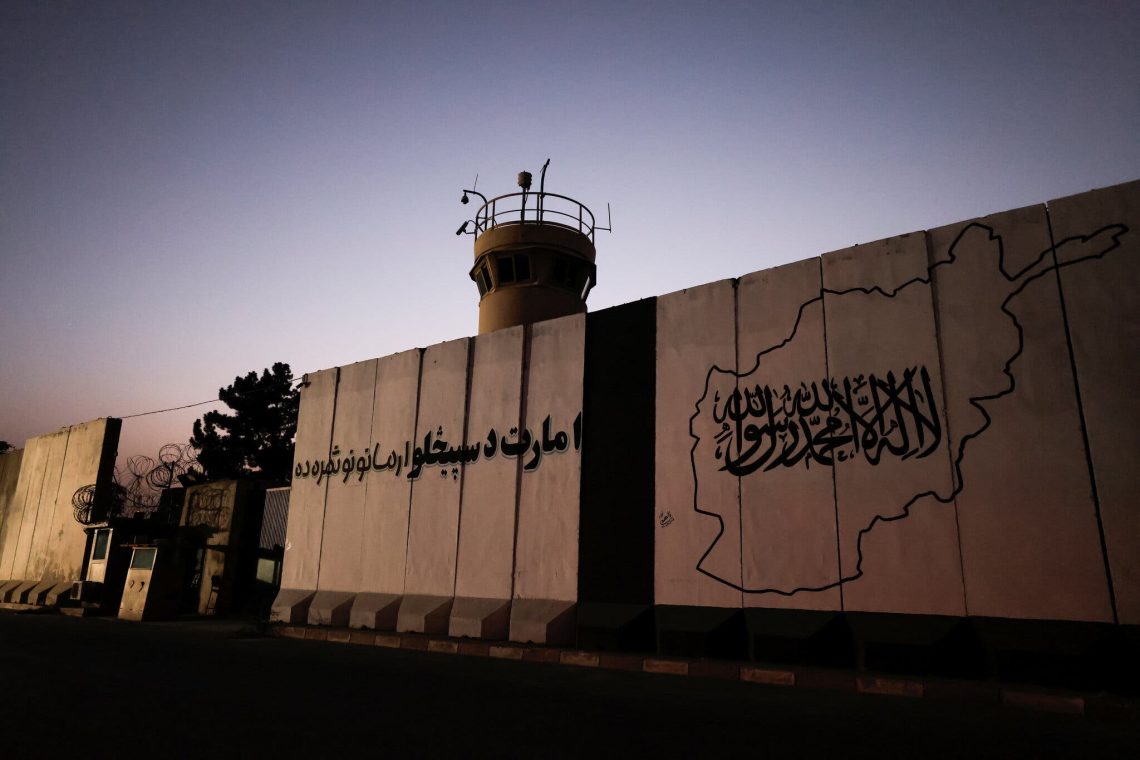
Jorge Silva/Reuters

The Middle East Research Institute recently published its findings on the ethnic composition of the Taliban regime. The research shows that among the 1,137 leaders and high-ranking officials, 87 belong to the Tajik, Uzbek, and Hazara ethnic groups. Several political figures and prominent individuals in the country argue that none of the non-Pashtun members of the Taliban regime represent the Tajik, Uzbek, and Hazara communities. They claim these individuals work as hired soldiers for the Taliban and lack the authority to influence the group’s decisions.

Abdul Zahir Salangi, a former representative of Parwan province in the previous parliament, told the Hasht-e Subh Daily: “Some Tajik brothers might be part of the Taliban regime, but this does not mean they represent the literary, cultural, ethical, and historical diversity of the Tajik ethnicity. Naturally, every regime and group needs soldiers; these figures are soldiers of the Taliban group.” Mr. Salangi added: “The Taliban, a group that has occupied Afghanistan, cannot represent not only other ethnic groups but also the large Pashtun tribe. They have taken away the people’s right to raise their voices, demand their rights, and choose or be chosen as the leader of the country.”

Habiba Sarabi, a member of the former government’s peace negotiation team with the Taliban, regarding the half-percent presence of Hazaras in the Taliban regime, said: “First, the half-percent presence of Hazaras in the Taliban’s hegemony is very insignificant considering the ethnic diversity in Afghanistan. Secondly, those who are from the Hazara ethnic group with the Taliban cannot meet the expectations and demands of the Hazara people.” Ms. Sarabi added: “Not all Hazara people agree with Taliban ideologies. The Hazara people are detained, tortured, insulted, and humiliated under the Taliban’s rule, but those who are from the Hazara ethnic group in the Taliban regime can never support these individuals. Therefore, they cannot represent the Hazara ethnic group.”

Similarly, Abdullah Qarluq, deputy leader of the National Islamic Movement of Afghanistan and former governor of Takhar province, said: “There are a few symbolic Uzbek individuals in the ranks of the Taliban who joined them at the beginning and share the Taliban’s ideology and policies. No educated and specialized Uzbek person is in the ranks of the Taliban.”

The Middle East Research Institute, on June 11, 2024, published a detailed report on the leaders and high-ranking officials of the Taliban. The report states that among the 1,137 high-ranking officials of the Taliban, 891 are Pashtun, and 87 are from Tajik, Uzbek, and Hazara ethnic groups.

According to the institute’s findings, 53 Tajiks, 28 Uzbeks, and 6 Hazaras are among the leaders and high-ranking officials of the Taliban. Nooruddin Azizi, the Taliban’s Minister of Commerce & Industries, Qari Din Mohammad Hanif, the Taliban’s Minister of Economy, and Fasihuddin Fitrat, the Taliban’s Chief of the General Staff of the Armed Forces, are from the Tajik ethnic group. Abdul Salam Hanafi, Deputy Administrative Chief of the Taliban’s Prime Minister’s Office, and Attaullah Omari, Taliban’s Minister of Agriculture, Irrigation and Livestock, are from the Uzbek ethnic group.

The report states that among the six Hazara officials in the Taliban, five are deputy ministers in various ministries, and one is appointed as a director. Thus, five percent of the high-ranking Taliban officials are Tajik, three percent are Uzbek, and half a percent are Hazara.

The report’s findings show that among the Taliban officials, 40 top leaders, including the supreme leader, the Prime Minister, and the Ministers of Defense, Higher Education, Education, Culture, Rural Development, Labor and Social Affairs, Public Works, and the Chief Justice, are from Kandahar province. Nineteen other leaders, including the Minister of Interior, Deputy Political Chief of the Taliban’s Prime Minister’s Office, Minister of Energy and Water, and Minister of Refugees and Repatriation, are from Paktia province. There are no Hazara individuals in the group’s cabinet.

According to the Middle East Research Institute, five members of the Taliban leadership, including Khaled Hanafi, Minister of Propagation of Virtue and Prevention of Vice, are from the Pashai ethnic group. Hamdullah Nomani, Taliban’s Minister of Urban Development and Housing, is from the Baloch ethnic group, and three other officials, including the Deputy Chief Justice of the regime, Mohammad Qasim Rasikh, are from the Turkmen ethnic group.

You can read the Persian version of this daily report here:
درصدی اندک اقوام در بدنه رژیم طالبان؛ «چهره‌های هم‌سو با طالبان نماینده‌گان تاجیک، اوزبیک و هزاره نیستند» | روزنامه ۸صبح 

ShareTweetSendSendShare

Related Posts

An Uzbek cultural activist and employee of the Turkish Cooperation and Coordination Agency was arrested by the Taliban in Herat province and transferred to Kabul. (Photo Credit: Exclusive)
Afghanistan News

Taliban Arrest Cultural Activist in Herat Province

28 January 2026 [t_time:1769610711]
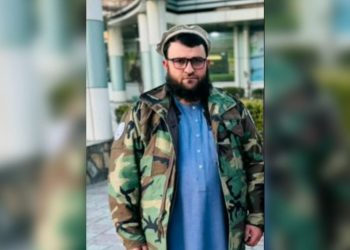
Amauddin Karimi, a Taliban member arrested in Badakhshan province following internal ethnic disputes within the group. (Photo Credit: Social Media)
Afghanistan News

Internal Taliban Disputes in Badakhshan Lead to Arrest of Group Member

26 October 2025 [t_time:1761480212]
Ancient ruins stand against a dramatic sky with lush green trees in the foreground, capturing the contrast between historical architecture and natural beauty in Afghanistan. (Photo Credit: 8am.media)
Daily Reports

Power Outages and Rising Theft: Kapisa’s Phase 1 Residents Fear for Their Lives and Property

21 September 2025 [t_time:1758457298]

Latest

Loading latest news...

Popular stories

  • Hamza bin Laden - the son of Osama bin Laden (Photo: Social Media)

    Al-Qaeda Releases Hamza bin Laden Message on 9/11 Anniversary

    Share
    Share Tweet
  • Taliban Shoot Young Man from Herat After Torturing Him with Hands Tied

    Share
    Share Tweet
  • UN Women: Ban on Women’s Entry to UN Offices in Afghanistan Enters Second Year

    Share
    Share Tweet
  • Iran Foreign Ministry: US Attacks on Commercial Vessels Constitute Economic War Against Iran

    Share
    Share Tweet
  • Scholarship to Deportation: Pakistan Orders Mass Expulsion of Afghanistan Citizen Medical Students

    Share
    Share Tweet

Podcast

Insights
Insights

Join Lynne O’Donnell for 8AM’s podcast series, Insights.
Lynne talks with generals, diplomats, soldiers, journalists, politicians, activists, people who have front row seats for conflicts around the world, and citizens with a story to tell, happy or sad. For this first series, Afghanistan is the focus. Lynne and her guests talk about the collapse of the republic in August, 2021, and the impact since — for the people of Afghanistan, for the security of the region, for the safety of the world. It’s important, interesting and insightful.

Insights/22: Controlling the Narrative with Mina Sharif
byinsights8am

Controlling the Narrative

Lynne O’Donnell talks with Mina Sharif, author, activist, women’s rights campaigner, educator and mentor. They discuss who controls the narrative and who speaks for Afghanistan’s people when the Taliban appear to have seized control not only of the country but of the message, too.

Have a listen

Insights/22: Controlling the Narrative with Mina Sharif
Episode play icon
Insights/22: Controlling the Narrative with Mina Sharif
Episode Description
Episode play icon
Insights/21: Media Meltdown with Zahra Joya
Episode Description
Episode play icon
Insights/20: Terror Inc with Scott Richards
Episode Description
Episode play icon
Insights/19: Busting Stereotypes with Bushra Gohar
Episode Description
Episode play icon
Insights/18: Media Matters with Waliullah Rahmani
Episode Description
Episode play icon
Insights/17: What Goes Around Comes Around with Sima Samar
Episode Description
Search Results placeholder
Hasht-e Subh

8AM Media, also known as Hasht-e-Subh Daily, stands as Afghanistan's premier independent and non-profit newspaper, resonating as a beacon of journalistic integrity since its establishment in June 2007 by esteemed Afghan journalists and human rights advocates. With a steadfast commitment to citizen journalism and civic education, Hasht-e-Subh Daily has earned its place as the most esteemed publication in the nation.

Publisher: Sanjar Sohail
Email: [email protected]
Executive Director: Parwiz Kawa
Email: [email protected]

Read More

Kandahar: Mosque Construction Race Overshadows Growing Public Needs

Amir Khan Muttaqi Meets Chinese Ambassador in Kabul

Shortage of Factors 8 and 9 Deprives Hemophilia Patients in Afghanistan of Regular Treatment

Educational Scams: How Out-of-School Girls in Afghanistan Fall Victim to Fake Programs

Declining Handicraft Sales: Artisans Voice Concerns Over Market Restrictions and Shrinking Demand

Editor’s Choice

Every Saturday morning, 8AM MEDIA English Services Department will guide you through the week’s biggest stories from Afghanistan and the international community.

Subscribe

© 2026 - ©Hasht-e Subh Daily

No Result
View All Result
8am.Media
پښتو ویب‌پاڼه
ویب‌سایت فارسی
اۉزبېکچه ویب‌سایت
  • Home
  • News
    • Afghanistan News
    • World News
  • Opinion
    • Editorial
    • Analysis
  • Reports
    • Daily Reports
    • Investigative Reports
  • Society
    • The story of people
  • Women’s Word
  • Columns
    • Three Years After Afghanistan’s Fall: The Taliban’s Resurgence
    • Towards Equality
    • The Resurgence of the Taliban: Two Years Since Afghanistan’s Fall
    • Hebatullah Report Special Edition
    • Resistance for Education Special Edition
    • Special Column on Taliban’s Education Curriculum
    • Nawroz
  • Interviews
  • Contact Us
    • About Us
    • 8AM MEDIA Annual Awards
    • Submit an Article to Hasht-e-Subh
  • 8am.media

© 2026 - ©Hasht-e Subh Daily