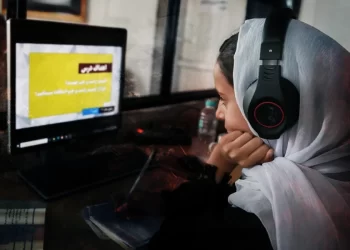
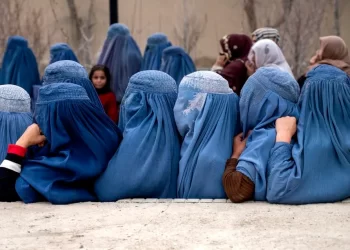
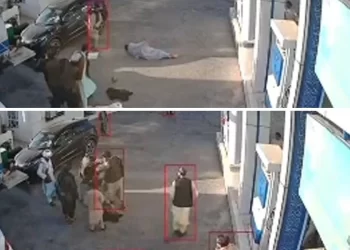
Many students across various schools in Afghanistan have expressed concern over the mounting pressure from the Taliban to wear white shalwar kameez and turbans (lungi). According to these students, those who cannot afford such attire face harsh treatment, are sometimes beaten by teachers, marked as absent, or even barred from entering school. Many students say that aside from the discomfort of wearing a turban, they simply cannot afford the cost.
Several students from schools around the country have voiced anxiety over the behavior of teachers enforcing the Taliban’s new uniform policy. They report that poverty, hunger, and lack of financial resources are being ignored, and they are forced to purchase turbans under psychological and physical pressure. According to them, most families cannot afford to buy white garments and turbans for their children, which has led some parents to prevent their children from attending school.
Meanwhile, students at the Islam Qala School in Pul-e-Khumri city, the capital of Baghlan Province, say they were expelled from class for not wearing a turban and white clothes. These students emphasize they are facing severe economic hardship and cannot afford the mandated uniform and turban. They call on the Taliban to reconsider this decision.
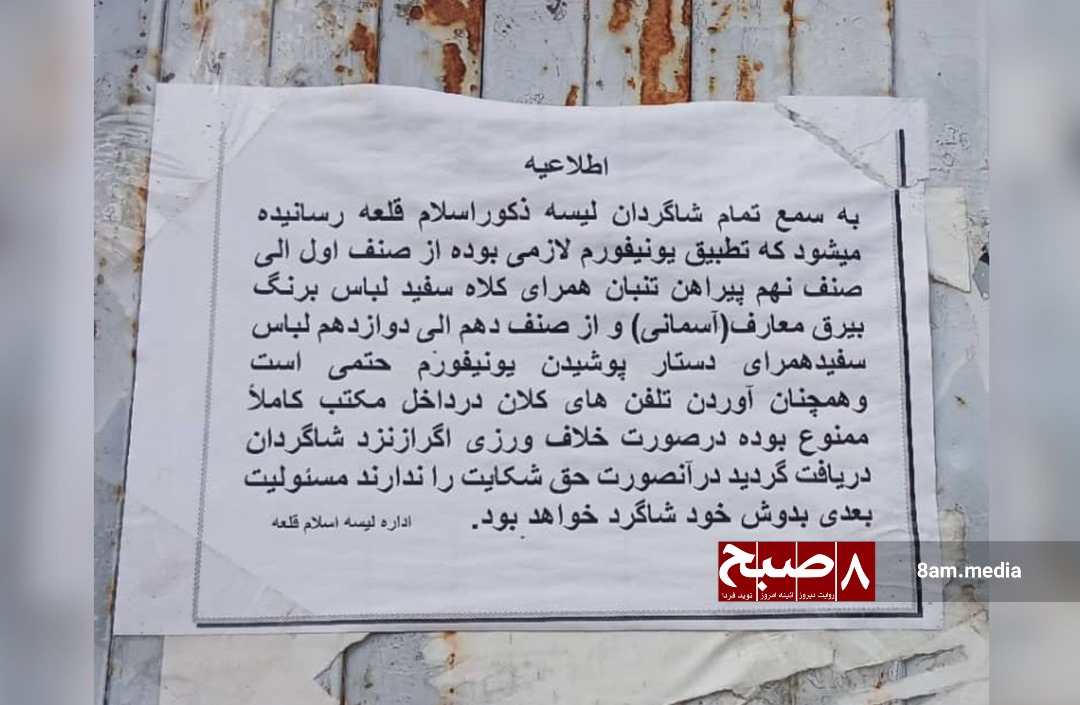
An announcement issued by this school stressed that implementing the Taliban uniform policy is mandatory for all. According to the directive, students from grades 1 to 9 must wear shalwar kameez in the color of the “heavenly education flag (light blue)” along with a white cap, and students in grades 10 to 12 are required to wear white clothing and a turban. The notice also emphasizes that no one is allowed to bring a mobile phone into the school.
A student in Pul-e-Khumri told the Hasht-e Subh Daily:
“Restrictions have increased. Since Saturday, April 12, 2025, students without turbans and white clothing have not been allowed into school. The boys are not happy, and they do not agree with this policy. Some simply cannot afford to buy the Taliban’s uniform.”
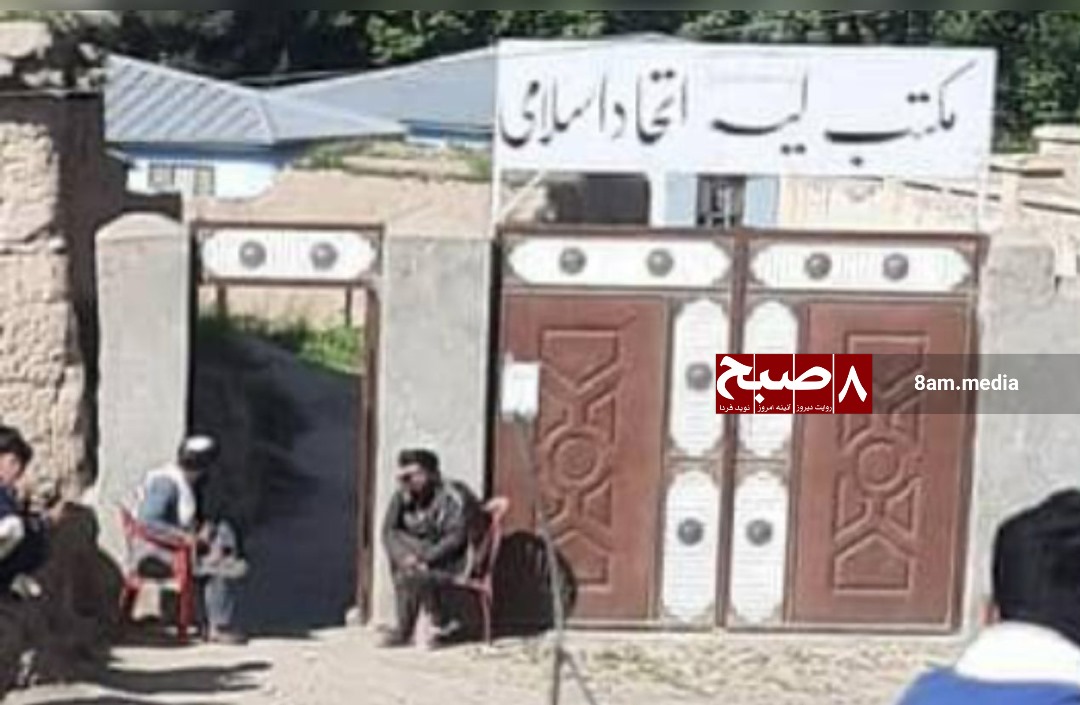
At the same time, several students at Etihad-e Islami High School in the Bangi District of Takhar Province reported being barred from entering school due to not wearing turbans. According to them, the school gate was closed to anyone not wearing a turban, and these students were forced to return home and were marked absent.
Meanwhile, a student in Kabul says he was beaten by a school official. He shared a photo of injuries on his back caused by a whip and said the beating was because he didn’t wear a turban. Speaking to the Hasht-e Subh Daily, he said:
“It’s better to stay silent and move on.”

A video circulating on social media shows a student in Kabul announcing he is quitting school because of the forced requirement to wear a turban. In the video, he says:
“They said wear a turban and white shalwar kameez to school. That’s not possible. I’m quitting. Are we supposed to put such big turban on our heads? We can study without a turban. I won’t buy a turban.”
Pointing to his friend, he adds:
“I’m going with him to buy a turban. If I have to wear one, I won’t go to school. Times are bitter, and the future is uncertain.”
Another video shows a student holding a white turban in his hand, saying:
“I’ve taken the turban in hand, but I couldn’t wear it. Whatever they [Taliban] want, we’ll accept.”
The issue of compulsory turban-wearing is not limited to students. Government employees are also grappling with the same problem. Amid increasing pressure to wear turbans, the Taliban in Balkh province have issued an order stating that anyone who trims their beard will not be allowed to sign attendance sheets. The group has also collected written pledges, fingerprints, and signatures from all civil servants in Balkh, committing them to wear either a turban or cap and dress in shalwar kameez.
Previously, the Taliban issued a directive by order of Hibatullah Akhundzada, the Taliban Supreme Leader, mandating that school students must comply. According to this directive, students from grades 1 to 9 must wear shalwar kameez in “heavenly blue” with a turban or white cap, and students from grades 9 to 12 must wear white shalwar kameez and a turban. The nine-article directive, organized into four chapters, emphasizes that the shirts worn by students must extend below the knees.
In addition to imposing compulsory uniforms and removing several subjects from the curriculum, the Taliban have altered the content of educational materials to reflect the ideology of their previous rule. Notable changes include the removal of images of living beings, the promotion of jihad, justifications for violence and destruction, opposition to democracy and human rights, and the rejection of education and freedom for women. The curriculum also portrays Shiites as outsiders, labels the United Nations as evil, forbids the celebration of Nowruz, restricts festivals and public gatherings, and denounces certain historical figures.
Most recently, the United Nations Assistance Mission in Afghanistan (UNAMA) reported that the Taliban have transformed the public education system into a religious madrassa system and are gradually replacing educated technocrats in ministries with mullahs loyal to the group.
You can read the Persian version of this report here:
لنگی و شلاق؛ دروازههای مکتب بهروی دانشآموزان بدون دستار بسته است | روزنامه ۸صبح