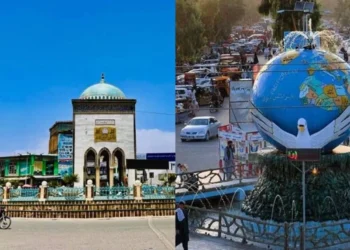
On the evening of Thursday, October 9, 2025, several explosions were reported in parts of Kabul. Some independent sources described the blasts as the result of strikes by Pakistani warplanes. At the same time, claims circulated that a vehicle carrying Noor Wali Mehsud, leader of Tehrik-e-Taliban Pakistan (TTP), had been targeted, an allegation that, as of this writing, has not been independently or officially verified by impartial sources. Taliban officials said the matter was “under investigation.” Even so, while technical details of the Kabul incident may require further verification, the basic fact that an attack attributed to Pakistan inside Afghanistan, reportedly aimed at a TTP-linked target, was carried out is neither surprising nor unprecedented.
Just 24 to 48 hours before the Kabul blasts, Pakistan suffered one of its bloodiest days this year in fighting with the TTP: in successive operations and ambushes in the Orakzai area near the Afghan border, at least 11 Pakistani soldiers, including two senior officers, were killed. Nineteen Pakistani Taliban fighters were also reported killed. That episode amplified a domestic atmosphere of “revenge / decisive action” within Pakistan and intensified pressure to target leaders of the Pakistani Taliban. As Pakistan’s defense minister, Khawaja Asif declared, his country’s patience with terrorism had run out, and those who harbor militants must be held accountable. From the perspective of state behavior, such a context often precedes cross-border operations or demonstrations of force.
In recent months, Kabul repeatedly accused Islamabad of carrying out air or drone strikes on Afghan soil. For example, in August of this year, Taliban officials and regional media reported rockets striking targets in Nangarhar and Khost, leading the Taliban foreign ministry to summon Pakistan’s ambassador. Even if some details of those incidents remain disputed, the use of drones, jet fighters, and direct operations in the Pakistan–Pakistani Taliban conflict on Afghan territory has precedent, and public opinion in both countries is not unfamiliar with it. For that reason, the October 9 strike in Kabul fits a comprehensible pattern.
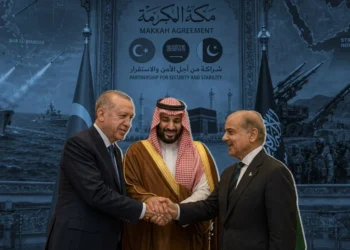
Since mid-2024, Khawaja Asif has repeatedly warned in interviews and official statements that if Afghanistan’s Taliban do not act against TTP sanctuaries and logistics networks, Islamabad will “pursue the enemy wherever it is,” including inside Afghanistan. Under a policy he termed “resolute determination,” he expressly raised the possibility of striking terrorist hideouts on Afghan soil. In other words, the strategic ambiguity of that threat has been reduced and reiterated many times; therefore, an airstrike in Kabul is not inconsistent with Pakistan’s stated policy. According to an informed source, Pakistani officials had told Afghanistan’s Taliban that they would target TTP leadership even if it were located “inside the Arg in Kabul.”
Since 2021, as the Taliban consolidated power in Kabul, the curve of TTP attacks inside Pakistan has risen, and Islamabad has repeatedly accused Kabul of “harboring/turning a blind eye.” Consequently, any bloody wave inside Pakistan, such as the killings of its military personnel in border areas with Afghanistan, increases the pressure for external action and for forcing the Taliban to act; on the other hand, Kabul condemns any violation of its sovereignty, and diplomatic tensions escalate.
Although early accounts spoke of a vehicle carrying Noor Wali Mehsud being targeted in Kabul, and some sources even reported his “death,” no independent, credible authority had confirmed this at the time of publication, and an official Taliban account had not been released. At the same time, an audio clip attributed to Noor Wali Mehsud circulated on social media in which he asserts that he is alive.
Messages of the strike: to Pakistan, to Kabul, to third parties
To the Pakistani public opinion: after the deaths of officers and soldiers, the government and military want to show that “pursuing the enemy wherever it is” is more than rhetoric. Such demonstrations are usually intended to restore eroded deterrence and to respond to domestic public pressure.
To the Afghan Taliban: Islamabad’s preferred understanding is that Kabul must pay the price for failing to rein in the TTP. The clear message is that if sufficient action is not taken, Islamabad will continue limited and potentially open-ended operations inside Afghanistan.
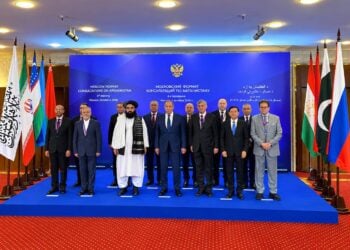
To regional actors (China, Iran, India, Russia): Pakistan wants to demonstrate that it can simultaneously engage at the diplomatic table and assume the risks of operations in the field. Notably, just two days before the Kabul explosions, Moscow hosted a Taliban delegation and cautioned against any foreign military presence in Afghanistan. In such an environment, any cross-border operation can further complicate security and political calculations.
Operational logic: why “Kabul”?
To strike a highly mobile insurgent network, two types of targets are especially valuable: command nodes and logistical/media nodes. If we accept claims that the target was the TTP’s top leadership, then choosing Kabul, the capital, with its concentration of security and media, serves two functions:
- Symbolic function: to signal to the Taliban that “no place is absolutely safe.”
- Media function: to maximize publicity and the psychological impact among TTP cores and their supporters/networks.
But that choice carries risks: targeting errors, civilian casualties, erosion of international legitimacy, and escalation of the crisis with Kabul. Early news coverage also described “widespread fear” and “repeated explosions,” which in themselves impose a political cost on the actor conducting the operation.
If Noor Wali Mehsud has indeed been eliminated, what then?
Historical experience of insurgent movements in Pakistan and Afghanistan shows that removing the top leader rarely produces structural collapse. Both the Afghan Taliban and Pakistani Taliban have lost leaders over the years, yet this has not critically degraded their operational structures. Eliminating a group’s leadership can, however, push the network temporarily into a “shadow leadership” mode, reduce cohesion, and intensify intra-group rivalries phenomena previously observed within the TTP. Analytical reports from summer 2025 pointed to divisions among TTP factions; the removal or wounding of their leader would likely activate those divisions in the short term. Nevertheless, the TTP’s transnational networks and its local links in Khyber Pakhtunkhwa are not easily undone.
You can read the Persian version of this analysis here: