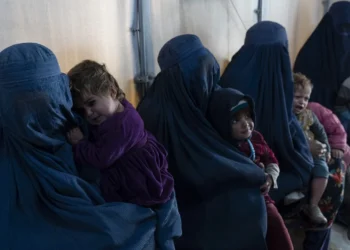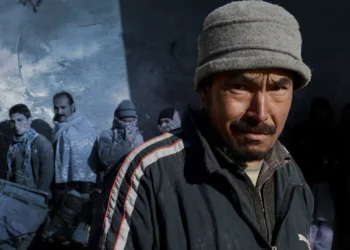

Several young people complain about their economic inability to proceed with engagement and marriage. They say that unemployment, low income, and rising living costs have turned starting a family into a distant dream. According to these young people, despite having experienced various jobs, they have never been able to save enough capital for marriage, and the future of many of them remains shrouded in ambiguity. These young people add that the continuous rise in prices, low wages, and increasing marriage costs, along with families’ expectations,s have further increased the obstacles to marriage. Meanwhile, several families also speak of their inability to cover the costs of their children’s engagement and marriage. They emphasize that economic problems, unemployment, and rising living costs have made it impossible for many families to arrange marriages for their children.
Heshmat, 30, is worried about the delay in his marriage and his inability to start a family. He says that despite trying various jobs to earn a better income, he has never been able to save capital for marriage. He says: “From street vending to shoe repair, selling plastic goods, running a shop, doing manual labor, and pushing a cart, I have done every job you can imagine, but I still haven’t been able to earn more than what covers my family’s daily expenses. The income I have barely covers household costs.” According to him, the future of many young people in Afghanistan is uncertain. “They have neither the opportunity to study nor a clear outlook for life and work. Everyone is caught on an uncertain and difficult path.”
Heshmat adds: “Nothing was left for us by our grandfather, nor by our father. We live in a country where even having shelter and a night’s bread, which is the most basic right of every human being, is not available to many.”
He speaks with regret about the years of his youth that have been lost, saying: “My entire adolescence and youth passed in work and hardship. I don’t know when I will be able to marry and have children. I fear that by the time my children are still young, I myself will have grown old and no longer have the strength to raise them and see them through to success. We never tasted the real flavor of life.”
Qayum, 31, also says that due to difficult economic conditions, he has still not been able to start a family. He believes that rising living costs and marriage expenses have made this dream unattainable for many young people. He says: “Prices go up every day, and families’ expectations have also increased. Financially, my family’s situation isn’t bad, but the problem is that if I find work for one day, I remain unemployed for another five days.”
According to him, his family insists that he marry because of his advancing age, but he himself believes that without the ability to cover the costs of shared life, marriage would not only fail to bring happiness but could also be the beginning of further problems.
Qayum says: “My father and brother are also day laborers. They say to get married and that God will provide, but when economic problems exist, a person not only fails to become happy but may become even more miserable. My wife will need clothes, will need food, may want to go somewhere for recreation, or if she falls ill, I will have to pay for her treatment. How can I keep extending my hand in need to my father and asking him for money?”
Zakaria (a pseudonym), 29, says he has been engaged for seven years, but due to the lack of job opportunities and low wages, he has still not been able to cover the costs of his marriage. He says: “I have been engaged for seven years. I still need to prepare two hundred thousand Afghanis for the dowry, along with the cost of gold and wedding expenses, but to this day I have not been able to save this money. Jobs are not available, and even when there is work, the wage is so low that it is only enough to survive on.” According to him, he traveled to Iran twice in search of work, but both times he was arrested and deported from that country. He says all his capital and belongings were lost in Iran, and he never received the wages he had worked for.
Zakaria adds: “The first time I went to Iran, my employer did not pay my wages. Then I was arrested and deported. All my capital and belongings remained there, and I returned empty-handed. The second time, the same fate was repeated.” He concludes with regret: “If there were security and job opportunities in our own country, why would we go to other countries? We would like to work in our homeland, have a dignified life, and contribute to the development of our own country.”
Meanwhile, Sardar, a father with two young sons, says that due to economic problems, he is unable to arrange the engagement and marriage preparations for his two sons. He says: “My two sons are 29 and 27 years old, but with what economic capacity can I proceed with their engagement and marriage? My youngest son is also still a teenager. Both of my elder sons are unemployed, and I myself run a shop. My income is only enough to cover the family’s daily expenses. Now prices have also risen, and families’ expectations for marriage have increased. For now, we can only hope and wait to see what happens.”
This comes as a number of officials from wedding halls recently expressed concern over the decline in their business. They had said that the holding of wedding ceremonies in halls has decreased considerably compared to previous years, and many families, due to economic hardships, are unable to afford holding their celebrations in halls.
Officials from these halls had added that currently, a major portion of the clientele of luxury halls consists of the Taliban and individuals affiliated with them. According to them, these individuals usually choose luxury halls for holding their ceremonies and order the most expensive service packages and the most complete catering menus.
Several Kabul residents had also said that the problem is not limited to the cost of the hall alone, but that the rising prices of the dowry, gold, clothing, and other expenses related to wedding ceremonies have also placed heavy financial pressure on families, turning the holding of a wedding into a difficult dream for many.
You can read the Persian version of this report here:
زیر بار فقر؛ ازدواج به رویایی دور برای جوانان افغانستان بدل شده است