Afghan Women’s Day. Statements and speeches on this occasion highlighted the systematic exclusion of women from all spheres of public life—denying them education, employment, travel, and political participation. Many activists and women-led protest movements have described the Taliban’s actions as crimes against humanity and gender apartheid, demanding that Taliban leaders be prosecuted in international courts.
On this day, some women and girls expressed their defiance by singing, throwing shoes at pictures of Taliban leaders, and engaging in graffiti and other symbolic acts of protest to assert their presence in society. These protesters have emphasized that seeking rights from the oppressive and misogynistic Taliban regime is futile.
Dozens of women and girls, women’s protest movements, human rights organizations, political figures, senior officials of the former government, and social media users have reacted in various ways to the Taliban’s restrictions on women in commemoration of March 8. This report provides an overview of these reactions, highlighting key protests from individuals and organizations as examples. Among them, the most prominent and intense opposition has come from protesting women and girls, who view any form of demand from the Taliban regime as legitimizing the group’s authoritarian rule.
Women’s Reactions
Alongside women’s protest movements, activists and individual women demonstrated their resistance through dance, singing, and acts of defiance—such as throwing shoes at Taliban leaders’ images. One woman in Kabul shared a video of herself performing a protest dance while singing.
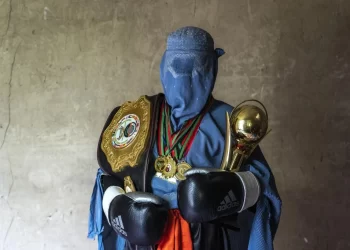
A young woman, wearing a turban and traditional Taliban men’s attire, released a video protesting the Taliban’s misogynistic policies. She stated that as a “dancer and singer,” she has been stripped of all her human rights by the Taliban, leaving her with no space to breathe. In her video, she declares:
“This is not just a video; it is a cry for women whose voices have been silenced, a beacon of hope for those trapped in the darkness of oppression, and a tribute to the women who have stood up for freedom and equality.”
This activist is part of a group consisting of four girls and one boy. They hope their actions will not only serve as a protest against the current reality but also awaken consciences and spark change within society. They continue their defiant acts of dance and music in remote areas, using their art as a means to resist the Taliban’s repression.
Meanwhile, several women and girls expressed their outrage by throwing shoes at images of Taliban leaders and chanting, “Death to the Taliban.” They called on the international community to stand against the Taliban’s oppressive policies and take concrete steps to end these injustices.
Human Rights Organizations’ Reactions
Amnesty International, marking International Women’s Day, criticized the global community’s response to the violation of women’s rights in Afghanistan. The organization stressed that issuing statements is not enough—tangible actions must be taken to support Afghan women at an international level. Amnesty International highlighted that 1.4 million girls in Afghanistan have been deprived of education, emphasizing that the world cannot turn a blind eye to this systematic oppression.
Richard Bennett, the UN Special Rapporteur on Human Rights in Afghanistan, also acknowledged International Women’s Day, stating:
“On this day, we celebrate the strength, courage, and achievements of women everywhere, particularly in Afghanistan. I stand with them for a better future. We rise together—on International Women’s Day, men must stand alongside women.”
He reaffirmed his commitment to documenting Taliban abuses against imprisoned women.
Similarly, Human Rights Watch acknowledged that Afghan women, despite the Taliban’s suppression, continue their struggle for their rights. The organization underscored the importance of supporting Afghan women against Taliban restrictions and ensuring a safe and legal path for those seeking asylum. It also highlighted efforts by four leading European nations to bring Taliban leaders to the International Criminal Court and the ICC prosecutor’s call for their arrest on charges of crimes against humanity.
United Nations Educational, Scientific, and Cultural Organization (UNESCO) reported that Taliban-imposed restrictions have already affected 1.5 million female students. It warned that if these restrictions persist until 2030, over four million girls will be deprived of education. UNESCO lamented that Afghanistan, after decades of educational progress, is now witnessing the systematic destruction of women’s achievements. The organization also hosted a conference in Paris to explore alternative educational opportunities for Afghan girls.
The United Nations Assistance Mission in Afghanistan (UNAMA) renewed its call for the Taliban to lift restrictions on women. Roza Otunbayeva, head of UNAMA, stated:
“The United Nations stands in full solidarity with the women and girls of Afghanistan.”
Political Opposition and Anti-Taliban Fronts’ Reactions
The Afghanistan Freedom Front (AFF) urged the global community to recognize the Taliban’s gender apartheid policies. The group pointed out that over the past three and a half years, the Taliban have systematically stripped women of their fundamental rights. It warned that if the international community remains silent, misogyny will become entrenched as a norm, with repercussions extending beyond Afghanistan’s borders.
Dr. Rangin Dadfar Spanta, former Afghan National Security Advisor and Foreign Minister, hailed Afghan women as the “pioneers of the people’s liberation struggle” and reaffirmed the necessity of their continued fight for freedom and equality. He posted on social media:
“On this day, we must honor the courageous struggles of Afghan women for liberation and equality in a free homeland.”
Rahmatullah Nabil, former head of Afghanistan’s National Directorate of Security (NDS), described International Women’s Day for Afghan women as “an open wound, a silenced hope.” He wrote:
“Around the world, International Women’s Day is celebrated with flowers and smiles, but in Afghanistan, this day is written with tears, cried out with grief, and carved into the hearts of women through pain. Here, March 8 is not a day of celebration—it is a day of humiliation, hunger, and silent suffering.”
Nabil added:
“A woman who was once a teacher now sits behind closed doors, reminiscing about her lost past. A girl who once went to school with hope now stares at a locked gate, fearing it may never reopen for her. Mothers, lying awake at night, stare at cold, dark ceilings, terrified that this darkness may become permanent for them and their daughters.”
UN Reports on Women’s Situation in Afghanistan
A United Nations report released on August 13, 2024, stated that the Taliban have erased women from public life, exacerbating a mental health crisis. The report found that nearly 70% of Afghan women experienced severe anxiety, isolation, and depression between April and June 2024. Based on surveys and interviews with 592 women across 22 provinces, the report revealed that 68% of women rated their mental health as “bad” or “very bad,” and 8% reported knowing at least one woman or girl who had attempted suicide.
Alison Davidian, the UN Women representative in Afghanistan, warned that the Taliban’s restrictive policies will have long-term consequences for future generations. She specifically noted that the exclusion of 1.1 million girls from schools and 100,000 women from universities could lead to a 45% increase in early pregnancies and a 50% rise in maternal mortality rates by 2026.
It is worth noting that Zabihullah Mujahid, the Taliban’s spokesperson, claimed on the occasion of March 8, International Women’s Solidarity Day, that women’s rights in Afghanistan have been ensured within the framework of Islamic rulings. He asserted that women’s rights in an “Islamic society” differ from those in Western countries.
You can read the Persian version of this daily reports here:
واکنشها به مناسبت ۸مارچ؛ از رژیم سرکوبگر طالبان نباید حق مطالبه کرد | روزنامه ۸صبح