Her voice, cutting through countless obstacles, reaches the most deprived regions of Afghanistan through the radio, keeping locals informed about the latest events. In a place where oppressive rulers’ stern frowns have crushed smiles and banned joy, she fights alone to retain her right to work. Despite the Taliban’s relentless efforts over the past three years to silence her decade-long broadcast, they have failed. Susan Ahmad firmly believes in victory. Even with the constant fear of arrest and torture, she stands strong to protect her fundamental right to work and be part of society—a right she has fought for tirelessly.
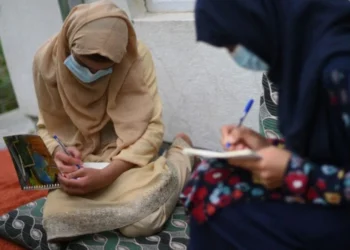
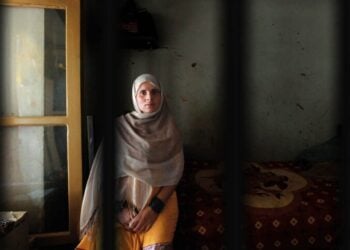
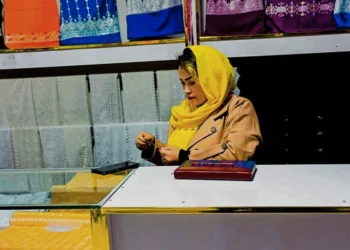
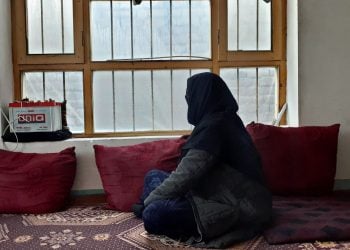
Susan Ahmad (pseudonym) is a female journalist in a remote province of Afghanistan. For over ten years, she has worked with various local media, giving voice to the most deprived people in different provinces. The Taliban have imposed severe restrictions on the media, especially on female journalists, dismissing many from their duties. Since the Taliban’s takeover, Susan has been fighting these restrictions, ensuring that her voice, which has informed people for years, remains unsilenced.
Since seizing power, the Taliban have crushed freedom of expression and imposed severe restrictions on journalists. Despite this suffocating atmosphere, Susan continues her work, even as the Taliban dismiss many women, especially female journalists in remote provinces. Female journalists across Afghanistan face numerous restrictions on their work, attire, speech, and behavior if they continue their jobs. These constraints are even more severe in local media under Taliban control, where working under constant threats of death and torture makes the job exceedingly difficult.
These oppressive measures have repeatedly challenged Susan’s resolve, but she remains steadfast. “From the beginning of their rule until now,” she says, “the Taliban have always tried to silence the voice of free speech in all parts of Afghanistan, and they have succeeded in many places. Today, the media under Taliban control only broadcast what the Taliban want, not the truth. They apply immense pressure on local media. Most female journalists in these media have been forced to leave their jobs.”
The most challenging aspect of journalism for her has been the policy changes in media broadcasting to align with Taliban demands. The group has forced all media to alter their broadcasts to comply with Taliban desires: “We had to change most of the programs we used to air before the Taliban’s rule, broadcasting more Islamic programs like Naat (devotional poetry), recitations, preaching, and Islamic worldviews. While preparing and broadcasting reports, I censor many truths and then publish them. If we broadcast the real statements of the local people, the consequences for us are imprisonment and torture.”
Despite these restrictions, the Taliban have continually sought to shut down media outlets employing women. Susan works in a media outlet founded by women. Eleven years ago, she and a colleague established a radio station in one of Afghanistan’s provinces, employing women interested in journalism and broadcasting. They created this radio station specifically to enhance the capacities of rural women who were deprived of all facilities.
They succeeded in establishing this auditory medium at a time when hearing a woman’s voice in the villages was considered a crime. Despite all challenges and restrictions, they tirelessly created enlightening and educational programs, changing the mindset of local people who were then akin to the Taliban, and amplifying women’s voices from a radio station that everyone opposed: “We created the radio under conditions where even my own family was unwilling to let me be a broadcaster, but out of passion, information dissemination, and breaking women’s deprivation, we succeeded.”
She has fought not only during the Taliban’s rule but also before that, striving against the patriarchal society where she and her daughters were to grow up. She has constantly tried to make society understand that women and girls should not be viewed as the weaker sex but should be seen as individuals who can develop and contribute to society’s prosperity.
Yet, it seems there is no end to the misfortune of her and other women in Afghanistan. Just as her efforts bore fruit and she bypassed the restrictions, those who took over had previously propagated misogynistic ideologies among the people, especially in rural areas.
Now, she grapples with a group that opposes women’s presence in society, forcing her to persist in her struggle more tenaciously than before: “When the Taliban seized power, we were very worried and feared that they might attack our media because its founder and all its employees were women, and we had worked for years to enhance women’s capacities. But fear does not accomplish anything; we must resist.”
Susan describes her struggle against the Taliban as the most unjust war—a battle where one side rises with guns and knows nothing about civil resistance, while the other seeks victory through the power of the pen and insight. But she says that the fighting women of Afghanistan, who stand and resist the Taliban in any way, will one day be victorious.
While expressing her dissatisfaction with the international community’s stance toward the Taliban, she says that Afghan women bear all difficulties to teach the world and future generations that no matter how exhausting the restrictions are, resistance and perseverance are undefeatable.
You can read the Persian version of this Afghan woman’s story here:
اطلاعرسانی با هراس از بازداشت و شکنجه؛ روایت مبارزه یک خبرنگار زن در برابر طالبان | روزنامه ۸صبح