
The post-colonial order established in our region has been marked by numerous shortcomings and inconsistencies. While the colonial era did promote advancements in administration, bureaucracy, legislation, and education—bringing certain societies closer to modernity—it primarily served the interests of the colonizers. This duality both facilitated development and triggered movements for independence and liberation among nations. Countries that were bordered and delineated under colonialism, as well as the states that emerged post-colonization, often faced crises and instability. The formation of nation-states under such unstable conditions was based on division and separation rather than the unity and cohesion rooted in the shared history of the region’s peoples. This division has sown the seeds for new crises.
The geographical area encompassing Afghanistan and its neighbors represents a culturally and civilizationally diverse yet interconnected entity. For centuries, this region has experienced an interwoven fabric of ethnicities, languages, tribes, religions, and subcultures under various empires. The peoples of Central Asia, the Indian subcontinent, and the territories now known as Afghanistan and Iran, extending to Mesopotamia, shared many commonalities. Differences in language, dialect, skin color, or facial features did not divide them. The correct modern approach would have involved drawing national borders that reflect these realities, rather than imposing rigid boundaries that separate these regional nations. A common historical and civilizational foundation should have served as the basis for regional integration, fostering cooperation and focusing on improving citizens’ lives and rights.
In reality, however, the situation has been tragic. Colonial boundaries inflicted deep wounds on the collective psyche of regional peoples and imposed artificial divisions that persist to this day. As a result of these colonial demarcations, the Pashtuns were split between two countries, the Uzbeks between two, the Tajiks across three, the Baloch across three, and the Kurds across four nations. Many other ethnic groups experienced a similar fate, fragmented across the newly drawn boundaries. Ideally, a Commonwealth-like structure should have emerged, enabling all of the region’s ethnicities to participate and reinforcing their connections in the modern age. Industrial advances could have further facilitated collaboration among these communities.
One major consequence of the fragmented post-colonial era has been the marginalization of justice within power structures and wealth distribution—fundamental needs for human societies. Throughout history, achieving justice in power and wealth has ranked among humanity’s most essential collective aspirations, prompting extensive theoretical and practical efforts, often with significant sacrifices. In the modern era, more advanced philosophies have emerged to reform power structures and make them more inclusive, alongside better plans for achieving social and economic justice. Societies in our region require a comprehensive political and social approach to realize these core aspirations.
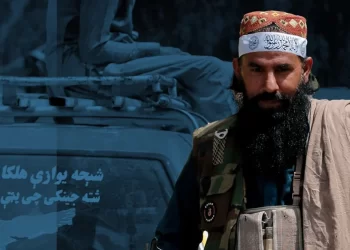
The Pashtun Protection Movement (PTM), led by Manzoor Pashteen, demands social justice in Pakistan and an end to all forms of discrimination against the country’s ethnic groups, resonating deeply with people across the region and inspiring solidarity. The movement’s opposition to the Taliban and fundamentalist groups, which have propagated violence and destruction over the past half-century, further strengthens this solidarity. These groups have driven the machinery of violence in the name of faith, plunging regional nations into compounded crises by using religious sanctities as tools. By promoting ideological illusions, fundamentalist groups overshadow the genuine and concrete demands of the people for justice and improved living conditions, replacing them with false, imaginary goals.
This call for justice, however, is not limited to the Pashtuns in Pakistan. It resonates strongly in Afghanistan, Iran, and other countries in the region, where the peoples and ethnic groups face the same sufferings of inequality, discrimination, oppression, and suppression as Pakistan’s Pashtuns. The demand for justice grows louder each day, accompanied by increasing grounds for protest, anger, and uprising. This trend will not abate unless the region’s rulers and power structures recognize the people’s demands and formally establish justice and equality.
If Pakistan’s rulers heed the call for justice and implement mechanisms with effective guarantees to eliminate discrimination among citizens, allowing equal growth and progress opportunities for all ethnicities while addressing the root causes of violence and extremism, the nation will not only escape major crises but also inspire other countries in the region toward peaceful transformation. In an environment of justice and equality, peace, stability, and development will spread across these lands, mitigating risks such as disintegration, civil wars, and ongoing upheavals.
In Afghanistan, many people also yearn for justice and equality, suffering from discrimination and oppression. For many ethnic groups in Afghanistan, their conditions are even worse than those of Pakistan’s Pashtuns, as positions and opportunities such as provincial governance or access to presidential and prime ministerial roles, available to Pakistani Pashtuns over the past seventy years, are not easily attainable in Afghanistan. Justice, however, is not achieved merely by distributing positions; symbolic achievements in Pakistan have not resolved the demands for justice or ended the suffering of marginalized populations. To realize justice, superficial solutions must be surpassed, paving the way for all residents of a country to share in opportunities and privileges while rooting out any form of discrimination or inequality.
You can read the Persian version of this editorial here: